


Investors want Taiwan Semicon-ductor Manufacturing Co (台積電) chairman Morris Chang (張忠謀) to cut spending this year to boost profit, after dominating the made-to-order chip industry by outspending rivals to be first with new production technology.
Lower investments on plants and equipment are beginning to pay off. The company, which makes chips for Microsoft Corp's Xbox video-game console and Texas Instruments Inc, is expected to report its second-quarter profit today. It generated NT$9.3 billion in second-quarter profit a year ago.
TSMC has said it may pare capital expenditure this year to as little as $1 billion, a third of what it spent in 2000. Its attempts to use existing plants better may extend profit gains as the chip industry recovers from its worst slump.
"It's a good sign," said Ernie Tam, who counts shares in TSMC among the US$2.5 billion in equities he helps manage for Baring Asset Management, of the company's reduced budget.
"People are concerned about over-investment," he said.
TSMC said on July 7 it used 86 percent of its production capacity in the three months ended June 30, the highest rate since the fourth quarter of 2000. Sales rose 13 percent to NT$13 billion as demand improved.
Chang said in March the company will spend money on new equipment only when it's confident it will be fully used, reassuring investors concerned that the company might place building market share ahead of profitability.
TSMC reaped the benefits of investing in its business in the late 1990s, as profits rose more than fourfold and its stock price trebled between 1998 and 2000.
The company increased capital expenditure by half in 2000 to NT$103.8 billion (US$3 billion) -- about 60 percent more than its record net income of $65.1 billion that year.
The anticipated growth in demand didn't arrive. Chip sales plunged by a third in 2001, the industry's steepest decline, and barely rose last year.
Collapsing demand left much of the company's advanced new production lines idle, prompting it to reduce capital spending to US$2 billion in 2001 and US$1.6 billion last year. This year's budget is US$1 billion to US$1.5 billion.
TSMC's investment budget is still at least twice as much as the US$500 million rival United Microelectronics Corp (
The reductions have left the company well placed to profit from a recovery in semiconductor spending, some investors say.
"The main difference this year is TSMC has kept pretty good control of capital expenditures," said George Wu (吳裕良), an analyst at Primasia Securities Co in Taipei, who forecast the company will post a second-quarter profit of NT$12.7 billion.
After a 33 percent drop in first-quarter net income to NT$4.36 billion, Chang has forecast profit will increase through the rest of this year.
Chang said he aims to achieve a return on equity, or net income as a percentage of shareholders' funds, of at least 20 percent, about the return the company earned in 1998 and 1999, without giving a time frame for the target.
The company's return on equity was 7.73 percent last year, after tumbling to 5.4 percent in 2001 from 31.4 percent the previous year.
The company said it expects this year's sales to rise by a fifth from last year, more than double the 8.4 percent pace forecast for the industry by market researcher Gartner Inc.
Some investors doubt whether the recovery will be strong enough for the chipmaker to achieve its return on equity target.
"I'm not worried about TSMC's competitive strength,"said Vincent Lai, who helps manage the equivalent of US$865 million at HSBC Asset Management Taiwan.
"I'm concerned that the speed of recovery in the global economy will influence the company's earnings growth," he said.
Lai said he doesn't think the company will achieve a 20 percent return on equity until next year.
The company faces competition from low-cost rivals such as Shanghai-based Semiconductor Manufacturing International Corp (中芯國際集成電路), which plans to raise funds selling shares overseas next year.
It also faces a challenge from International Business Machines Corp which is building a high-end made-to-order semiconductor business. Earlier this year, TSMC lost its role as sole supplier to Nvidia Corp, when the designer of Xbox chips signed a contract with IBM.
The biggest competitive challenge for TSMC may be finding a replacement for 73-year-old Chang, seen as the father of the chip-foundry industry, investors said.
Chang has headed the company since its inception in 1987.
"Morris is a very strong guy," said Michael Ding (丁予嘉), who counts TSMC shares among equivalent of US$4.2 billion he manages for International Investment Trust Co (國際投信).
"Any successor would be very challenged," he said.
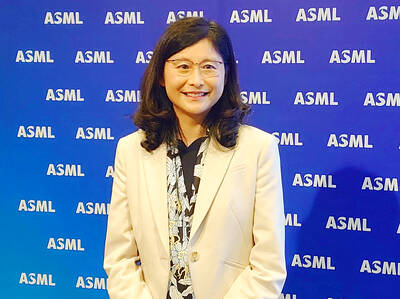
Netherlands-based semiconductor equipment supplier ASML Holding NV yesterday said that it is planning to hire an additional 1,000 people in Taiwan this year in response to growing demand from clients. ASML had previously planned to recruit 600 people this year, but that the plan has been adjusted upward, ASML vice president and ASML Taiwan general manager Grace Wang (汪佳慧) told reporters. ASML has a workforce of more than 4,500 in Taiwan, accounting for about 10 percent of its global total, Wang said. This year’s recruitment campaign would focus on adding people in the customer support, manufacturing and supply chain domains to assist ASML
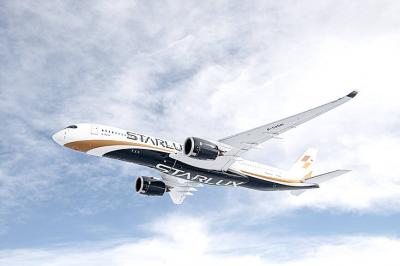
Starlux Airlines Co (星宇航空) today unveiled a long-haul network expansion plan at a shareholders’ meeting in Taipei, including direct flights to Barcelona, Spain, and Zurich, Switzerland, as well as a service connecting Taipei, Sydney and New Zealand. Starlux is to become the first Taiwanese carrier to offer non-stop services to the two European cities, while the inaugural oceanic route is expected to expand transit opportunities within the Australia-New Zealand market, Starlux said. Flight services to Chicago, Dallas, Washington and New York are under evaluation, the airline added. Prior to the shareholders’ meeting, the airline earlier this year announced that it would be
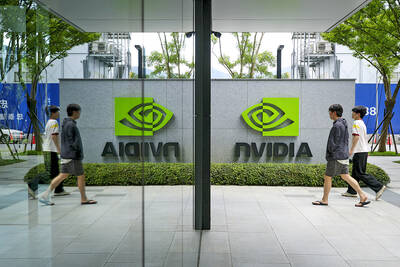
UNDER MICROSCOPE: Taiwan detained three people who allegedly conspired to buy servers in Taiwan and export them using fraudulent documentation, prosecutors said Nvidia Corp chief executive officer Jensen Huang (黃仁勳) on Saturday urged Super Micro Computer Inc to tighten up on compliance after Taiwan detained three people this week for allegedly making fraudulent declarations about artificial intelligence (AI) servers made by its US partner. The development marked the nation’s first crackdown on semiconductor smuggling, which grew after the US slapped restrictions on exports of high-end chips such as Nvidia AI accelerators to China. Nvidia is “rigorous” in explaining regulations to all of its partners, Huang told reporters after arriving in Taipei. “Ultimately Super Micro has to run their own company,” he said in response to

Nvidia Corp yesterday announced that CEO Jensen Huang (黃仁勳) would attend an employee meeting in Taipei tomorrow to celebrate the launch of the company’s Taiwan headquarters project. Huang would attend a gathering at the site of Nvidia’s planned headquarters in Beitou Shilin Technology Park (北投士林科技園區), the company said in a statement. After arriving in Taiwan on Saturday last week, Huang told reporters that he plans to meet with Quanta Computer Inc (廣達) chairman Barry Lam (林百里) and Taiwan Semiconductor Manufacturing Co (TSMC, 台積電) chairman C.C. Wei (魏哲家), and would attend the groundbreaking ceremony for Nvidia’s Taiwan headquarters tomorrow. Nvidia has not yet applied


 RSS
RSS