


The euro recoiled on Friday after German Chancellor Gerhard Schroeder issued what dealers saw as a thinly veiled call on the European Central Bank (ECB) to move to curb the strength of the euro.
The single European currency fell to US$1.1303 from US$1.1377 late on Thursday in New York.
The dollar stood at ¥117.81 against ¥117.64 on Thursday.
The euro eased back after Schroeder said in an interview with the Financial Times: "I assume the intelligent people in the leadership of the ECB discuss the question every day of whether they have done enough in the context of the dollar/euro exchange rate to maintain the competitiveness of exports from Europe."
The current strength of the euro was partly responsible for the sluggishness of the German economy as it is hitting the country's exporters, Schroeder added.
"These comments were interpreted by some as an implicit call for ECB action to stem euro strength, prompting the currency to fall against the other majors after the release of the report overnight," said UBS Warburg strategist Shahab Jalinoos.
But in what was taken by some as a rejection of Schroeder's call, the ECB's chief economist, Otmar Issing, told reporters the competitiveness of the German economy "does not just depend on the exchange rate".
This apparent fault line between politicians and central bankers could prove destabilising for the single currency, analysts said.
"We expect euro/dollar to remain under pressure, not because of any danger of intervention, but because ongoing tensions between the ECB and EU governments will likely be damaging for the currency," said BNP Paribas strategists commented.
WestLB strategists said Schroeder's remarks "may mark a turning point in the way politicians respond to the euro strength, and therefore may influence the medium to longer term euro sentiment."
The yen meanwhile lost ground on the threat of intervention by Japanese authorities to support the dollar and on a sharp fall in Tokyo stock prices.
"Intervention fears are increasing," said Kazuhiro Nishina, assistant manager of the foreign exchange division at Aozora Bank in Tokyo.
"The majority of market participants still expect the Japanese authorities to step into the market to weaken the yen."
The euro was changing hands at US$1.1303 from US$1.1377 late on Thursday in New York, ¥133.79 (¥133.79), £0.6927 (£0.6960) and 1.5517 Swiss francs (Sf1.5478).
The dollar was being quoted at ¥117.81 (¥117.64) and 1.3728 Swiss francs (Sf1.3601).
The pound was at US$1.6323 (US$1.6344), ¥192.28 (¥192.27) and 2.2402 Swiss francs (Sf2.2229).
On the London Bullion Market, the price of a single ounce of gold was standing at US$343.70 from US$343.40 on Thursday afternoon.
Shares of contract chipmaker Taiwan Semiconductor Manufacturing Co (TSMC, 台積電) came under pressure yesterday after a report that Apple Inc is looking to shift some orders from the Taiwanese company to Intel Corp. TSMC shares fell NT$55, or 2.4 percent, to close at NT$2,235 on the local main board, Taiwan Stock Exchange data showed. Despite the losses, TSMC is expected to continue to benefit from sound fundamentals, as it maintains a lead over its peers in high-end process development, analysts said. “The selling was a knee-jerk reaction to an Intel-Apple report over the weekend,” Mega International Investment Services Corp (兆豐國際投顧) analyst Alex Huang
Taiwan Semiconductor Manufacturing Co (TSMC, 台積電) is expected to remain Apple Inc’s primary chip manufacturing partner despite reports that Apple could shift some orders to Intel Corp, industry experts said yesterday. The comments came after The Wall Street Journal reported on Friday that Apple and Intel had reached a preliminary agreement following more than a year of negotiations for Intel to manufacture some chips for Apple devices. Taiwan Institute of Economic Research (台灣經濟研究院) economist Arisa Liu (劉佩真) said TSMC’s advanced packaging technologies, including integrated fan-out and chip-on-wafer-on-substrate, remain critical to the performance of Apple’s A-series and M-series chips. She said Intel and Samsung
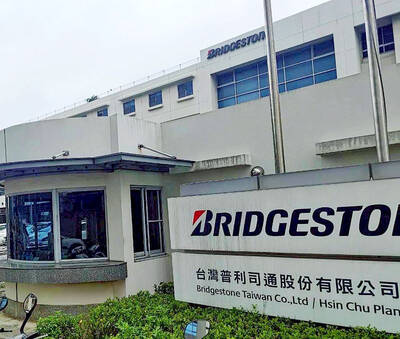
TRANSITION: With the closure, the company would reorganize its Taiwanese unit to a sales and service-focused model, Bridgestone said Bridgestone Corp yesterday announced it would cease manufacturing operations at its tire plant in Hsinchu County’s Hukou Township (湖口), affecting more than 500 workers. Bridgestone Taiwan Co (台灣普利司通) said in a statement that the decision was based on the Tokyo-based tire maker’s adjustments to its global operational strategy and long-term market development considerations. The Taiwanese unit would be reorganized as part of the closure, effective yesterday, and all related production activities would be concluded, the statement said. Under the plan, Bridgestone would continue to deepen its presence in the Taiwanese market, while transitioning to a sales and service-focused business model, it added. The Hsinchu
Taiwan Semiconductor Manufacturing Co (TSMC, 台積電) has approved a capital budget of US$31.28 billion for production expansion to meet long-term development needs during the artificial intelligence (AI) boom. The company’s board meeting yesterday approved the capital appropriation plan for purposes such as the installation of advanced technology capacity and fab construction, the world’s largest contract chipmaker said in a statement. At an earnings conference last month, TSMC forecast that its capital expenditure for this year would be at the higher end of the US$52 billion to US$56 billion range it forecast in January in response to robust demand for 5G, AI and


 RSS
RSS