


After two years of preparation, the Koo's family-run business finally split into two major groups, one headed by 86-year-old Koo Chen-fu (
"The split-up aims to consolidate professional management in the [financial] business," Chinatrust president Jeffrey Koo Jr. (
New blood relatives who do not bear the surname of Koo should be allowed to take up management responsibilities based on their business expertise while the Koo family continues to serve as financers, 38-year-old Jeffrey Koo Jr. added.
Chinatrust yesterday confirmed that Jeffrey Koo relinquished his seat at the board of Taiwan Polypropylene Co (福聚公司) to the Koo's Group on Thursday, facilitating the split-up agreement reached two years ago by both clans.
Core businesses of the Koo's Group now include Taiwan Cement Corp (
Younger generations of both clans in the Koo family are also gradually taking over the helm including Jeffrey Koo Jr, who is the eldest son of Jeffrey Koo. He currently chairs the Chinatrust Commercial Bank (
Market watchers yesterday lauded the Koo family's progressive and clear-cut approach to differentiate their core businesses as well as to improve financial transparency.
Hsieh Chin-ho (
He added that the family appears to have retained a good working relationship among its members, although Jeffrey Koo's business outperformed Koo Chen-fu's ill-performing China Life Insurance in December 2001.
Koo Chen-fu may face a challenge ahead in cleaning up the mess left behind by his deceased eldest son, Chester Koo (辜啟允) -- who died of gall-bladder cancer at the age of 48 in 2001 -- at Taiwan Cement, which has a liability of NT$50 billion, Hsieh said.
But Mike Chow (
Taiwan Cement president Leslie Koo announced in April that the company plans to invest US$2 billion in its China-based plants over the next five years, aiming to become the largest cement maker in China by 2008.
William Fong (
"The move will help dismiss market concerns that a family-run business usually involves complicated hidden debts that are not easy to detect and fear that the burden will be put on the banking business," Fong said.
Fong added that Chinatrust has been toning down its family-run nature by recruiting professionals such as Eric Chen (陳聖德), formerly country officer of Citigroup Taiwan, and his 19 top staff.
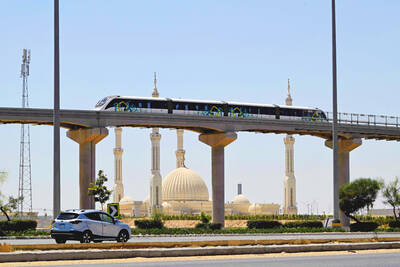
Cairo’s new monorail slices across the city skyline, running above the familiar chaos of blaring horns and aging buses’ exhaust fumes that mark rush hour below. The US$4.5 billion monorail, opened this month, is among Egypt’s most prominent new transport projects, part of a debt-funded infrastructure drive criticized for sapping state finances while bringing limited benefits to most of the country’s 109 million people. “It feels like you’re in a different country,” said Ramy Sayed, a restaurant manager, aboard a driverless Innovia 300 train. “No noise, no traffic, we’re not used to this.” The eastern line runs 56km from the bustling middle-class

Taiwanese firms have increased investment in the Philippines in recent years as Manila’s ties with Washington deepen and global supply chains continue to shift away from China, an expert at the Chung-Hua Institution for Economic Research (CIER, 中華經濟研究院) said yesterday. The Philippines had not been among Taiwanese investors’ top choices in Southeast Asia, CIER Taiwan ASEAN Studies Center director Kristy Hsu (徐遵慈) said at a seminar in Taipei. However, Taiwan’s investment in the country has grown significantly since the COVID-19 pandemic, reaching US $257 million last year, a high in recent years, she said. Although Taiwan’s total investment in the Philippines still lags

Intel Corp regards Taiwan Semiconductor Manufacturing Co (TSMC, 台積電) as a longstanding partner, as the US chipmaker would continue outsourcing production of advanced chips to TSMC, Intel chief executive officer Lip-Bu Tan (陳立武) said yesterday. “I don’t look at people as competitors. I look at the collaboration... Nvidia is also, you know, a good friend,” Tan told a news conference following his keynote speech at the Computex trade show in Taipei. “It’s a very trusted partnership for us... We are a big, top customer for them, and we’re going to continue doing that,” he said, referring to TSMC, the world’s largest foundry
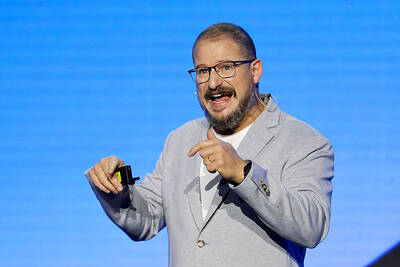
Artificial intelligence (AI) agents would supplant smartphones as the center of people’s digital lives, fundamentally reshaping personal devices and driving a major computing upgrade cycle, Qualcomm Inc CEO Cristiano Amon said yesterday. In his keynote speech for this year’s Computex trade show in Taipei, Amon said that the rise of "agentic AI" — AI systems capable of reasoning, planning and carrying out tasks autonomously — would transform how people interact with technology across phones, PCs, vehicles and wearable devices. Describing the technology as the next major evolution in computing, Amon said that "2026 is the year of agents.” For decades, smartphones have sat


 RSS
RSS