


Asustek Computer Inc (
"We plan to buy Elitegroup's factory in Chungli for over NT$1 billion before the end of June," Asustek's spokesperson David Chang (
The sale has to be approved at the Elitegroup investors' conference in mid-June before it can be finalized, Chang said.
Having seen shipments of its notebooks rocket in the past two years, Asustek's current manufacturing facilities can't pump out new products quickly enough. Last year Asustek shipped 800,000 notebooks, more than double the previous year's figure of 380,000, Chang said. The company plans to ship 1.6 million this year.
"Asustek needs to increase production and this purchase will help in its capacity expansion," said Jonathan Chen (
Elitegroup makes Apple Computer Inc's iBook model at the Chungli plant, its only remaining factory in Taiwan. The majority of Elitegroup's production is now based in Shenzhen and Dongguan in China's Gaungdong Province. The Chungli factory is able to produce up to 200,000 notebook computers each month, local Chinese-language media reported at the weekend. Elitegroup's spokesperson Chen Ming-tsun (
"There has been speculation that Asustek plans to [use the Elitegroup purchase to] get orders from Apple Computer Inc," said Steven Tseng (曾緒良), an analyst at Yuanta Core Pacific Securities (元大京華證券), adding that it is unlikely that this will happen. "Elitegroup has been very close to Apple for years."
Local Chinese-language media had speculated that the Asustek deal would enable it to produce Apple products very soon after taking over the factory.
Chen also poured cold water on talk of Apple orders for Asustek.
"Elitegroup provides a very good level of service to Apple," Chen said. "I don't think it is likely that Asustek can win orders from Apple."
Tseng expressed skepticism over talk of moving the manufacture of iBooks to Elitegroup's factories in China, saying the company's notebook operations in China were not "smooth" enough yet to take on Apple's high-end products. The move to sell the Chungli plant may simply be the result of declining orders, Tseng said.
"The suggestion to me is that Elitegroup's [order] momentum beyond the second quarter is not as great as predicted," he said.
Last year Taiwan produced nearly two-thirds of all the notebooks computers sold worldwide, amounting to 30 million units, the government-funded Market Intelligence Center reported.

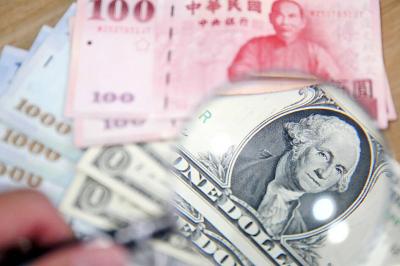
The US dollar was trading at NT$29.7 at 10am today on the Taipei Foreign Exchange, as the New Taiwan dollar gained NT$1.364 from the previous close last week. The NT dollar continued to rise today, after surging 3.07 percent on Friday. After opening at NT$30.91, the NT dollar gained more than NT$1 in just 15 minutes, briefly passing the NT$30 mark. Before the US Department of the Treasury's semi-annual currency report came out, expectations that the NT dollar would keep rising were already building. The NT dollar on Friday closed at NT$31.064, up by NT$0.953 — a 3.07 percent single-day gain. Today,
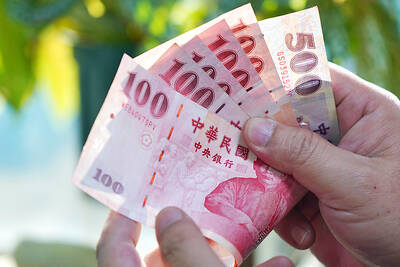
‘SHORT TERM’: The local currency would likely remain strong in the near term, driven by anticipated US trade pressure, capital inflows and expectations of a US Fed rate cut The US dollar is expected to fall below NT$30 in the near term, as traders anticipate increased pressure from Washington for Taiwan to allow the New Taiwan dollar to appreciate, Cathay United Bank (國泰世華銀行) chief economist Lin Chi-chao (林啟超) said. Following a sharp drop in the greenback against the NT dollar on Friday, Lin told the Central News Agency that the local currency is likely to remain strong in the short term, driven in part by market psychology surrounding anticipated US policy pressure. On Friday, the US dollar fell NT$0.953, or 3.07 percent, closing at NT$31.064 — its lowest level since Jan.
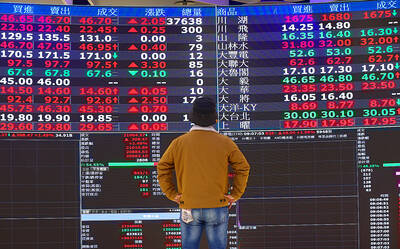
The New Taiwan dollar and Taiwanese stocks surged on signs that trade tensions between the world’s top two economies might start easing and as US tech earnings boosted the outlook of the nation’s semiconductor exports. The NT dollar strengthened as much as 3.8 percent versus the US dollar to 30.815, the biggest intraday gain since January 2011, closing at NT$31.064. The benchmark TAIEX jumped 2.73 percent to outperform the region’s equity gauges. Outlook for global trade improved after China said it is assessing possible trade talks with the US, providing a boost for the nation’s currency and shares. As the NT dollar

The Financial Supervisory Commission (FSC) yesterday met with some of the nation’s largest insurance companies as a skyrocketing New Taiwan dollar piles pressure on their hundreds of billions of dollars in US bond investments. The commission has asked some life insurance firms, among the biggest Asian holders of US debt, to discuss how the rapidly strengthening NT dollar has impacted their operations, people familiar with the matter said. The meeting took place as the NT dollar jumped as much as 5 percent yesterday, its biggest intraday gain in more than three decades. The local currency surged as exporters rushed to


 RSS
RSS