


Nokia Oyj and Samsung Electronics Co have sued to suppress what they say are counterfeit mobile phones and accessories to protect their brand names in the growing wireless phone market.
Nokia, the world's biggest cellular telephone maker, said companies in south Florida are taking old phones, repackaging them with bootleg accessories and selling them as new. Samsung, the world's No. 3 mobile handset maker, sued a California company it says is selling knockoff carrying cases, power cords and "swivel clip holsters" with the Samsung name.
Cellphone makers are joining such companies as Coca-Cola Co, Tommy Hilfiger Corp and Oakley Inc in fighting imitation goods with famous names that are sold over the Internet and elsewhere. Some of the knockoffs are covers, batteries and earphones that feature the Nokia and Samsung names.
"The cellphones are the sexy end of the consumer electronics market now," said Jan Lindemann, global managing director for brand valuation at Omnicom Group Inc's Interbrand unit.
"If you have a badly made accessory under the Samsung name or Nokia name, the consumer gets the wrong brand message."
The number of cell phones is growing worldwide as handset prices fall. Global mobile-phone sales probably rose more than 5 percent to 405 million units last year, Nokia said in January. The company expects industrywide sales of handsets to rise at least 10 percent this year, projecting about 445 million phones will be sold this year.
Nokia had a market share of 36.4 percent in the fourth quarter of last year, No. 2 Motorola Inc 17.5 percent and Samsung 9.2 percent, according to Strategy Analytics, a market research group.
To entice customers, the handset makers are producing new models with features like cameras and color screens. Nokia introduced a record 33 new models last year.
Along with the high-tech features, the companies are selling holsters, face plates, and other accessories to allow consumers to personalize their phones.
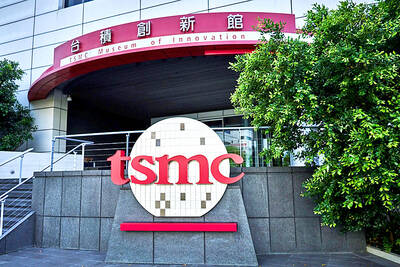
SEEKING CLARITY: Washington should not adopt measures that create uncertainties for ‘existing semiconductor investments,’ TSMC said referring to its US$165 billion in the US Taiwan Semiconductor Manufacturing Co (TSMC, 台積電) told the US that any future tariffs on Taiwanese semiconductors could reduce demand for chips and derail its pledge to increase its investment in Arizona. “New import restrictions could jeopardize current US leadership in the competitive technology industry and create uncertainties for many committed semiconductor capital projects in the US, including TSMC Arizona’s significant investment plan in Phoenix,” the chipmaker wrote in a letter to the US Department of Commerce. TSMC issued the warning in response to a solicitation for comments by the department on a possible tariff on semiconductor imports by US President Donald Trump’s
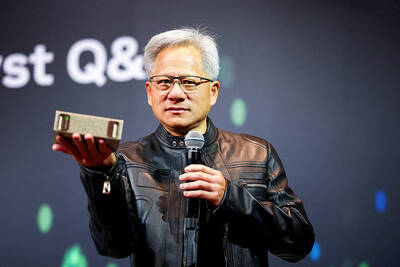
‘FAILED EXPORT CONTROLS’: Jensen Huang said that Washington should maximize the speed of AI diffusion, because not doing so would give competitors an advantage Nvidia Corp cofounder and chief executive officer Jensen Huang (黃仁勳) yesterday criticized the US government’s restrictions on exports of artificial intelligence (AI) chips to China, saying that the policy was a failure and would only spur China to accelerate AI development. The export controls gave China the spirit, motivation and government support to accelerate AI development, Huang told reporters at the Computex trade show in Taipei. The competition in China is already intense, given its strong software capabilities, extensive technology ecosystems and work efficiency, he said. “All in all, the export controls were a failure. The facts would suggest it,” he said. “The US

The government has launched a three-pronged strategy to attract local and international talent, aiming to position Taiwan as a new global hub following Nvidia Corp’s announcement that it has chosen Taipei as the site of its Taiwan headquarters. Nvidia cofounder and CEO Jensen Huang (黃仁勳) on Monday last week announced during his keynote speech at the Computex trade show in Taipei that the Nvidia Constellation, the company’s planned Taiwan headquarters, would be located in the Beitou-Shilin Technology Park (北投士林科技園區) in Taipei. Huang’s decision to establish a base in Taiwan is “primarily due to Taiwan’s talent pool and its strength in the semiconductor
French President Emmanuel Macron has expressed gratitude to Hon Hai Precision Industry Co (鴻海精密) for its plan to invest approximately 250 million euros (US$278 million) in a joint venture in France focused on the semiconductor and space industries. On his official X account on Tuesday, Macron thanked Hon Hai, also known globally as Foxconn Technology Group (富士康科技集團), for its investment projects announced at Choose France, a flagship economic summit held on Monday to attract foreign investment. In the post, Macron included a GIF displaying the national flag of the Republic of China (Taiwan), as he did for other foreign investors, including China-based


 RSS
RSS