


The Taiwan Future Exchange (TAIFEX, 台灣期貨交易所) yesterday listed equity options on the shares of five blue-chip companies for the first time -- Taiwan Semiconductor Manufacturing Co (台積電), United Microelectronics Corp (聯電), Nan Ya Plastics Corp (南亞塑膠), China Steel Corp (中鋼) and Fubon Financial Holding Co (富邦金控).
On the first trading day, a total of 4,558 contracts were signed to purchase options yesterday, according to TAIFEX.
"Our goal is to boost daily transactions to reach over 10,000 contracts and list another group of stocks in three months," TAIFEX chairman Richard Shih (
Options on shares of the first five companies were approved for trading because they met the requisites of market capitalization, liquidity, price volatility and industry coverage, Shih added.
Speaking at yesterday's launch ceremony, Chu Jaw-chyuan (朱兆銓), chairman of the Securities and Futures Commission was bullish on the market, calling it "a mainstream, world-class financial product."
Equity options are securities that give the holder the right to buy or sell a specific number of shares, at a specific price for a certain-limited-time period. In the new plan, one option equals 1,000 shares.
The future exchange is a commodities market where futures contracts in financial instruments or real commodities, such as wheat and soybeans, are traded. Stock, bond indexes and options are also traded on these exchanges.
Trading options on shares allow investors to benefit from the local stock market's (TAIEX) rise and decline for less initial cash outlay than would be possible when trading in underlying shares.
There are generally two kinds of options -- a call option (
A call option gives the right to the buyer of the option to force the writer of the option to sell a particular stock at a prefixed price within a particular period.
A put option gives the buyer a right to force the writer to buy a particular stock at a prefixed price.
For example, investors can buy a call option at a prefixed price in anticipation of a market rise and sell the call option to profit from the actual rise during the contracted one-month period.
"The principle is to buy a call option in anticipation of a rising market and to buy a put option in anticipation of a declining market," said Emily Chiang (江燕琇), an assistant manager with Jih Sun Securities Co (日盛證券).
Traders' gains depend on the fluctuation of stock prices in accordance with their anticipated movement while their maximum losses are pre-paid premiums, and a NT$200 transaction fee, said Mark Hsu (
To grab market share and boost the market, some securities houses have cut the transaction fee down to NT$148 per contract, he said, adding that lower transaction fees are foreseeable due to competition.
Hsu said that the new market could be seen as a haven of futures to avoid risks of stock fluctuation especially for big-time shareholders while it's inevitable that some speculative individual investors may also "gamble on it and make quick gains."
Shares of contract chipmaker Taiwan Semiconductor Manufacturing Co (TSMC, 台積電) came under pressure yesterday after a report that Apple Inc is looking to shift some orders from the Taiwanese company to Intel Corp. TSMC shares fell NT$55, or 2.4 percent, to close at NT$2,235 on the local main board, Taiwan Stock Exchange data showed. Despite the losses, TSMC is expected to continue to benefit from sound fundamentals, as it maintains a lead over its peers in high-end process development, analysts said. “The selling was a knee-jerk reaction to an Intel-Apple report over the weekend,” Mega International Investment Services Corp (兆豐國際投顧) analyst Alex Huang
Taiwan Semiconductor Manufacturing Co (TSMC, 台積電) is expected to remain Apple Inc’s primary chip manufacturing partner despite reports that Apple could shift some orders to Intel Corp, industry experts said yesterday. The comments came after The Wall Street Journal reported on Friday that Apple and Intel had reached a preliminary agreement following more than a year of negotiations for Intel to manufacture some chips for Apple devices. Taiwan Institute of Economic Research (台灣經濟研究院) economist Arisa Liu (劉佩真) said TSMC’s advanced packaging technologies, including integrated fan-out and chip-on-wafer-on-substrate, remain critical to the performance of Apple’s A-series and M-series chips. She said Intel and Samsung
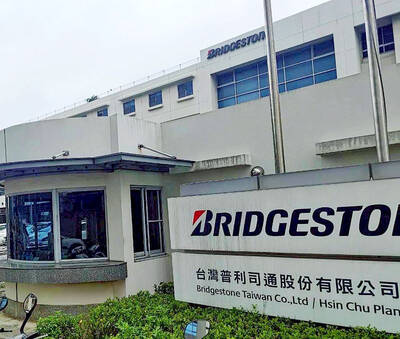
TRANSITION: With the closure, the company would reorganize its Taiwanese unit to a sales and service-focused model, Bridgestone said Bridgestone Corp yesterday announced it would cease manufacturing operations at its tire plant in Hsinchu County’s Hukou Township (湖口), affecting more than 500 workers. Bridgestone Taiwan Co (台灣普利司通) said in a statement that the decision was based on the Tokyo-based tire maker’s adjustments to its global operational strategy and long-term market development considerations. The Taiwanese unit would be reorganized as part of the closure, effective yesterday, and all related production activities would be concluded, the statement said. Under the plan, Bridgestone would continue to deepen its presence in the Taiwanese market, while transitioning to a sales and service-focused business model, it added. The Hsinchu
Taiwan Semiconductor Manufacturing Co (TSMC, 台積電) has approved a capital budget of US$31.28 billion for production expansion to meet long-term development needs during the artificial intelligence (AI) boom. The company’s board meeting yesterday approved the capital appropriation plan for purposes such as the installation of advanced technology capacity and fab construction, the world’s largest contract chipmaker said in a statement. At an earnings conference last month, TSMC forecast that its capital expenditure for this year would be at the higher end of the US$52 billion to US$56 billion range it forecast in January in response to robust demand for 5G, AI and


 RSS
RSS