


From the beginning of next month, six foreign-language TV channels will become available to local cable-television subscribers.
Expatriates gladly welcomed the move.
"I'd love to be able to watch cricket from back home," said Horst Brammer, representative of the liaison office for South Africa.
Not all areas, however, will have access to the service, as local cable cartels have divided up territories, with only Eastern Multimedia Group (
"The policy of local system operators has been to create cartels," said Nic van Zwanenberg, head of network development in Asia for BBC World. "There are three big multiple-system operators in Taiwan that control over 60 percent of the system operators."
Multiple-system operators provide content and infrastructure to system operators, who then sell their services on to local cable services.
Eastern, one of the nation's largest multiple-system operators, said they would be offering a new digital set-top box service via 13 cable operators in which they hold a majority share.
Six of these operators are located in the Taipei area, two in Pingtung, and one each in Hsinchu, Taoyuan, Changhwa, Taichung County and Tainan County.
The boxes won't come cheap. On top of the standard monthly fee paid to a traditional cable operator there is no additional charge for the six channels, but subscribers will need to make a one-time payment of around NT$5,000 to buy the set-top box, which is needed to decode the digital signal.
An official at Eastern Multimedia Co (
"We are expecting to reach a target of 150,000 to 200,000 subscribers to the new digital service in 2003," president and CEO of Eastern Multimedia, Charles Wu (
The Eastern Multimedia Group has invested NT$1 billion in the project so far, and will have to pay a further NT$700 million to broadcast the new channel package, Wu said. By the end of this year, up to 50 new channels should be offered on the digital service, increasing to around 100 next year.
The advantages of digital TV include interactive services and Internet access over the same cable. While watching television subscribers can check the weather and financial markets, for example, or shop on the TV, and take part in educational programs. This is not possible with traditional cable channels.
The digital television launch has been five years in the planning, culminating in approval last week from the Government Information Office, which allowed Eastern to offer the digital service.
Representatives from the trade offices of the six countries whose television channels are included in Eastern's first digital offering were on hand to praise the development.
"So close to Christmas and Chinese New Year ... this is the best present you could give the francophone community in Taiwan," Elisabeth Laurin, director general of the Institut Francais, told the Eastern Group's chairman, Gary Wang (王令麟) in a speech at Eastern Multimedia's headquarters in Taipei yesterday. Wang said that the launch would "hasten Taiwan's integration into the international community."
And the process is two-way. Eastern Broadcasting Co (東森華榮), the company responsible for the content of the new digital service, went global last year. Now 1 million viewers in North America, another million in Southeast Asia, 700,000 in Hong Kong and Macao and 20,000 in Australia and New Zealand can watch ETTV, Eastern's flagship channel. The company plans to begin a new service in North America in March, followed by a service to Europe in 2004.
"We want to serve all of the world's 1.5 billion Chinese speakers," Wang said.

Cairo’s new monorail slices across the city skyline, running above the familiar chaos of blaring horns and aging buses’ exhaust fumes that mark rush hour below. The US$4.5 billion monorail, opened this month, is among Egypt’s most prominent new transport projects, part of a debt-funded infrastructure drive criticized for sapping state finances while bringing limited benefits to most of the country’s 109 million people. “It feels like you’re in a different country,” said Ramy Sayed, a restaurant manager, aboard a driverless Innovia 300 train. “No noise, no traffic, we’re not used to this.” The eastern line runs 56km from the bustling middle-class

Taiwanese firms have increased investment in the Philippines in recent years as Manila’s ties with Washington deepen and global supply chains continue to shift away from China, an expert at the Chung-Hua Institution for Economic Research (CIER, 中華經濟研究院) said yesterday. The Philippines had not been among Taiwanese investors’ top choices in Southeast Asia, CIER Taiwan ASEAN Studies Center director Kristy Hsu (徐遵慈) said at a seminar in Taipei. However, Taiwan’s investment in the country has grown significantly since the COVID-19 pandemic, reaching US $257 million last year, a high in recent years, she said. Although Taiwan’s total investment in the Philippines still lags
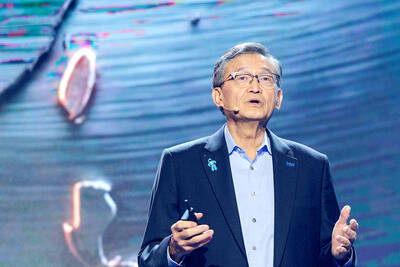
Intel Corp regards Taiwan Semiconductor Manufacturing Co (TSMC, 台積電) as a longstanding partner, as the US chipmaker would continue outsourcing production of advanced chips to TSMC, Intel chief executive officer Lip-Bu Tan (陳立武) said yesterday. “I don’t look at people as competitors. I look at the collaboration... Nvidia is also, you know, a good friend,” Tan told a news conference following his keynote speech at the Computex trade show in Taipei. “It’s a very trusted partnership for us... We are a big, top customer for them, and we’re going to continue doing that,” he said, referring to TSMC, the world’s largest foundry

Artificial intelligence (AI) agents would supplant smartphones as the center of people’s digital lives, fundamentally reshaping personal devices and driving a major computing upgrade cycle, Qualcomm Inc CEO Cristiano Amon said yesterday. In his keynote speech for this year’s Computex trade show in Taipei, Amon said that the rise of "agentic AI" — AI systems capable of reasoning, planning and carrying out tasks autonomously — would transform how people interact with technology across phones, PCs, vehicles and wearable devices. Describing the technology as the next major evolution in computing, Amon said that "2026 is the year of agents.” For decades, smartphones have sat


 RSS
RSS