


The newly appointed head of the Council of Agriculture needs to focus on strengthening marketing of the nation's farming products overseas after he takes up his post next week, pundits said yesterday.
"With a lifelong career in the agricultural sector, the new agriculture council head -- Lee Chin-lung (
Taiwan's predominance of family farms often lack economies of scale and are inefficient.
"The new chairman will be facing challenges such as how to encourage strategic alliances to upgrade farmers' competitiveness and how to boost agricultural exports," Wu said.
Lee will also continue to work on eliminating non-trade barriers such as quarantine restrictions with Japan and the US, said Yan Jian-sian (顏建賢), secretary-general of Taiwan Agro-Fighters United, an organization composed of farmers' and fishermen's associations.
Japan is the top destination of Taiwan's farm exports, accounting for 33.5 percent, followed by Hong Kong's 24.5 percent and the US' 12.4 percent.
Lee, 55, director of the Bureau of Animal and Plant Health Inspection and Quarantine, was named on Wednesday as new chairman of the agricultural council.
His predecessor, Fan Chen-tsung (
Lee, the third person to take up the post under the Chen Shui-bian (
Taiwan's recent WTO entry, for example, requires that tariffs on agricultural imports be lowered, placing pressure on local farmers.
"Lee has been working in governmental-level agricultural agencies for 23 years," Yan said. "He has a lot of experience in quarantine, technological assistance and agricultural promotion."
"Because farmers generally lack the trade-related experience, Lee is likely to begin working on enlarging potential markets for our agricultural products abroad," he said.
Contributions from the agriculture sector to Taiwan's gross domestic product have been on the decline over the past five decades, dropping from 32.2 percent in 1952 to 1.91 percent last year, according to Ruby Yeh (
In addition, the growth rate of agricultural production has slowed, falling from 7.3 percent in 1961 to minus 1.3 percent last year, Yeh said. Both fruit and vegetable exports are also on the decline, she said.
Taiwan shipped about US$80 million worth of fruit including bananas, lichees, mangoes, pineapples and guava, in 1991, but the figure dropped to US$30 million last year, according to council statistics. Vegetable exports stood at US$34 million in 1991 and slid to US$11 million last year.
To boost exports, Taiwanese farmers need to adopt new marketing strategies, such as conducting surveys of consumption patterns, improving product packaging and developing high value-added products, Yeh said.

Cairo’s new monorail slices across the city skyline, running above the familiar chaos of blaring horns and aging buses’ exhaust fumes that mark rush hour below. The US$4.5 billion monorail, opened this month, is among Egypt’s most prominent new transport projects, part of a debt-funded infrastructure drive criticized for sapping state finances while bringing limited benefits to most of the country’s 109 million people. “It feels like you’re in a different country,” said Ramy Sayed, a restaurant manager, aboard a driverless Innovia 300 train. “No noise, no traffic, we’re not used to this.” The eastern line runs 56km from the bustling middle-class

Taiwanese firms have increased investment in the Philippines in recent years as Manila’s ties with Washington deepen and global supply chains continue to shift away from China, an expert at the Chung-Hua Institution for Economic Research (CIER, 中華經濟研究院) said yesterday. The Philippines had not been among Taiwanese investors’ top choices in Southeast Asia, CIER Taiwan ASEAN Studies Center director Kristy Hsu (徐遵慈) said at a seminar in Taipei. However, Taiwan’s investment in the country has grown significantly since the COVID-19 pandemic, reaching US $257 million last year, a high in recent years, she said. Although Taiwan’s total investment in the Philippines still lags
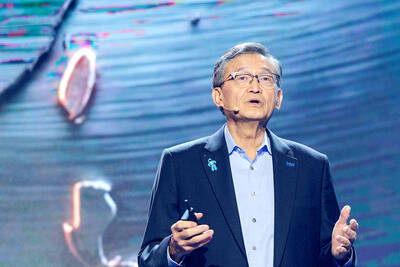
Intel Corp regards Taiwan Semiconductor Manufacturing Co (TSMC, 台積電) as a longstanding partner, as the US chipmaker would continue outsourcing production of advanced chips to TSMC, Intel chief executive officer Lip-Bu Tan (陳立武) said yesterday. “I don’t look at people as competitors. I look at the collaboration... Nvidia is also, you know, a good friend,” Tan told a news conference following his keynote speech at the Computex trade show in Taipei. “It’s a very trusted partnership for us... We are a big, top customer for them, and we’re going to continue doing that,” he said, referring to TSMC, the world’s largest foundry
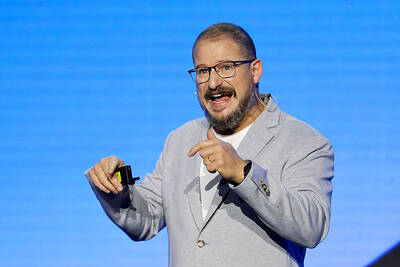
Artificial intelligence (AI) agents would supplant smartphones as the center of people’s digital lives, fundamentally reshaping personal devices and driving a major computing upgrade cycle, Qualcomm Inc CEO Cristiano Amon said yesterday. In his keynote speech for this year’s Computex trade show in Taipei, Amon said that the rise of "agentic AI" — AI systems capable of reasoning, planning and carrying out tasks autonomously — would transform how people interact with technology across phones, PCs, vehicles and wearable devices. Describing the technology as the next major evolution in computing, Amon said that "2026 is the year of agents.” For decades, smartphones have sat


 RSS
RSS