


Seventeen women from Taiwan, China, Singapore, Japan and the Philippines were among Fortune magazine's 50 most influential women in international business, the US-based publication said yesterday.
Four Asian women were ranked in the top 10 -- including Mary Ma, CFO of China's Legend Group Holdings (聯想集團) at five, followed by Ho Ching, executive director of Singapore-based Temasek Holdings, Lien Siaou-Sze, senior vice president of Hewlett-Packard Services Asia Pacific in Singapore in eighth place and Eiko Kono, president of Recruit (Japan) in 10th place.
Marjorie Scardino, CEO of Britain's Pearson, was ranked the number one woman in international business, followed by Belinda Stronach, CEO and president of Canada's Magna International, Anne Lauvergeon, executive chairman of France's Areva and Patricia Barbizet, chief executive of France's Artemis.
Nita Ing (
In compiling the list, Fortune said although power was difficult to quantify, women are indeed a force to be reckoned with in the traditionally male-oriented business arena.
Fortune said however that "female corporate power is still spread unevenly across the business world," adding "many cultural, social and logistical issues conspire against women's development in business, from stereotyping to maternity leave."
Other Asians on the list include Xie Qihua, vice chairman and president of Shanghai Baosteel Group (
Pansy Ho, managing director of Shun Tak Holdings in Hong Kong was in 31st place, while Nina Wang, chairwoman of Chinachem (Hong Kong) came in at 35 followed by Marjorie Yang, chairman and CEO of Hong Kong's Esquel Group.
Teresita Sy-Coson, executive vice president of Philippines-based SM Prime Holdings was in 39th place and Vidya Chabria, chairwoman of Jumbo Group of India took 44th place, while Naina Lal Kidwai, executive vice chairman and CEO of HSBC Securities and Capital Markets in India was listed as the 50th most influential woman.
The Fortune list is widely-watched and in some circles a spot on one of its rankings list is considered highly prestigious.
Shares of contract chipmaker Taiwan Semiconductor Manufacturing Co (TSMC, 台積電) came under pressure yesterday after a report that Apple Inc is looking to shift some orders from the Taiwanese company to Intel Corp. TSMC shares fell NT$55, or 2.4 percent, to close at NT$2,235 on the local main board, Taiwan Stock Exchange data showed. Despite the losses, TSMC is expected to continue to benefit from sound fundamentals, as it maintains a lead over its peers in high-end process development, analysts said. “The selling was a knee-jerk reaction to an Intel-Apple report over the weekend,” Mega International Investment Services Corp (兆豐國際投顧) analyst Alex Huang
Taiwan Semiconductor Manufacturing Co (TSMC, 台積電) is expected to remain Apple Inc’s primary chip manufacturing partner despite reports that Apple could shift some orders to Intel Corp, industry experts said yesterday. The comments came after The Wall Street Journal reported on Friday that Apple and Intel had reached a preliminary agreement following more than a year of negotiations for Intel to manufacture some chips for Apple devices. Taiwan Institute of Economic Research (台灣經濟研究院) economist Arisa Liu (劉佩真) said TSMC’s advanced packaging technologies, including integrated fan-out and chip-on-wafer-on-substrate, remain critical to the performance of Apple’s A-series and M-series chips. She said Intel and Samsung
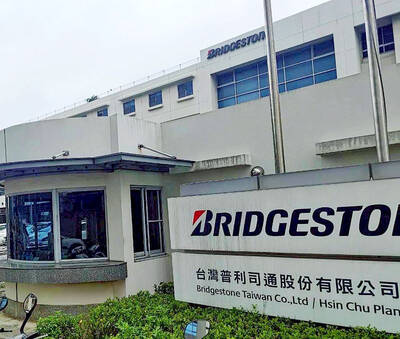
TRANSITION: With the closure, the company would reorganize its Taiwanese unit to a sales and service-focused model, Bridgestone said Bridgestone Corp yesterday announced it would cease manufacturing operations at its tire plant in Hsinchu County’s Hukou Township (湖口), affecting more than 500 workers. Bridgestone Taiwan Co (台灣普利司通) said in a statement that the decision was based on the Tokyo-based tire maker’s adjustments to its global operational strategy and long-term market development considerations. The Taiwanese unit would be reorganized as part of the closure, effective yesterday, and all related production activities would be concluded, the statement said. Under the plan, Bridgestone would continue to deepen its presence in the Taiwanese market, while transitioning to a sales and service-focused business model, it added. The Hsinchu
Taiwan Semiconductor Manufacturing Co (TSMC, 台積電) has approved a capital budget of US$31.28 billion for production expansion to meet long-term development needs during the artificial intelligence (AI) boom. The company’s board meeting yesterday approved the capital appropriation plan for purposes such as the installation of advanced technology capacity and fab construction, the world’s largest contract chipmaker said in a statement. At an earnings conference last month, TSMC forecast that its capital expenditure for this year would be at the higher end of the US$52 billion to US$56 billion range it forecast in January in response to robust demand for 5G, AI and


 RSS
RSS