


The state-owned Chinese Petrole-um Corp (CPC,
The ministry had originally planned to sell 48 percent of its stake in Chinese Petroleum between 1998 and 2002.
In addition, the ministry has calculated an additional, hoped-for gross of NT$56.8 billion in revenue from selling an additional 23 percent of its Chinese Petroleum holdings into its 2003 budget plan.
In other words, the ministry was expecting the state-run oil company to have 71 percent of its shares sold by the end of 2003, Kuo said.
However, the company was unable to set a timetable for share auctions because the Petroleum Law regulating the operations of petroleum corporations was not approved by the legislature until Oct. 11, 2001, according to Kuo.
He said that Chinese Petroleum had also been forced to postpone the share auctions several times in the past few months because the market environment was not favorable.
In the past few months, Chinese Petroleum has tried to find corporate investors from home and abroad. However, negotiations with some international corporations and oil-producing countries in the Middle East have not been successful, he said.
According to Kuo, a corporation intending to be a strategic investor will be interested only if it can obtain 35 percent or more of the shares and a seat on the board.
In related news, Chinese Petroleum may open an office in Beijing to market its fuel and petrochemical products in China, Oilchina.com reported, citing chairman Kuo.
Chinese Petroleum will focus its investments in China and an office in Beijing may also oversee its exploration business on the mainland, Kuo was quoted as saying.
In May, Chinese Petroleum agreed with China National Offshore Oil Corp (CNOOC, 中國海洋石油) to jointly look for oil under the sea between China and Taiwan.
Chinese Petroleum's share of Taiwan's market for fuels such as gasoline and diesel may fall to 50 percent by next year amid intense competition, OilChina.com said, citing Hong Kong Commercial Daily.
Since Formosa Petrochemical Corp (台塑石化) started to produce ethylene in July 1999 and began selling oil-based products in September 2000, Chinese Petroleum has seen its share of Taiwan's market trimmed by around 30 percent. Formosa Petrochemical is part of Formosa Plastics Corp (台塑), Taiwan's largest plastics maker.
Besides the oil-supply market, the two have been engaging in a fierce competition over gas-station business recently. According to the Taiwan Ratings Corp (中華信評), the local partner of Standard & Poor's Ratings Services, Chinese Petroleum's market share of retail gas stations in Taiwan stood at 73 percent in April of this year, versus Formosa Petrochemical's 24 percent.

Taiwanese firms have increased investment in the Philippines in recent years as Manila’s ties with Washington deepen and global supply chains continue to shift away from China, an expert at the Chung-Hua Institution for Economic Research (CIER, 中華經濟研究院) said yesterday. The Philippines had not been among Taiwanese investors’ top choices in Southeast Asia, CIER Taiwan ASEAN Studies Center director Kristy Hsu (徐遵慈) said at a seminar in Taipei. However, Taiwan’s investment in the country has grown significantly since the COVID-19 pandemic, reaching US $257 million last year, a high in recent years, she said. Although Taiwan’s total investment in the Philippines still lags

Intel Corp regards Taiwan Semiconductor Manufacturing Co (TSMC, 台積電) as a longstanding partner, as the US chipmaker would continue outsourcing production of advanced chips to TSMC, Intel chief executive officer Lip-Bu Tan (陳立武) said yesterday. “I don’t look at people as competitors. I look at the collaboration... Nvidia is also, you know, a good friend,” Tan told a news conference following his keynote speech at the Computex trade show in Taipei. “It’s a very trusted partnership for us... We are a big, top customer for them, and we’re going to continue doing that,” he said, referring to TSMC, the world’s largest foundry

Artificial intelligence (AI) agents would supplant smartphones as the center of people’s digital lives, fundamentally reshaping personal devices and driving a major computing upgrade cycle, Qualcomm Inc CEO Cristiano Amon said yesterday. In his keynote speech for this year’s Computex trade show in Taipei, Amon said that the rise of "agentic AI" — AI systems capable of reasoning, planning and carrying out tasks autonomously — would transform how people interact with technology across phones, PCs, vehicles and wearable devices. Describing the technology as the next major evolution in computing, Amon said that "2026 is the year of agents.” For decades, smartphones have sat
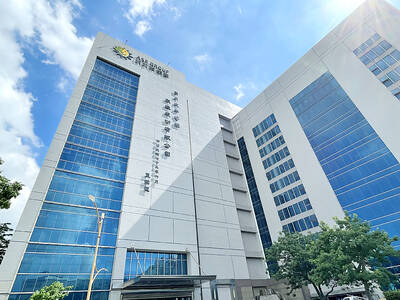
The average pay to employees by ASE Technology Holding Co (日月光投控) was the highest among the companies listed on the local main board last year, while contract chipmaker Taiwan Semiconductor Manufacturing Co (TSMC, 台積電) ranked seventh, the Taiwan Stock Exchange (TWSE) said on Monday. Data compiled by the exchange showed ASE Technology, the world’s largest chip packaging and testing services provider, paid its employees an average of NT$6.28 million (US$199,746) last year, up 40 percent from a year earlier. TSMC, the world’s largest contract chipmaker and the most profitable company in Taiwan, paid its employees NT$4.09 million on average, up


 RSS
RSS