


The Chinese Petroleum Corp (
With an eye on shaving around 15,000 employees from its payroll before privatization, expected sometime in 2005, Chinese Petroleum hopes to farm out around 77 stations around the country to employees, said the executive who requested anonymity.
Chinese Petroleum Chairman Kuo Ching-tsai (郭進財) was yesterday quoted in a Chinese-language newspaper as saying that the move would be a step on the road toward eventual privatization.
The 77 gas stations, which reportedly rack up annual losses of about NT$34 million, would be offered to employees to operate independently, under the Chinese Petroleum banner, the executive said.
While offering its employees a chance to effectively run their own businesses, the executive offered scant details as to how private management would help the loss-making gas stations turn a profit.
He did say that operators would be free of the legal constraints placed upon state-run firms in terms of salaries, budget targets and simple day-to-day operations, which could offer some hope of eventual profitability.
The executive said that a crucial part of the plan was to simply maintain the firm's share of the local market.
Since Formosa Petrochemical Corp (台塑石化) started to produce ethylene in July 1999 and began selling oil-based products in September 2000, Chinese Petroleum has seen its share of Taiwan's market trimmed by around 30 percent.
According to the Taiwan Ratings Corp (中華信評), the local partner of Standard & Poor's Ratings Services, Chinese Petroleum's market share of retail gas stations in Taiwan stood at 73 percent in April of this year, versus Formosa Petrochemical's 24 percent.
"We cannot close any of the stations, as laws governing our operations don't allow us to. In addition, we must try to restrict new entrants in the market," the executive said.
The gas station plan is still being formulated and must first be accepted by the Chinese Petroleum worker's union, the executive added.

Taiwanese firms have increased investment in the Philippines in recent years as Manila’s ties with Washington deepen and global supply chains continue to shift away from China, an expert at the Chung-Hua Institution for Economic Research (CIER, 中華經濟研究院) said yesterday. The Philippines had not been among Taiwanese investors’ top choices in Southeast Asia, CIER Taiwan ASEAN Studies Center director Kristy Hsu (徐遵慈) said at a seminar in Taipei. However, Taiwan’s investment in the country has grown significantly since the COVID-19 pandemic, reaching US $257 million last year, a high in recent years, she said. Although Taiwan’s total investment in the Philippines still lags
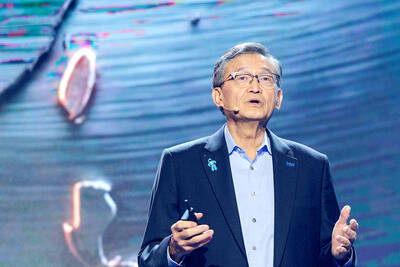
Intel Corp regards Taiwan Semiconductor Manufacturing Co (TSMC, 台積電) as a longstanding partner, as the US chipmaker would continue outsourcing production of advanced chips to TSMC, Intel chief executive officer Lip-Bu Tan (陳立武) said yesterday. “I don’t look at people as competitors. I look at the collaboration... Nvidia is also, you know, a good friend,” Tan told a news conference following his keynote speech at the Computex trade show in Taipei. “It’s a very trusted partnership for us... We are a big, top customer for them, and we’re going to continue doing that,” he said, referring to TSMC, the world’s largest foundry

Artificial intelligence (AI) agents would supplant smartphones as the center of people’s digital lives, fundamentally reshaping personal devices and driving a major computing upgrade cycle, Qualcomm Inc CEO Cristiano Amon said yesterday. In his keynote speech for this year’s Computex trade show in Taipei, Amon said that the rise of "agentic AI" — AI systems capable of reasoning, planning and carrying out tasks autonomously — would transform how people interact with technology across phones, PCs, vehicles and wearable devices. Describing the technology as the next major evolution in computing, Amon said that "2026 is the year of agents.” For decades, smartphones have sat
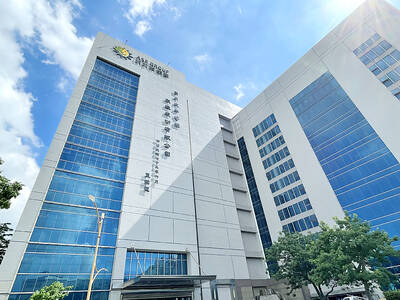
The average pay to employees by ASE Technology Holding Co (日月光投控) was the highest among the companies listed on the local main board last year, while contract chipmaker Taiwan Semiconductor Manufacturing Co (TSMC, 台積電) ranked seventh, the Taiwan Stock Exchange (TWSE) said on Monday. Data compiled by the exchange showed ASE Technology, the world’s largest chip packaging and testing services provider, paid its employees an average of NT$6.28 million (US$199,746) last year, up 40 percent from a year earlier. TSMC, the world’s largest contract chipmaker and the most profitable company in Taiwan, paid its employees NT$4.09 million on average, up


 RSS
RSS