


Outgoing-Minister of Finance Yen Ching-chang's (
Announcing his selection as the nation's first representation, Yen told reporters late Monday evening that the new role -- which was confirmed yesterday by Premier-designate Yu Shyi-kun -- would be a challenge.
According to Chen Tien-chi (
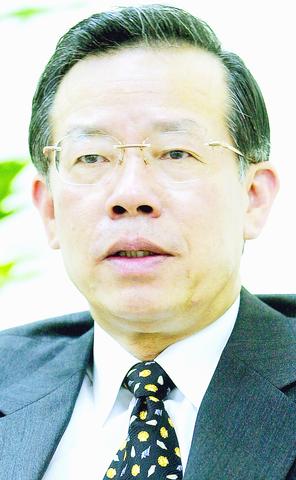
PHOTO: CHEN CHENG-CHANG, TAIPEI TIMES
"The candidate must have prestige, experience in the subject and negotiating skills of a diplomat. As a minister, Yen Ching-chang has that prestige and experience," Chen said.
Yen's status and understanding of GATT -- and subsequently the WTO -- eventually put him at the head of a distinguished list of candidates which included Mainland Affairs Council chairman Tsai Ing-wen (
In a recent interview with the Taipei Times, Yen said that he was "... a pioneer scholar on the GATT in Taiwan. I based my studies in the US particularly on this subject and taught classes on this subject at a university."
"I also served as a government advisor at the time of Taiwan's GATT membership," he said adding that in 1989 he published a book on the GATT's operational proceedures.
And while a good understanding of the WTO is considered a prerequisite, political and diplomatic skills will also be vital for the representative.
"Yen's political skills are very good and his negotiating skills are perfect," said Huang Da-ye (黃達業), a professor of finance at National Taiwan University, who predicted Yen's appointment on a television talk show only hours before it became known.
Indeed according to some it was Yen's political skills in particular that smoothed the way for his appointment to Geneva.
Besides background experience in law, economics and foreign affairs "... the candidate must be trusted by the ruling party and especially the president," said Shea Jia-dong (
Entry into the WTO on Jan. 1 was the most significant step Taiwan has taken in the global community for decades, as it has been barred from participation in international groups under pressure from China.
"It'll be important for Taiwan as it will be the first full membership in a international organization ... Taiwan's representative must be pro-active to represent the nation's interests," said NTU's Chen.
According to one official from the Board of Foreign Trade, the negotiation skills of Taiwan's representative will be vital as tough discussions over agricultural issues will certainly dominate WTO meeting agendas.
How effectively Taiwan's voice is heard will depend upon how pro-active Yen and his team are in Geneva and how well they are able to balance the nation's small political influence with it large global trade presence.
"Taiwan is in the middle of the road as although our trade is big our political influence is little," said Lin Sheung-chung (
To achieve its goals in multilateral discussions, "Taiwan will have to work closely with other missions on many different trade issues. We do have solid support from various influential members," Lin said.
Simply maintaining a voice within the WTO could present a problem, as many in Taiwan -- and indeed also among other members -- are concerned about the role Beijing could play in muffling the efforts of Taipei to play a constructive role in the international community.
But according to Lin, this shouldn't be too much of a problem for Yen and his new team, as "normal WTO business is concentrated in trade-related issues, and for those issues each representative can act in accordance with his own perspective."
"If there are disagreements, so be it," said Lin, adding that the WTO is a consensus-driven organization based on rules and regulations.


Taiwanese firms have increased investment in the Philippines in recent years as Manila’s ties with Washington deepen and global supply chains continue to shift away from China, an expert at the Chung-Hua Institution for Economic Research (CIER, 中華經濟研究院) said yesterday. The Philippines had not been among Taiwanese investors’ top choices in Southeast Asia, CIER Taiwan ASEAN Studies Center director Kristy Hsu (徐遵慈) said at a seminar in Taipei. However, Taiwan’s investment in the country has grown significantly since the COVID-19 pandemic, reaching US $257 million last year, a high in recent years, she said. Although Taiwan’s total investment in the Philippines still lags

Intel Corp regards Taiwan Semiconductor Manufacturing Co (TSMC, 台積電) as a longstanding partner, as the US chipmaker would continue outsourcing production of advanced chips to TSMC, Intel chief executive officer Lip-Bu Tan (陳立武) said yesterday. “I don’t look at people as competitors. I look at the collaboration... Nvidia is also, you know, a good friend,” Tan told a news conference following his keynote speech at the Computex trade show in Taipei. “It’s a very trusted partnership for us... We are a big, top customer for them, and we’re going to continue doing that,” he said, referring to TSMC, the world’s largest foundry
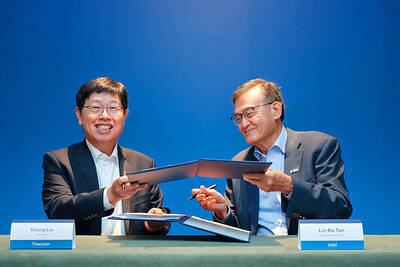
Hon Hai Precision Industry Co (鴻海精密) yesterday said it would work with US chipmaker Intel Corp to jointly develop and deploy next-generation artificial intelligence (AI) infrastructure and intelligent computing platforms in a move to capture booming demand for AI computing systems. Hon Hai, also known as Foxconn Technology Group (富士康), said in a statement that the partnership would combine its global manufacturing scale, system integration expertise and AI data center deployment capabilities with Intel’s strengths in processor architecture, silicon technologies and software ecosystem. The companies said they plan to work on equipment used in AI data centers, including server racks powered by
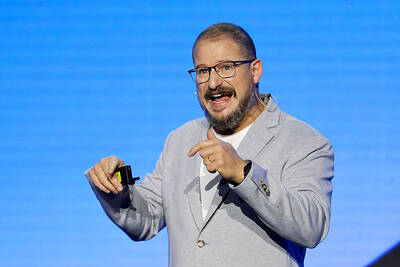
Artificial intelligence (AI) agents would supplant smartphones as the center of people’s digital lives, fundamentally reshaping personal devices and driving a major computing upgrade cycle, Qualcomm Inc CEO Cristiano Amon said yesterday. In his keynote speech for this year’s Computex trade show in Taipei, Amon said that the rise of "agentic AI" — AI systems capable of reasoning, planning and carrying out tasks autonomously — would transform how people interact with technology across phones, PCs, vehicles and wearable devices. Describing the technology as the next major evolution in computing, Amon said that "2026 is the year of agents.” For decades, smartphones have sat


 RSS
RSS