


The state-run China Shipbuilding Corp (
According to a plan by the Commission of National Corpor-ations (國營事業委員會) under the Ministry of Economic Affairs (經濟部), which supervises state-run companies, the privatization of China Shipbuilding is scheduled for the end of June 2001.
"Our estimated deficit was more than NT$4 billion as of the end of last month," said Liou Wu-hsien (
This past June, the government demanded that seven debt-ridden state-run companies, including China Shipbuilding, propose restructuring plans to end their financial problems. The plan proposed by the corporation's board of directors in mid-September includes laying off around half of the company's 4,600 workers and a 35 percent salary reduction for the remaining employees.
The proposals quickly triggered strong protests from labor repre-sentatives, who urged the company's president, Chang Ming-yung (
As a result, Chang tendered his resignation with the Ministry of Economic Affairs last week, along with the company's chairman, Yu Chen-nan (
"The reconstruction plan should encourage winning shipbuilding contracts, including larger projects, rather than slashing salaries and laying off workers in an effort to turn around the company's debt problems," said Chang Chien-chang (張健長), chairman of the labor union that represents the company's workers.
"The reconstruction plan will be reviewed by the board after the appointment of the new president, which is expected to happen soon," Liou said.
He insisted that the company's debt crisis was due to the world's sluggish shipbuilding market, which has seen a 30 percent to 50 percent drop in ship prices and strong competition from Japan, South Korea and China. These countries compete by taking advantage of their established peripheral industries -- which Taiwan lacks -- to support their shipbuilders.
In the past few years, 70 percent of China Shipbuilding's orders for merchant ships, the company's major product, have come from Denmark, Germany, Greece, Norway and France.
The company's revenue in 1995 was NT$19.8 billion, down from NT$22 billion in 1999.
"We hope that the government can let China Shipbuilding make more warships for the Taiwan Navy instead of buying them from abroad," Liou said.
The company has made ammunition replacement ships, landing ships and missile craft for the Taiwan Navy, including eight Perry-class frigates.
Economists say that the primary question comes down to whether Taiwan's shipbuilding industry will remain competitive enough in the future to warrant being maintained.
"Even if China Shipbuilding can find a new buyer, it is still questionable as to whether the company would agree to keep all its current employees," said Chang Ching-hsi (張清溪) from National Taiwan University. "It does not make economic sense for a state-run company that cannot make a profit to be subsidized at great cost to the taxpayers, just to maintain an unneeded workforce," Chang said.
"It is not necessary to sustain an ailing company which may be difficult to revive, unless there are national policy considerations," said Weng Yung-ho (
Shares of contract chipmaker Taiwan Semiconductor Manufacturing Co (TSMC, 台積電) came under pressure yesterday after a report that Apple Inc is looking to shift some orders from the Taiwanese company to Intel Corp. TSMC shares fell NT$55, or 2.4 percent, to close at NT$2,235 on the local main board, Taiwan Stock Exchange data showed. Despite the losses, TSMC is expected to continue to benefit from sound fundamentals, as it maintains a lead over its peers in high-end process development, analysts said. “The selling was a knee-jerk reaction to an Intel-Apple report over the weekend,” Mega International Investment Services Corp (兆豐國際投顧) analyst Alex Huang
Taiwan Semiconductor Manufacturing Co (TSMC, 台積電) is expected to remain Apple Inc’s primary chip manufacturing partner despite reports that Apple could shift some orders to Intel Corp, industry experts said yesterday. The comments came after The Wall Street Journal reported on Friday that Apple and Intel had reached a preliminary agreement following more than a year of negotiations for Intel to manufacture some chips for Apple devices. Taiwan Institute of Economic Research (台灣經濟研究院) economist Arisa Liu (劉佩真) said TSMC’s advanced packaging technologies, including integrated fan-out and chip-on-wafer-on-substrate, remain critical to the performance of Apple’s A-series and M-series chips. She said Intel and Samsung
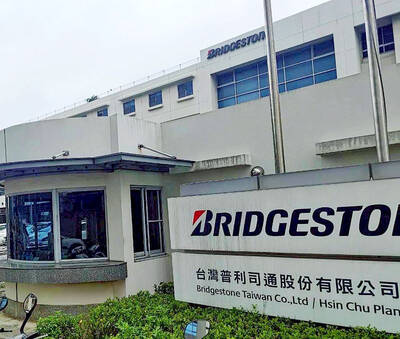
TRANSITION: With the closure, the company would reorganize its Taiwanese unit to a sales and service-focused model, Bridgestone said Bridgestone Corp yesterday announced it would cease manufacturing operations at its tire plant in Hsinchu County’s Hukou Township (湖口), affecting more than 500 workers. Bridgestone Taiwan Co (台灣普利司通) said in a statement that the decision was based on the Tokyo-based tire maker’s adjustments to its global operational strategy and long-term market development considerations. The Taiwanese unit would be reorganized as part of the closure, effective yesterday, and all related production activities would be concluded, the statement said. Under the plan, Bridgestone would continue to deepen its presence in the Taiwanese market, while transitioning to a sales and service-focused business model, it added. The Hsinchu
Taiwan Semiconductor Manufacturing Co (TSMC, 台積電) has approved a capital budget of US$31.28 billion for production expansion to meet long-term development needs during the artificial intelligence (AI) boom. The company’s board meeting yesterday approved the capital appropriation plan for purposes such as the installation of advanced technology capacity and fab construction, the world’s largest contract chipmaker said in a statement. At an earnings conference last month, TSMC forecast that its capital expenditure for this year would be at the higher end of the US$52 billion to US$56 billion range it forecast in January in response to robust demand for 5G, AI and


 RSS
RSS