


Workers at two mines owned by Chile’s Codelco company, the world’s biggest copper mining concern, went on strike on Monday demanding higher pay and better work benefits.
Miners at the Chuquicamata and Mina Sur mines, which together account for 4 percent of the world’s copper production, are calling for a 7.5 percent pay hike as copper prices hit a 17-month peak at more than US$7,500 per tonne.
Analysts said copper prices were sent higher by the strike, amid fears that market supply of the commodity will become tighter.
Both mines belong to Codelco, the state-owned National Copper Corporation of Chile, which produces about 1.6 million tonnes of copper per year and employs about 5,600 workers.
About a third of the unionized miners failed to show up when their shifts began at 5am on Monday.
Union leaders said 95 percent of the work force at the two mines joined the strike.
“From the start of the day, we’ve been monitoring the general situation and it is peaceful,” Codelco human resources chief Humberto Fernandois told reporters.
Codelco said it had contingency plans to cope with the strike, but offered no details. The company later made a new offer to workers, raising its proposed wage hike from 3.8 percent to 4 percent and increasing a bonus payment in a bid to end the strike.
Union leader Hernan Guerrero said the offer would be discussed at an emergency meeting of the rank and file, who would vote on it yesterday.
The government regretted the strike action in one of the treasury’s biggest revenue-generating sectors.
“We did everything possible to avoid it, but it could not be done. This is not good for the country,” Chilean President Michelle Bachelet said as the strike got under way.
The miners’ demands for more concessions come as the price of copper, which fell significantly during the global economic crisis, has jumped in recent months amid renewed demand from China, the world’s biggest copper consumer.
Copper prices have rocketed by more than 130 percent since early last year, driven by signs of global economic recovery after the steep worldwide downturn.
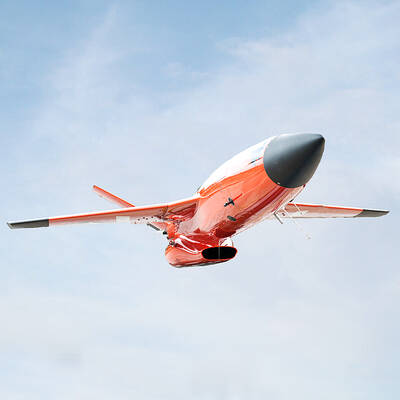
The Chien Feng IV (勁蜂, Mighty Hornet) loitering munition is on track to enter flight tests next month in connection with potential adoption by Taiwanese and US armed forces, a government source said yesterday. The kamikaze drone, which boasts a range of 1,000km, debuted at the Taipei Aerospace and Defense Technology Exhibition in September, the official said on condition of anonymity. The Chungshan Institute of Science and Technology and US-based Kratos Defense jointly developed the platform by leveraging the engine and airframe of the latter’s MQM-178 Firejet target drone, they said. The uncrewed aerial vehicle is designed to utilize an artificial intelligence computer
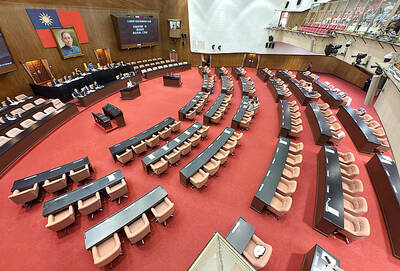
The Chinese Nationalist Party (KMT) caucus yesterday decided to shelve proposed legislation that would give elected officials full control over their stipends, saying it would wait for a consensus to be reached before acting. KMT Legislator Chen Yu-jen (陳玉珍) last week proposed amendments to the Organic Act of the Legislative Yuan (立法院組織法) and the Regulations on Allowances for Elected Representatives and Subsidies for Village Chiefs (地方民意代表費用支給及村里長事務補助費補助條例), which would give legislators and councilors the freedom to use their allowances without providing invoices for reimbursement. The proposal immediately drew criticism, amid reports that several legislators face possible charges of embezzling fees intended to pay

REQUIREMENTS: The US defense secretary must submit a Taiwan security assistance road map and an appraisal of Washington’s ability to respond to Indo-Pacific conflict The US Congress has released a new draft of the National Defense Authorization Act (NDAA), which includes up to US$1 billion in funding for Taiwan-related security cooperation next year. The version published on Sunday by US House of Representatives Speaker Mike Johnson removed earlier language that would have invited Taiwan to participate in the US-led Rim of the Pacific Exercise (RIMPAC). A statement on Johnson’s Web page said the NDAA “enhances U.S. defense initiatives in the Indo-Pacific to bolster Taiwan’s defense and support Indo-Pacific allies.” The bill would require the US secretary of defense to “enable fielding of uncrewed and anti-uncrewed systems capabilities”
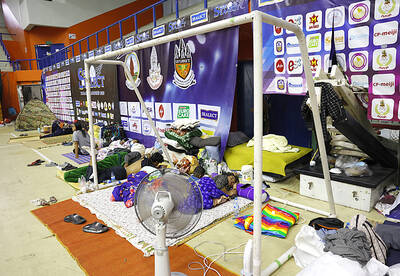
Renewed border fighting between Thailand and Cambodia showed no signs of abating yesterday, leaving hundreds of thousands of displaced people in both countries living in strained conditions as more flooded into temporary shelters. Reporters on the Thai side of the border heard sounds of outgoing, indirect fire yesterday. About 400,000 people have been evacuated from affected areas in Thailand and about 700 schools closed while fighting was ongoing in four border provinces, said Thai Rear Admiral Surasant Kongsiri, a spokesman for the military. Cambodia evacuated more than 127,000 villagers and closed hundreds of schools, the Thai Ministry of Defense said. Thailand’s military announced that


 RSS
RSS