


Executives at Britain’s top companies saw their basic salaries rise 10 percent last year, despite the onset of the worst global recession in decades in which their companies lost almost a third of their value.
The Guardian’s annual survey of boardroom pay reveals that the full and part-time directors of the FTSE 100, the premier league of British business, shared between them more than £1 billion (US$1.66 billion).
Bonus payouts were lower, but the basic salary hikes were more than three times the 3.1 percent average pay rise for ordinary workers in the private sector. The big rise in directors’ basic pay — more than double the rate of inflation last year — came as many of their companies were imposing pay freezes on staff and starting huge redundancy programmes to slash costs.
The Guardian data also shows that a coterie of elite bosses at the helm of multinational corporations are seeing their overall pay packets soar ever higher. The 10 most highly paid executives earned a combined £170 million last year — up from £140 million in 2007. Five years ago, the top 10 banked some £70 million.
The UK Liberal Democrat party’s Treasury spokesman, Vince Cable, said: “The Guardian’s analysis shows the breathtaking cynicism involved in a lot of executive pay deals, which are unrelated to either personal or corporate performance and involve people who are very well off helping themselves to larger salaries when private sector wages in many companies are being cut.”
The stealth increases in basic pay took much of the sting out of falls in bonuses tied to the performances of their companies. Overall pay for directors of FTSE companies, including bonuses, fell by an average of 5 percent.
The average chief executive of a blue-chip firm now earns a basic salary of £791,000. However, adding bonus payments, share awards and the value of perks ranging from cars and drivers to school fees and dental work, the average pay package rises dramatically. Nearly a quarter of FTSE chief executives received total pay packages last year in excess of £5 million, and 22 directors now have basic salaries of more than £1 million.
The survey is likely to spark renewed calls for shareholders to take a tougher line to control boardroom pay. Earlier this year, Financial Services Secretary Lord Paul Myners accused shareholders of behaving like “absentee landlords.”
In the wake of the banking crisis, there has been a wave of shareholder revolts over directors’ remuneration. But even if investors vote against over-generous boardroom payouts, companies are not obliged to take their views into account.
“The recession has done nothing to stop the gap between top directors and the rest of their staff getting wider every year,” said Brendan Barber, general secretary of the Trade Union Congress.
“It is even more offensive when the Institute of Directors has called for spending cuts that would hit pensioners, the poor and low-paid public sector staff. We’ve already had the 1980s-style recession, it looks depressingly like we are going back to 1980s greed-is-good politics, too,” Barber said.
The highest paid boss last year was Bart Becht, the CEO of Reckitt Benckiser, whose brands include Harpic, Veet and Strepsils. He was rewarded with £36.8 million in pay, bonuses, perks and share incentive schemes. Becht, 53, a regular feature in the upper echelons of the annual Guardian survey, earned more than £80 million in the last three years.
The highest paid woman was Cynthia Carroll, the head of mining giant Anglo American. The multinational also owns a big stake in the De Beers diamond business. Carroll, a 52-year-old American, earned a basic salary of more than £1 million last year, but benefits, bonus payments and share awards took her total payout to nearly £4 million.
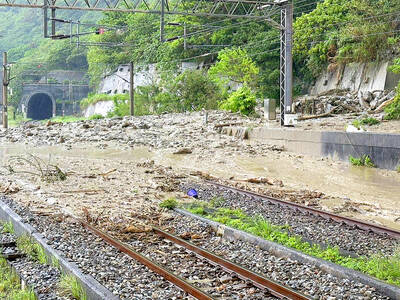
ROLLER-COASTER RIDE: More than five earthquakes ranging from magnitude 4.4 to 5.5 on the Richter scale shook eastern Taiwan in rapid succession yesterday afternoon Back-to-back weather fronts are forecast to hit Taiwan this week, resulting in rain across the nation in the coming days, the Central Weather Administration said yesterday, as it also warned residents in mountainous regions to be wary of landslides and rockfalls. As the first front approached, sporadic rainfall began in central and northern parts of Taiwan yesterday, the agency said, adding that rain is forecast to intensify in those regions today, while brief showers would also affect other parts of the nation. A second weather system is forecast to arrive on Thursday, bringing additional rain to the whole nation until Sunday, it

LANDSLIDES POSSIBLE: The agency advised the public to avoid visiting mountainous regions due to more expected aftershocks and rainfall from a series of weather fronts A series of earthquakes over the past few days were likely aftershocks of the April 3 earthquake in Hualien County, with further aftershocks to be expected for up to a year, the Central Weather Administration (CWA) said yesterday. Based on the nation’s experience after the quake on Sept. 21, 1999, more aftershocks are possible over the next six months to a year, the agency said. A total of 103 earthquakes of magnitude 4 on the local magnitude scale or higher hit Hualien County from 5:08pm on Monday to 10:27am yesterday, with 27 of them exceeding magnitude 5. They included two, of magnitude
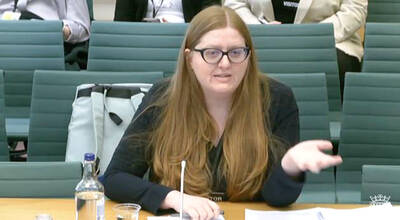
CONDITIONAL: The PRC imposes secret requirements that the funding it provides cannot be spent in states with diplomatic relations with Taiwan, Emma Reilly said China has been bribing UN officials to obtain “special benefits” and to block funding from countries that have diplomatic ties with Taiwan, a former UN employee told the British House of Commons on Tuesday. At a House of Commons Foreign Affairs Committee hearing into “international relations within the multilateral system,” former Office of the UN High Commissioner for Human Rights (OHCHR) employee Emma Reilly said in a written statement that “Beijing paid bribes to the two successive Presidents of the [UN] General Assembly” during the two-year negotiation of the Sustainable Development Goals. Another way China exercises influence within the UN Secretariat is
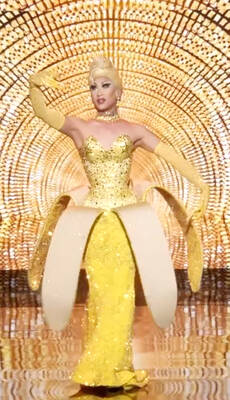
Taiwan’s first drag queen to compete on the internationally acclaimed RuPaul’s Drag Race, Nymphia Wind (妮妃雅), was on Friday crowned the “Next Drag Superstar.” Dressed in a sparkling banana dress, Nymphia Wind swept onto the stage for the final, and stole the show. “Taiwan this is for you,” she said right after show host RuPaul announced her as the winner. “To those who feel like they don’t belong, just remember to live fearlessly and to live their truth,” she said on stage. One of the frontrunners for the past 15 episodes, the 28-year-old breezed through to the final after weeks of showcasing her unique


 RSS
RSS