


The world’s airlines are expected to lose US$9 billion this year, industry body International Air Transport Association (IATA) said yesterday in a drastic reassessment of the worst slump the industry has ever faced.
The forecast is almost double an estimate made just three months ago, making the crisis worse than the aftermath of the Sept. 11, 2001, attacks in the US, the IATA said.
Combined with the revised estimate that it lost US$10.4 billion last year, the industry now looks set to lose almost US$20 billion over two years.
“There is no modern precedent for today’s economic meltdown. The ground has shifted. Our industry has been shaken,” IATA director-general Giovanni Bisignani told the association’s annual meeting.
Despite lower fuel charges, airlines will suffer from a drop of 8 percent in passenger demand and 17 percent in cargo demand this year as the global economy grapples with its worst recession since the 1930s.
Even an economic recovery could complicate things if “greedy speculation” sends oil prices rising again, Bisignani said.
Carriers in all regions are expected to report losses this year, with Asia-Pacific airlines — once the brightest spot of the industry — accounting for more than a third of the global total loss at US$3.3 billion.
“This is the most difficult situation that the industry has faced,” Bisignani said, calling for greater liberalization in the industry.
In March, IATA had forecast US$4.7 billion in losses for this year, but it was forced to drastically raise the figure and revise last year’s industry losses up to US$10.4 billion, from an earlier estimate of US$8.5 billion.
Bisignani said the impact of the global financial and economic crisis was worse than that of the Sept. 11 attacks on the US.
After the attacks, global airline revenues tumbled by 7 percent and it took three years for the industry to recover despite a strong global economy, he said.
“This time we face a 15 percent drop — a loss of revenues of US$80 billion — in the middle of a global recession,” he said.
The industry is expected to generate US$448 billion in revenue this year, down from US$528 billion last year.
“Our future depends on a drastic reshaping by partners, governments and industry. We cannot bear the cost of government micro-regulation, crazy taxation and partners abusing their monopoly power,” the IATA head said.
Qatar Airways CEO Akbar al-Baker played down the forecast.
“Where did he get the figures? He is just estimating,” he said, adding that his company was still determined to order 200 new planes from this year to 2017 in addition to the 84 now in its modern fleet.
But Shukor Yusof, an aviation analyst with Standard and Poor’s Equity Research in Singapore, said “my own feeling is that it could even get worse, depending on how the next six months pan out.”
“Nothing can shake up the industry more than by looking at those numbers,” said Shukor, who was attending the IATA conference.
Despite the grim numbers, IATA said its members were still committed to controlling emissions, for which the fuel-guzzling industry has been criticized by environmentalists, even if the industry returns to growth.
“Two years ago we set a vision to achieve carbon-neutral growth on the way to a carbon-free future,” Bisignani said. “Today we have taken a major step forward by committing to a global cap on our emissions in 2020. After this date, aviation’s emissions will not grow even as demand increases.”

PROVOCATIVE: Chinese Deputy Ambassador to the UN Sun Lei accused Japan of sending military vessels to deliberately provoke tensions in the Taiwan Strait China denounced remarks by Japan and the EU about the South China Sea at a UN Security Council meeting on Monday, and accused Tokyo of provocative behavior in the Taiwan Strait and planning military expansion. Ayano Kunimitsu, a Japanese vice foreign minister, told the Council meeting on maritime security that Tokyo was seriously concerned about the situation in the East China and South China seas, and reiterated Japan’s opposition to any attempt to change the “status quo” by force, and obstruction of freedom of navigation and overflight. Stavros Lambrinidis, head of the EU delegation to the UN, also highlighted South China Sea
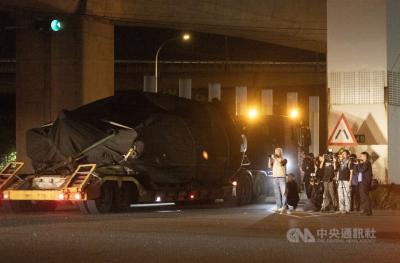
The final batch of 28 M1A2T Abrams tanks purchased from the US arrived at Taipei Port last night and were transported to the Armor Training Command in Hsinchu County’s Hukou Township (湖口), completing the military’s multi-year procurement of 108 of the tanks. Starting at 12:10am today, reporters observed more than a dozen civilian flatbed trailers departing from Taipei Port, each carrying an M1A2T tank covered with black waterproof tarps. Escorted by military vehicles, the convoy traveled via the West Coast Expressway to the Armor Training Command, with police implementing traffic control. The army operates about 1,000 tanks, including CM-11 Brave Tiger
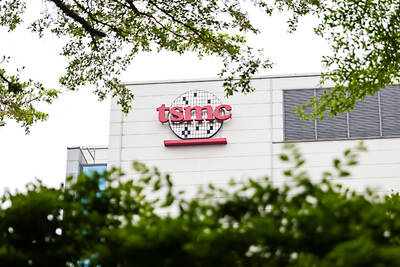
Taiwan Semiconductor Manufacturing Co (TSMC, 台積電), the world’s largest contract chipmaker, said it expects its 2-nanometer (2nm) chip capacity to grow at a compound annual rate of 70 percent from this year to 2028. The projection comes as five fabs begin volume production of 2-nanometer chips this year — two in Hsinchu and three in Kaohsiung — TSMC senior vice president and deputy cochief operating officer Cliff Hou (侯永清) said at the company’s annual technology symposium in Silicon Valley, California, last week. Output in the first year of 2-nanometer production, which began in the fourth quarter of last year, is expected to
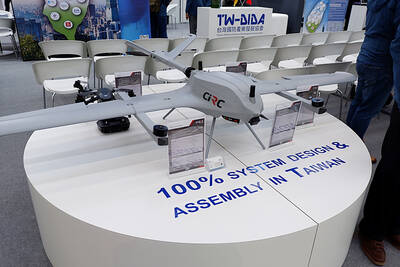
Taiwan’s drone exports surged past US$100 million in the first quarter, exceeding last year’s full-year total, with the Czech Republic emerging as the largest buyer, the Ministry of Economic Affairs said. Exports of complete drones reached US$115.85 million in the period, about 1.2 times the total recorded for all of last year, the ministry said in a report. Exports to the Czech Republic accounted for about US$100 million, far outpacing other markets. Poland, last year’s top destination, recorded about US$11.75 million in the first quarter. Taiwan’s drone exports have expanded rapidly in the past few years, with last year’s total


 RSS
RSS