


With the recession in full swing, many Americans are returning to their roots — literally — cultivating vegetables in their backyards to squeeze every penny out of their food budget.
Industry surveys show double-digit growth in the number of home gardeners this year and mail-order companies report such a tremendous demand that some have run out of seeds for basic vegetables such as onions, tomatoes and peppers.
“People’s home grocery budget got absolutely shredded and now we’ve seen just this dramatic increase in the demand for our vegetable seeds. We’re selling out,” said George Ball, CEO of Burpee Seeds, the largest mail-order seed company in the US. “I’ve never seen anything like it.”
Gardening advocates, who have long struggled to get the US grubby, have dubbed the newly planted tracts “recession gardens” and hope to shape the interest into a movement similar to the victory gardens of World War II.
Those gardens, modeled after a White House patch planted by Eleanor Roosevelt in 1943, were intended to inspire self-sufficiency, and at their peak supplied 40 percent of the nation’s fresh produce, said Roger Doiron, founding director of Kitchen Gardeners International.
Doiron and several colleagues are petitioning US President Barack Obama to plant a similar garden at the White House as part of his call for a responsible, eco-friendly economic turnaround. Proponents have collected 75,000 signatures on an online petition.
“It’s really part of our history and it’s part of the White House’s history,” Doiron said. “When I found out why it had been done over the course of history and I looked at where we are now, it makes sense again.”
But for many Americans, the appeal of backyard gardening isn’t in its history — it’s in the savings.
The National Gardening Association estimates that a well-maintained vegetable garden yields a US$500 average return per year. A study by Burpee Seeds claims that US$50 spent on gardening supplies can multiply into US$1,250 worth of produce annually.
Doiron spent nine months weighing and recording each vegetable he pulled from his 150m² garden outside Portland, Maine. After counting the final winter leaves of Belgian endive, he found he had saved about US$2,150 by growing produce for his family of five instead of buying it.
Adriana Martinez, an accountant who reduced her grocery bill to US$40 a week by gardening, said there’s peace of mind in knowing where her food comes from. And she said the effort has fostered a sense of community through a neighborhood veggie co-op.
“We’re helping to feed each other and what better time than now?” Martinez said.
A new report by the National Gardening Association predicts a 19 percent increase in home gardening next year, based on spring seed sales data and a telephone survey. One-fifth of respondents said they planned to start a food garden this year and more than half said they were already gardening to save on groceries.
Community gardens nationwide are also seeing a surge of interest.
The waiting list at the 312-plot Long Beach Community Garden has nearly quadrupled — and no one is leaving, said Lonnie Brundage, who runs the garden’s membership list.
“They’re growing for themselves, but you figure if they can use our community garden year-round they can save US$2,000 or US$3,000 or US$4,000 a year,” she said. “It doesn’t take a lot for it to add up.”
Seed companies say this renaissance has rescued their vegetable business after years of drooping sales. Orders for vegetable seeds have skyrocketed, while orders for ornamental flowers are flat or down, said Richard Chamberlin, president of Harris Seeds in Rochester, New York.
Business there has increased 40 percent in the last year, with the most growth among vegetables such as peppers, tomatoes and kitchen herbs that can thrive in small urban plots or patio containers, he said. Harris Seeds recently had to reorder pepper and tomato seeds.
“I think if things were fine, you wouldn’t see people doing this. They’re just too busy,” Chamberlin said. “Gardening for most Americans was a dirty word because it meant work and nobody wanted more work — but that’s changed.”

The Chien Feng IV (勁蜂, Mighty Hornet) loitering munition is on track to enter flight tests next month in connection with potential adoption by Taiwanese and US armed forces, a government source said yesterday. The kamikaze drone, which boasts a range of 1,000km, debuted at the Taipei Aerospace and Defense Technology Exhibition in September, the official said on condition of anonymity. The Chungshan Institute of Science and Technology and US-based Kratos Defense jointly developed the platform by leveraging the engine and airframe of the latter’s MQM-178 Firejet target drone, they said. The uncrewed aerial vehicle is designed to utilize an artificial intelligence computer
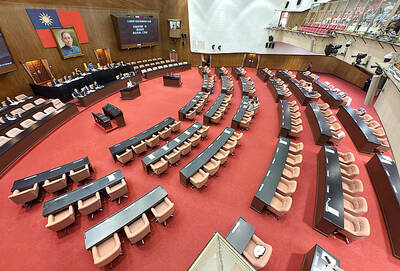
The Chinese Nationalist Party (KMT) caucus yesterday decided to shelve proposed legislation that would give elected officials full control over their stipends, saying it would wait for a consensus to be reached before acting. KMT Legislator Chen Yu-jen (陳玉珍) last week proposed amendments to the Organic Act of the Legislative Yuan (立法院組織法) and the Regulations on Allowances for Elected Representatives and Subsidies for Village Chiefs (地方民意代表費用支給及村里長事務補助費補助條例), which would give legislators and councilors the freedom to use their allowances without providing invoices for reimbursement. The proposal immediately drew criticism, amid reports that several legislators face possible charges of embezzling fees intended to pay

REQUIREMENTS: The US defense secretary must submit a Taiwan security assistance road map and an appraisal of Washington’s ability to respond to Indo-Pacific conflict The US Congress has released a new draft of the National Defense Authorization Act (NDAA), which includes up to US$1 billion in funding for Taiwan-related security cooperation next year. The version published on Sunday by US House of Representatives Speaker Mike Johnson removed earlier language that would have invited Taiwan to participate in the US-led Rim of the Pacific Exercise (RIMPAC). A statement on Johnson’s Web page said the NDAA “enhances U.S. defense initiatives in the Indo-Pacific to bolster Taiwan’s defense and support Indo-Pacific allies.” The bill would require the US secretary of defense to “enable fielding of uncrewed and anti-uncrewed systems capabilities”
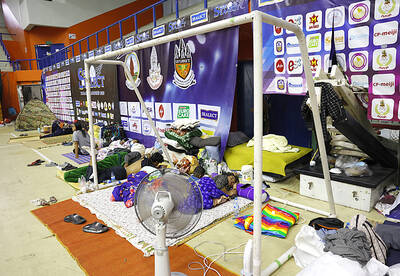
Renewed border fighting between Thailand and Cambodia showed no signs of abating yesterday, leaving hundreds of thousands of displaced people in both countries living in strained conditions as more flooded into temporary shelters. Reporters on the Thai side of the border heard sounds of outgoing, indirect fire yesterday. About 400,000 people have been evacuated from affected areas in Thailand and about 700 schools closed while fighting was ongoing in four border provinces, said Thai Rear Admiral Surasant Kongsiri, a spokesman for the military. Cambodia evacuated more than 127,000 villagers and closed hundreds of schools, the Thai Ministry of Defense said. Thailand’s military announced that


 RSS
RSS