


Cash or credit? For more Americans, who have already maxed out their credit cards or are just trying to manage their spending better in the tough economy, the answer is increasingly the old-fashioned one.
Retailers like Wal-Mart Stores Inc, Target Corp and J.C. Penney Co are noticing a marked shift away from credit cards in favor of cash and debit cards. A big factor is less credit available as major card issuers cut spending limits and raise fees even for customers who pay their bills on time.
The shift ends Americans’ long love affair with credit cards and is one of the changes in consumer behavior that has emerged since the financial meltdown that could depress consumer spending this holiday season and affect shoppers’ habits long afterward.
Particularly during holiday seasons past, shoppers could count on a pile of plastic to give them the extra financing needed to splurge on presents before they had to face the bills in January or later.
But even when the economy recovers and credit loosens up, analysts say Americans — shaped by what could be a deep and long-lasting recession — are likely to stick with buying only what they can afford just as their parents or grandparents did after the Great Depression of the 1930s.
“I think this is a new way of life,” said Robert Smith, of Loves Park, Illinois, who along with his wife has been using cash and debit cards to finance their spending, including vacations, since they paid off their credit card debts in July. “I like to be able to know that we paid for something. I hate monthly payments when you use a credit card.”
Smith, who has four children ages seven to 13 and owns a motivational training company called Drive and Grow Rich, says his business is down 20 percent this year, and since he is saddled with a mortgage, he does not want to get back into debt.
While the credit crunch is teaching consumers to be more “financially prudent,” it’s creating a lot of pain for both consumers and stores, said Curtis Arnold, founder of CreditRatings.com.
One sign of how strapped consumers are for credit — and buying only what they have the cash for — is that for the first time in 17 years, Penney’s has seen swings in spending around payday cycles over the past three months.
That’s common for discounters like Wal-Mart, but a rarity for a mall-based department store — suggesting that Penney’s middle-income customers are feeling the pinch as well. Penney’s president and chief merchandising officer Ken Hicks noted that the chain has not seen swings in spending around payday since about 1991, when the US was entering a recession.
At Wal-Mart, the volatility in spending around payday — a drop in spending in the days before, followed by spending bursts right afterward — has become even more pronounced since September. Chief financial officer Tom Schoewe said that shoppers are now unable to buy even necessities in the few days before payday.
Such swings became more dramatic last fall, but subsided when shoppers received their government rebate checks this past spring.
Eduardo Castro-Wright, president and chief executive of Wal-Mart’s US division, told investors last month that credit card payments as a percentage of total payments fell 7.4 percent so far in the current fiscal year, which ends in January. That’s a big reversal from the robust double-digit growth rates in credit cards over the past three years, he said.
Target executives told investors late last month that it is seeing lower credit card usage among its shoppers for the first time since 2001 to 2003.
At Penney’s, Hicks said that use of the company’s store credit card was flat during the third quarter. The use of credit cards issued by other parties declined by a couple of percentage points as a percentage of overall payment, he noted, while cash was up by the same amount. Hicks said he has not seen a decline in credit card use in five or six years.
Scott Hoyt, senior director of consumer economics at Moody’s Economy.com. said that Federal Reserve data has never shown an annual decline in credit card use, but he acknowledged that there is not any solid payment data. Visa Inc said that debit card growth is coming at the expense of cash and checks versus credit cards. And MasterCard Worldwide said consumers are increasingly paying with plastic — debit or credit — at the expense of cash and check, but did not break out which portion was debit cards.
But many Americans are using cash or debit cards because they are being forced to.
For years, consumers tapped into inflated home equity and used credit cards to finance their spending. Now those spigots are being shut off, and job losses are mounting.

The Chien Feng IV (勁蜂, Mighty Hornet) loitering munition is on track to enter flight tests next month in connection with potential adoption by Taiwanese and US armed forces, a government source said yesterday. The kamikaze drone, which boasts a range of 1,000km, debuted at the Taipei Aerospace and Defense Technology Exhibition in September, the official said on condition of anonymity. The Chungshan Institute of Science and Technology and US-based Kratos Defense jointly developed the platform by leveraging the engine and airframe of the latter’s MQM-178 Firejet target drone, they said. The uncrewed aerial vehicle is designed to utilize an artificial intelligence computer
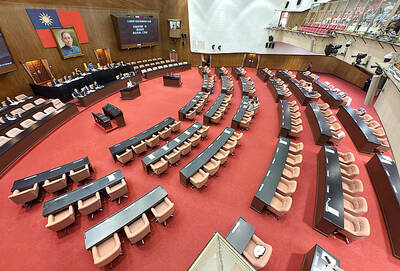
The Chinese Nationalist Party (KMT) caucus yesterday decided to shelve proposed legislation that would give elected officials full control over their stipends, saying it would wait for a consensus to be reached before acting. KMT Legislator Chen Yu-jen (陳玉珍) last week proposed amendments to the Organic Act of the Legislative Yuan (立法院組織法) and the Regulations on Allowances for Elected Representatives and Subsidies for Village Chiefs (地方民意代表費用支給及村里長事務補助費補助條例), which would give legislators and councilors the freedom to use their allowances without providing invoices for reimbursement. The proposal immediately drew criticism, amid reports that several legislators face possible charges of embezzling fees intended to pay
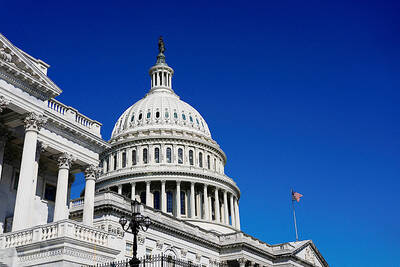
REQUIREMENTS: The US defense secretary must submit a Taiwan security assistance road map and an appraisal of Washington’s ability to respond to Indo-Pacific conflict The US Congress has released a new draft of the National Defense Authorization Act (NDAA), which includes up to US$1 billion in funding for Taiwan-related security cooperation next year. The version published on Sunday by US House of Representatives Speaker Mike Johnson removed earlier language that would have invited Taiwan to participate in the US-led Rim of the Pacific Exercise (RIMPAC). A statement on Johnson’s Web page said the NDAA “enhances U.S. defense initiatives in the Indo-Pacific to bolster Taiwan’s defense and support Indo-Pacific allies.” The bill would require the US secretary of defense to “enable fielding of uncrewed and anti-uncrewed systems capabilities”

Renewed border fighting between Thailand and Cambodia showed no signs of abating yesterday, leaving hundreds of thousands of displaced people in both countries living in strained conditions as more flooded into temporary shelters. Reporters on the Thai side of the border heard sounds of outgoing, indirect fire yesterday. About 400,000 people have been evacuated from affected areas in Thailand and about 700 schools closed while fighting was ongoing in four border provinces, said Thai Rear Admiral Surasant Kongsiri, a spokesman for the military. Cambodia evacuated more than 127,000 villagers and closed hundreds of schools, the Thai Ministry of Defense said. Thailand’s military announced that


 RSS
RSS