


Five of the world’s top architects will compete to draft a master plan for a US$28 billion international business hub aimed at transforming the South Korean capital, developers said yesterday.
“This is one of the biggest projects we have ever done,” said Nina Libeskind of the New York-based Studio Daniel Libeskind.
“It is the soul of Seoul,” she told a press conference about the planned 57-hectare development in Yongsan district, close to the city center.
A private consortium, including top business group Samsung, plans by 2016 to develop the railway and warehouse area into a “Dreamhub” that comprises offices, a hotel, residential units and entertainment and cultural centers.
The riverside site will link to a public park to be developed on the location of the current US army base, which is scheduled to move in two years.
The contract is to design a landmark tower and create a master plan for the development, almost half of which should be parks or roads.
Developers and architects said they see the project as a chance to give the architecturally undistinguished city of 14 million people a new heart.
Much of Seoul was destroyed in the 1950-1953 Korean War and redeveloped hastily during the economic boom which began in the 1960s.
“For the last several decades nobody even thought about the quality of space, the quality of the city, because our growth was too fast,” said Rah Woo-chun of Korean architectural firm Samoo, which is coordinating the project.
“This is the right time,” to do so, Rah said, adding that the “Dreamhub” could be a core for South Korea’s future development.
While the nation built its economic miracle on state-backed industrial conglomerates, the government says it must now become more of a high-tech and knowledge-based economy.
It hopes to make Seoul the financial hub of Northeast Asia.
“This is all about belief and optimism for the future ... and I think it’s very exciting,” Libeskind said.
Andy Bow of Britain’s Foster and Partners said central business districts can be sterile areas after office hours.
“It has to be the answer, to build more densely in the center and to stop the spread out into the suburbs,” he said.
US firms Asymptote, Jerde and Skidmore, Owings and Merrill are also taking part in the contest, with the winner to be announced in November. Construction work will start in 2011.
All five competitors have been involved in major developments worldwide.
Daniel Libeskind is the master planner behind the redevelopment of New York’s World Trade Center site, a project in which Foster and Partners are also involved.
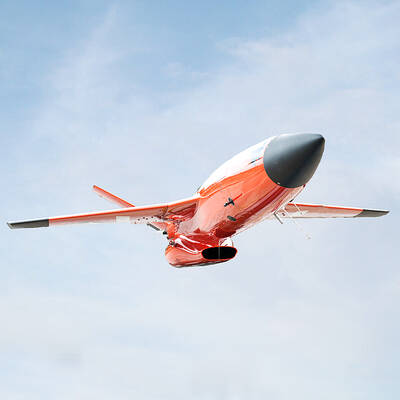
The Chien Feng IV (勁蜂, Mighty Hornet) loitering munition is on track to enter flight tests next month in connection with potential adoption by Taiwanese and US armed forces, a government source said yesterday. The kamikaze drone, which boasts a range of 1,000km, debuted at the Taipei Aerospace and Defense Technology Exhibition in September, the official said on condition of anonymity. The Chungshan Institute of Science and Technology and US-based Kratos Defense jointly developed the platform by leveraging the engine and airframe of the latter’s MQM-178 Firejet target drone, they said. The uncrewed aerial vehicle is designed to utilize an artificial intelligence computer
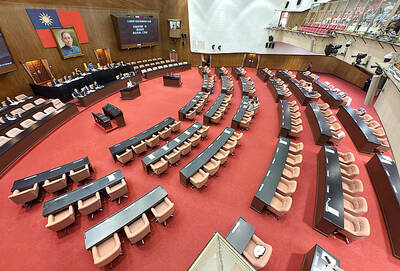
The Chinese Nationalist Party (KMT) caucus yesterday decided to shelve proposed legislation that would give elected officials full control over their stipends, saying it would wait for a consensus to be reached before acting. KMT Legislator Chen Yu-jen (陳玉珍) last week proposed amendments to the Organic Act of the Legislative Yuan (立法院組織法) and the Regulations on Allowances for Elected Representatives and Subsidies for Village Chiefs (地方民意代表費用支給及村里長事務補助費補助條例), which would give legislators and councilors the freedom to use their allowances without providing invoices for reimbursement. The proposal immediately drew criticism, amid reports that several legislators face possible charges of embezzling fees intended to pay
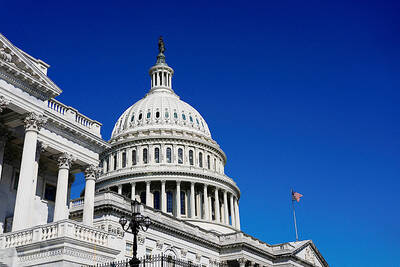
REQUIREMENTS: The US defense secretary must submit a Taiwan security assistance road map and an appraisal of Washington’s ability to respond to Indo-Pacific conflict The US Congress has released a new draft of the National Defense Authorization Act (NDAA), which includes up to US$1 billion in funding for Taiwan-related security cooperation next year. The version published on Sunday by US House of Representatives Speaker Mike Johnson removed earlier language that would have invited Taiwan to participate in the US-led Rim of the Pacific Exercise (RIMPAC). A statement on Johnson’s Web page said the NDAA “enhances U.S. defense initiatives in the Indo-Pacific to bolster Taiwan’s defense and support Indo-Pacific allies.” The bill would require the US secretary of defense to “enable fielding of uncrewed and anti-uncrewed systems capabilities”
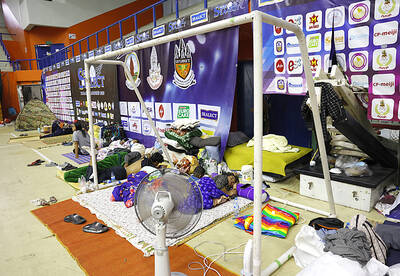
Renewed border fighting between Thailand and Cambodia showed no signs of abating yesterday, leaving hundreds of thousands of displaced people in both countries living in strained conditions as more flooded into temporary shelters. Reporters on the Thai side of the border heard sounds of outgoing, indirect fire yesterday. About 400,000 people have been evacuated from affected areas in Thailand and about 700 schools closed while fighting was ongoing in four border provinces, said Thai Rear Admiral Surasant Kongsiri, a spokesman for the military. Cambodia evacuated more than 127,000 villagers and closed hundreds of schools, the Thai Ministry of Defense said. Thailand’s military announced that


 RSS
RSS