


The US stock market is coming to grips with new worries about inflation that threaten to keep the mood cautious in the coming weeks, analysts say.
The latest hawkish comments from US Federal Reserve Chairman Ben Bernanke and his colleagues have taken markets by surprise after a long period of worry about economic weakness.
Now, some traders fear a boost in interest rates is on the way in the near future even though the US economy is still sputtering.
The past week saw volatile trading on Wall Street with the main indexes mixed.
The Dow Jones Industrial Average of 30 blue-chip shares rose 0.79 percent in the week to Friday to 12,307.35, while the Standard & Poor’s 500 broad-market index was essentially flat for the week at 1,360.03.
The tech-heavy NASDAQ composite fell 0.81 percent on the week to 2,454.50.
Bernanke signaled in the past week that he would work to keep price expectations in check to avert the kind of inflation spiral that central banks fear.
But he also said that “the risk that the economy has entered a substantial downturn appears to have diminished over the past month or so.”
Some analysts say Bernanke is trying to “jawbone” the market to keep inflation expectations in check without actually boosting rates.
Douglas Porter, economist at BMO Capital Markets, said in a note to clients that the market is coming to grips with a “profound shift in focus from weak growth (the frying pan) to rising inflation (the fire) among both global policymakers and markets.”
A sharp jump in retail sales in May meanwhile helped ease fears about a consumer meltdown. Sales were up 1 percent as Americans boosted spending with the help of tax rebates from the government’s economic stimulus.
But Ethan Harris at Lehman Brothers said he does not believe the Fed is ready to start hiking interest rates.
“Hawkish Fed commentary combined with further evidence that the economy is avoiding a major recession has caused a repricing of Fed expectations in the markets,” he said. “We believe any hike should be seen as a gesture to the markets rather than the start of a sustained tightening cycle. We continue to believe the Fed is more likely to cut than raise rates early next year.”
Philip Orlando at Federated Investors said the stock market may be able to make headway despite the muddled outlook.
“We believe that the economic environment is much more stable, earnings visibility has improved somewhat for stocks, the political environment is less uncertain now,” he said.
Bonds fell sharply in the past week amid the renewed focus on inflation. The yield on the 10-year Treasury bond jumped sharply to 4.261 percent from 3.938 percent a week earlier and that on the 30-year bond increased to 4.802 percent from 4.650 percent. Yields and prices move in opposite directions.

The Chien Feng IV (勁蜂, Mighty Hornet) loitering munition is on track to enter flight tests next month in connection with potential adoption by Taiwanese and US armed forces, a government source said yesterday. The kamikaze drone, which boasts a range of 1,000km, debuted at the Taipei Aerospace and Defense Technology Exhibition in September, the official said on condition of anonymity. The Chungshan Institute of Science and Technology and US-based Kratos Defense jointly developed the platform by leveraging the engine and airframe of the latter’s MQM-178 Firejet target drone, they said. The uncrewed aerial vehicle is designed to utilize an artificial intelligence computer
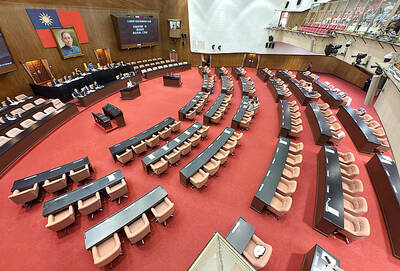
The Chinese Nationalist Party (KMT) caucus yesterday decided to shelve proposed legislation that would give elected officials full control over their stipends, saying it would wait for a consensus to be reached before acting. KMT Legislator Chen Yu-jen (陳玉珍) last week proposed amendments to the Organic Act of the Legislative Yuan (立法院組織法) and the Regulations on Allowances for Elected Representatives and Subsidies for Village Chiefs (地方民意代表費用支給及村里長事務補助費補助條例), which would give legislators and councilors the freedom to use their allowances without providing invoices for reimbursement. The proposal immediately drew criticism, amid reports that several legislators face possible charges of embezzling fees intended to pay
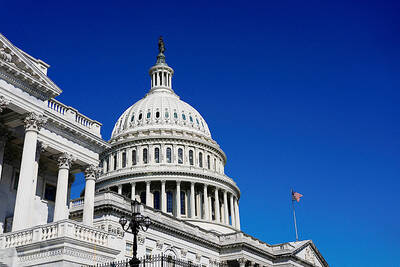
REQUIREMENTS: The US defense secretary must submit a Taiwan security assistance road map and an appraisal of Washington’s ability to respond to Indo-Pacific conflict The US Congress has released a new draft of the National Defense Authorization Act (NDAA), which includes up to US$1 billion in funding for Taiwan-related security cooperation next year. The version published on Sunday by US House of Representatives Speaker Mike Johnson removed earlier language that would have invited Taiwan to participate in the US-led Rim of the Pacific Exercise (RIMPAC). A statement on Johnson’s Web page said the NDAA “enhances U.S. defense initiatives in the Indo-Pacific to bolster Taiwan’s defense and support Indo-Pacific allies.” The bill would require the US secretary of defense to “enable fielding of uncrewed and anti-uncrewed systems capabilities”

Renewed border fighting between Thailand and Cambodia showed no signs of abating yesterday, leaving hundreds of thousands of displaced people in both countries living in strained conditions as more flooded into temporary shelters. Reporters on the Thai side of the border heard sounds of outgoing, indirect fire yesterday. About 400,000 people have been evacuated from affected areas in Thailand and about 700 schools closed while fighting was ongoing in four border provinces, said Thai Rear Admiral Surasant Kongsiri, a spokesman for the military. Cambodia evacuated more than 127,000 villagers and closed hundreds of schools, the Thai Ministry of Defense said. Thailand’s military announced that


 RSS
RSS