


The global cruise industry is putting on a brave face as it sails into seas darkened by a faltering US economy, a weak dollar and record oil prices, major cruise ship operators said at their annual convention.
The triple threat represents serious risks for the industry which has been blessed with dramatic growth over the past decade.
But cruise representatives are confident that the powers of globalization and the opening of new cruise destinations such as Asia and South America can help them weather the storm.
"All the information we hear and read today is negative," Gerald Cahill, president and chief executive officer of Carnival Cruise Lines, told the "Seatrade Cruise Shipping" convention, the most prominent annual gathering of international cruise operators.
"If you ask, the middle-income consumers will tell you [they] are already feeling the effects" of an economic downturn, Cahill said.
"But we feel we are very well positioned to withstand uncertain economic times," he said, reflecting the views of other cruise companies which also expressed optimism despite dour economic forecasts.
The industry has boomed in recent years, with the Cruise Lines International Association (CLIA) reporting 12.6 million passengers last year, up from 12 million in 2006. Despite a possible recession in the US, CLIA is predicting 12.8 million passengers this year.
Richard Sasso, president of MSC Cruises, was among those confident that his industry would remain resilient.
"Unless the oceans of the world dry up, you're going to see cruise growth," Sasso said.
The convention, which ended late on Thursday, was organized by CLIA and the Florida Caribbean Cruise Association, the latter overseeing more than 100 ships and 11 cruise lines -- including Carnival Corporation and Royal Caribbean, the two largest cruise ship operators in the world.
Thousands of firms from 111 countries participated, hearing experts tout the latest onboard innovations, promote plans for new international destinations and debate the future of the industry as a whole.
The massive growth in the cruise market in South America and the need to improve infrastructure in the region's cities was among the themes analyzed.
South America doubled and in some regions tripled its cruise ship arrivals in the last five years.
"They are locations with an abundance of nature and beautiful cities and culture, but they lack the necessary infrastructure," said Svein Sleipnes, a vice president for Norwegian Cruise Line.
Several Latin American cities host more than five cruise ships per day and the ports and commercial networks -- particularly hotels and businesses -- have not kept up with demand, the cruise companies say.
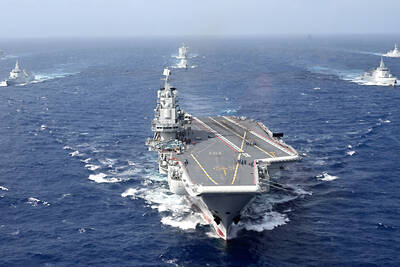
PROVOCATIVE: Chinese Deputy Ambassador to the UN Sun Lei accused Japan of sending military vessels to deliberately provoke tensions in the Taiwan Strait China denounced remarks by Japan and the EU about the South China Sea at a UN Security Council meeting on Monday, and accused Tokyo of provocative behavior in the Taiwan Strait and planning military expansion. Ayano Kunimitsu, a Japanese vice foreign minister, told the Council meeting on maritime security that Tokyo was seriously concerned about the situation in the East China and South China seas, and reiterated Japan’s opposition to any attempt to change the “status quo” by force, and obstruction of freedom of navigation and overflight. Stavros Lambrinidis, head of the EU delegation to the UN, also highlighted South China Sea
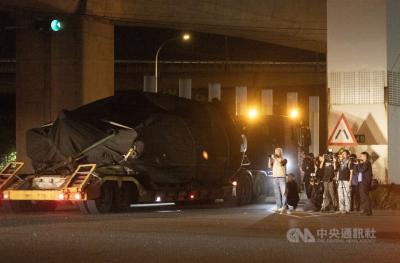
The final batch of 28 M1A2T Abrams tanks purchased from the US arrived at Taipei Port last night and were transported to the Armor Training Command in Hsinchu County’s Hukou Township (湖口), completing the military’s multi-year procurement of 108 of the tanks. Starting at 12:10am today, reporters observed more than a dozen civilian flatbed trailers departing from Taipei Port, each carrying an M1A2T tank covered with black waterproof tarps. Escorted by military vehicles, the convoy traveled via the West Coast Expressway to the Armor Training Command, with police implementing traffic control. The army operates about 1,000 tanks, including CM-11 Brave Tiger
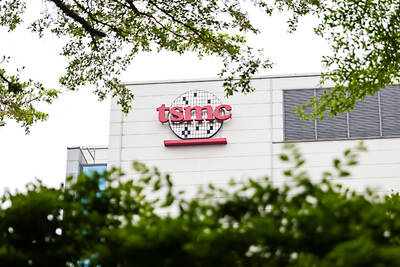
Taiwan Semiconductor Manufacturing Co (TSMC, 台積電), the world’s largest contract chipmaker, said it expects its 2-nanometer (2nm) chip capacity to grow at a compound annual rate of 70 percent from this year to 2028. The projection comes as five fabs begin volume production of 2-nanometer chips this year — two in Hsinchu and three in Kaohsiung — TSMC senior vice president and deputy cochief operating officer Cliff Hou (侯永清) said at the company’s annual technology symposium in Silicon Valley, California, last week. Output in the first year of 2-nanometer production, which began in the fourth quarter of last year, is expected to

Taiwan’s drone exports surged past US$100 million in the first quarter, exceeding last year’s full-year total, with the Czech Republic emerging as the largest buyer, the Ministry of Economic Affairs said. Exports of complete drones reached US$115.85 million in the period, about 1.2 times the total recorded for all of last year, the ministry said in a report. Exports to the Czech Republic accounted for about US$100 million, far outpacing other markets. Poland, last year’s top destination, recorded about US$11.75 million in the first quarter. Taiwan’s drone exports have expanded rapidly in the past few years, with last year’s total


 RSS
RSS