


The US toy industry is having little fun this holiday season.
Millions of toys have been recalled for safety reasons in recent months, while the US economy has softened as the key Christmas season opens.
Meanwhile, crude oil costs have shot up by some US$40 a barrel to nearly US$100 since the start of this year, meaning higher costs for makers of toys, as plastics accounts for about 40 percent of the average cost of a toy, the Toy Industry Association (TIA) said.
But because prices were set when orders were made six months ago, the toy producers are likely to swallow the price increases themselves, at least for now.
"Price quotes on toys are set almost a year ahead of release dates, so that this year's oil price rise may have to be absorbed by the manufacturers," the US-based association said in a report.
Moreover, labor costs in China, which produces 80 percent of the world's toys, are up sharply. In Guangdong Province, which has more than 5,000 toy manufacturing plants, labor costs have risen 20 percent.
For US makers and retailers, the weak dollar is also a factor since the yuan and other currencies have been rising against the greenback.
Toymakers say prices at the consumer level are expected to rise next year.
"Prices are based on a variety of factors, including cost of raw materials, cost of labor, currencies and innovation and play value of the toy, as well as testing costs," according to a statement from Mattel, the US giant that makes Barbie dolls, Hot Wheels cars and other toys.
"As we pointed out on our third quarter call earlier this month, we are looking at modest price increases for next year," the statement said.
Around the globe, the story is similar for the industry, which is expected to post sales of around US$70 billion this year, TIA said.
Manufacturers and distributors "cannot absorb the entire increase in costs, so these are passed on to the consumer one way or another in the final price," said Benoit Pousset, CEO at France-based Cesar SA, the leading global maker of masks and costumes.
Toymakers are also taking a hit from price pressures and safety recalls. Some 25 million toys have been recalled this year because of problems such as lead paint, small magnets and toxic chemicals. Many of the items were manufactured in China.
Some manufacturers will be looking at using wood or other materials, while others turn to more sophisticated products that command a price 10 percent to 20 percent higher. Some retailers will promote US-made toys that often bring higher profit margins.
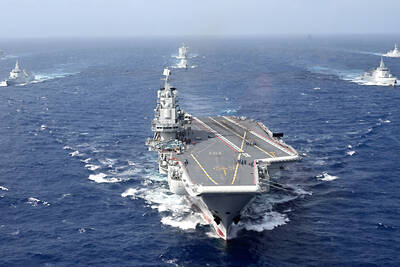
PROVOCATIVE: Chinese Deputy Ambassador to the UN Sun Lei accused Japan of sending military vessels to deliberately provoke tensions in the Taiwan Strait China denounced remarks by Japan and the EU about the South China Sea at a UN Security Council meeting on Monday, and accused Tokyo of provocative behavior in the Taiwan Strait and planning military expansion. Ayano Kunimitsu, a Japanese vice foreign minister, told the Council meeting on maritime security that Tokyo was seriously concerned about the situation in the East China and South China seas, and reiterated Japan’s opposition to any attempt to change the “status quo” by force, and obstruction of freedom of navigation and overflight. Stavros Lambrinidis, head of the EU delegation to the UN, also highlighted South China Sea
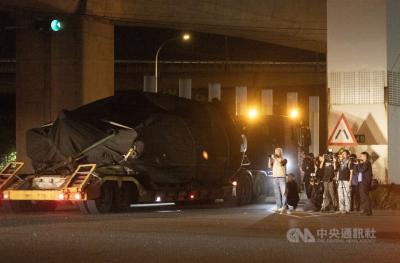
The final batch of 28 M1A2T Abrams tanks purchased from the US arrived at Taipei Port last night and were transported to the Armor Training Command in Hsinchu County’s Hukou Township (湖口), completing the military’s multi-year procurement of 108 of the tanks. Starting at 12:10am today, reporters observed more than a dozen civilian flatbed trailers departing from Taipei Port, each carrying an M1A2T tank covered with black waterproof tarps. Escorted by military vehicles, the convoy traveled via the West Coast Expressway to the Armor Training Command, with police implementing traffic control. The army operates about 1,000 tanks, including CM-11 Brave Tiger
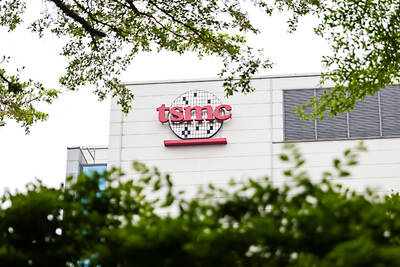
Taiwan Semiconductor Manufacturing Co (TSMC, 台積電), the world’s largest contract chipmaker, said it expects its 2-nanometer (2nm) chip capacity to grow at a compound annual rate of 70 percent from this year to 2028. The projection comes as five fabs begin volume production of 2-nanometer chips this year — two in Hsinchu and three in Kaohsiung — TSMC senior vice president and deputy cochief operating officer Cliff Hou (侯永清) said at the company’s annual technology symposium in Silicon Valley, California, last week. Output in the first year of 2-nanometer production, which began in the fourth quarter of last year, is expected to
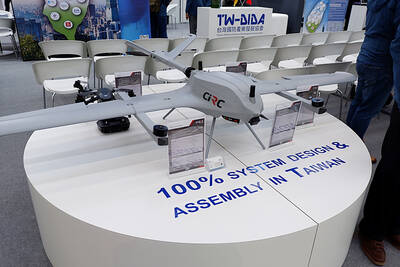
Taiwan’s drone exports surged past US$100 million in the first quarter, exceeding last year’s full-year total, with the Czech Republic emerging as the largest buyer, the Ministry of Economic Affairs said. Exports of complete drones reached US$115.85 million in the period, about 1.2 times the total recorded for all of last year, the ministry said in a report. Exports to the Czech Republic accounted for about US$100 million, far outpacing other markets. Poland, last year’s top destination, recorded about US$11.75 million in the first quarter. Taiwan’s drone exports have expanded rapidly in the past few years, with last year’s total


 RSS
RSS