


Microsoft Corp took the wraps off its second-generation Zune digital music players on Tuesday, showing three models that bring the software maker's offerings more in line with Apple's market-leading iPod.
One model -- available in black -- has an 80-gigabyte (GB) hard drive and an 8cm screen. It is slimmer than last year's Zune, which had a 30 gigabyte hard drive and a smaller screen. Microsoft also will sell a smaller, flash memory-based Zune, similar in shape and size to the iPod Nano, in pink, green, black and red with either 4GB or 8GB of storage.
Like the original Zune, the new models include an FM radio tuner and the ability to wirelessly share songs with other Zune owners.
The latest generation sports a new navigation button Microsoft calls the Zune Pad, and uses Wi-Fi to sync music, movies and photos wirelessly and automatically with users' PCs.
The new Zunes are set to go on sale in mid-November. The 4GB Zune will cost US$149, the 8GB will sell for US$199 and the 80GB model will cost US$249. The prices match those of Apple's iPod lineup.
To get its first-generation Zunes to consumers quickly, Microsoft linked up with partners like Toshiba Corp and MusicNet for the design of the device and the underlying software.
This time, the company has bulked up its staff to include industrial designers, and rebuilt the software for the device and the computer from scratch.
Microsoft tweaked the look of the new Zunes' display and added the Zune Pad, a combination mouse-button and touch pad that lets users scroll down a long list of songs with a few flicks of the finger, then click the button to select tracks or change the volume.
Zune users can connect automatically to their home Wi-Fi network and sync music, podcasts and video while the devivces charge. Users can connect more than one Zune to a PC without having to separate the music libraries. The new Zunes can also sync with a folder of TV shows users record using Windows Media Center and store on their PCs.
First-generation Zunes will automatically get software updates to bring them in line with new Zunes this fall, the company said.
Microsoft will also launch redesigned versions of its Zune desktop software and Marketplace store in November, as well as a new social networking site that lets people add friends, trade music suggestions and learn what music other members of the community are listening to.
As of the end of the last fiscal quarter, Apple Inc had sold more than 100 million iPods, compared with the approximately 1.2 million Zunes Microsoft reported selling.
Unlike Apple, Microsoft hasn't launched a phone or a touch-screen version of the Zune.
Company executives have been denying plans for a "Zune phone" since the iPhone was introduced this summer.

The Chien Feng IV (勁蜂, Mighty Hornet) loitering munition is on track to enter flight tests next month in connection with potential adoption by Taiwanese and US armed forces, a government source said yesterday. The kamikaze drone, which boasts a range of 1,000km, debuted at the Taipei Aerospace and Defense Technology Exhibition in September, the official said on condition of anonymity. The Chungshan Institute of Science and Technology and US-based Kratos Defense jointly developed the platform by leveraging the engine and airframe of the latter’s MQM-178 Firejet target drone, they said. The uncrewed aerial vehicle is designed to utilize an artificial intelligence computer
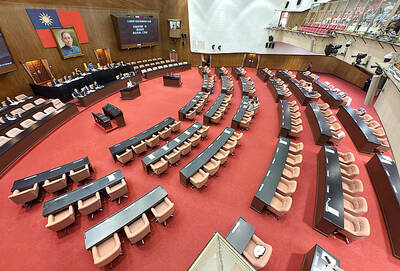
The Chinese Nationalist Party (KMT) caucus yesterday decided to shelve proposed legislation that would give elected officials full control over their stipends, saying it would wait for a consensus to be reached before acting. KMT Legislator Chen Yu-jen (陳玉珍) last week proposed amendments to the Organic Act of the Legislative Yuan (立法院組織法) and the Regulations on Allowances for Elected Representatives and Subsidies for Village Chiefs (地方民意代表費用支給及村里長事務補助費補助條例), which would give legislators and councilors the freedom to use their allowances without providing invoices for reimbursement. The proposal immediately drew criticism, amid reports that several legislators face possible charges of embezzling fees intended to pay

REQUIREMENTS: The US defense secretary must submit a Taiwan security assistance road map and an appraisal of Washington’s ability to respond to Indo-Pacific conflict The US Congress has released a new draft of the National Defense Authorization Act (NDAA), which includes up to US$1 billion in funding for Taiwan-related security cooperation next year. The version published on Sunday by US House of Representatives Speaker Mike Johnson removed earlier language that would have invited Taiwan to participate in the US-led Rim of the Pacific Exercise (RIMPAC). A statement on Johnson’s Web page said the NDAA “enhances U.S. defense initiatives in the Indo-Pacific to bolster Taiwan’s defense and support Indo-Pacific allies.” The bill would require the US secretary of defense to “enable fielding of uncrewed and anti-uncrewed systems capabilities”

Renewed border fighting between Thailand and Cambodia showed no signs of abating yesterday, leaving hundreds of thousands of displaced people in both countries living in strained conditions as more flooded into temporary shelters. Reporters on the Thai side of the border heard sounds of outgoing, indirect fire yesterday. About 400,000 people have been evacuated from affected areas in Thailand and about 700 schools closed while fighting was ongoing in four border provinces, said Thai Rear Admiral Surasant Kongsiri, a spokesman for the military. Cambodia evacuated more than 127,000 villagers and closed hundreds of schools, the Thai Ministry of Defense said. Thailand’s military announced that


 RSS
RSS