


The PlayStation 3 going on sale in Europe next month will play only some of the games for its predecessor video game machine -- a move designed to cut costs and speed up production.
Backward compatibility with PlayStation 2 has been billed as a major feature for the PlayStation 3 that went on sale late last year in the US and Japan.
But packing the machine with two expensive computer chips to play both PS2 and upgrade PS3 games has been racking up costs for the money-losing PS3, a big reason behind Sony Corp's flagging earnings lately.

PHOTO: AP
The European PlayStation 3, set to go on sale March 23, won't carry the chip for PlayStation 2 and will instead use special software to play PS2 games, saving costs and making mass production easier by reducing parts, Sony Computer Entertainment spokesman Daisuke Nakata said yesterday, while refusing to say how much the move would save.
"The method used for playing PS2 games is going to be different," he said. "We also want to concentrate on developing PS3 games."
It's still undecided whether PS3 machines for Japan, the US and elsewhere would also be sold without the PS2 chip, but the option is being considered, Nakata said.
The US and Japanese version PS3 machines had also failed to deliver full compatibility with PS2 games. Almost as soon as PS3 went on sale in Japan and the US, Sony acknowledged it wasn't properly playing thousands of PS2 games, with some scenes freezing, the music not playing, or the game not working at all.
Sony has been offering downloads to fix the problem, but not all the problems have been fixed, Sony Computer Entertainment has said.
Downloads for the European PS3 will also be available for playing more PS2 games, but the number of PS2 games the machine will be able to play is still undecided as work was still ongoing to make as many games as possible playable, Nakata said.
The decision to forego the PS2 chip for the European model, announced on Friday in Europe, is yet another blow to the PS3, plagued by production delays. The European launch was postponed until next month from the initially promised Christmas.
The PS3 has also suffered a bit of an image problem against the spectacular hit of the rival Wii home console from Nintendo Co, maker of the GameBoy Advance and Nintendo DS handheld machines, as well as Pokemon and Super Mario games.
Skeptics have noted that the Wii is out of stock while the PS3 can be found on shelves. One drawback to the PS3 is that at US$499 and US$599, it costs about twice as much as the Wii.
Although backward compatibility with PS2 would seem a small issue for its cutting-edge successor, there still aren't that many PS3 games on sale. A great deal of time is required to develop PS3 games, and attractive games are being promised for later this year.
Still, what is being perceived as PS3 problems is hurting Sony at a time when it is trying to achieve a turnaround, shedding unprofitable divisions and selling assets.
Sony's October-December profit slipped 5 percent to ¥160 billion (US$1.3 billion), largely because of PS3 startup costs. The company has fallen behind rivals in recent years in key gadgets such as flat-panel TVs and portable music players, but it has been gradually boosting profits in its electronics operations.
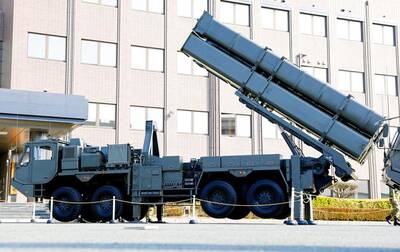
Japan has deployed long-range missiles in a southwestern region near China, the Japanese defense minister said yesterday, at a time when ties with Beijing are at their lowest in recent years. The missiles were installed in Kumamoto in the southern region of Kyushu, as Japan is attempting to shore up its military capacity as China steps up naval activity in the East China Sea. “Standoff defense capabilities enable us to counter the threat of enemy forces attempting to invade our country ... while ensuring the safety of our personnel,” Japanese Minister of Defense Shinjiro Koizumi said. “This is an extremely important initiative for
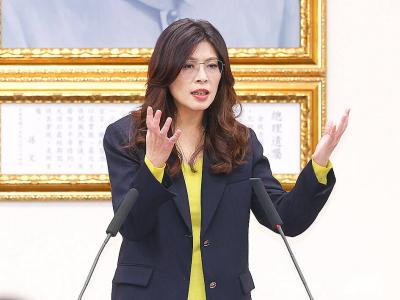
Chinese Nationalist Party (KMT) Chairwoman Cheng Li-wun (鄭麗文) today accepted an invitation from Chinese President Xi Jinping (習近平) to lead a delegation to China next month, saying she hopes to promote the peaceful development of cross-strait relations and bring stability to the Taiwan Strait. “I am grateful and happy to accept this invitation,” Cheng said in a statement from the KMT chairperson’s office. Cheng said she hopes both sides can work together to promote the peaceful development of cross-strait relations, enhance exchange and cooperation, bring stability to the Taiwan Strait and improve people’s livelihoods. At today's news conference, Cheng said any efforts to
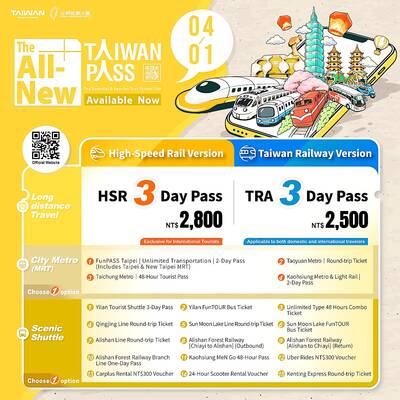
MORE POPULAR: Taiwan Pass sales increased by 59 percent during the first quarter compared with the same period last year, the Tourism Administration said The Tourism Administration yesterday said that it has streamlined the Taiwan Pass, with two versions available for purchase beginning today. The tourism agency has made the pass available to international tourists since 2024, allowing them to access the high-speed rail, Taiwan Railway Corp services, four MRT systems and four Taiwan Tourist Shuttles. Previously, five types of Taiwan Pass were available, but some tourists have said that the offerings were too complicated. The agency said only two types of Taiwan Pass would be available, starting from a three-day pass with the high-speed rail and a three-day pass with Taiwan Railway Corp. The former costs NT$2,800
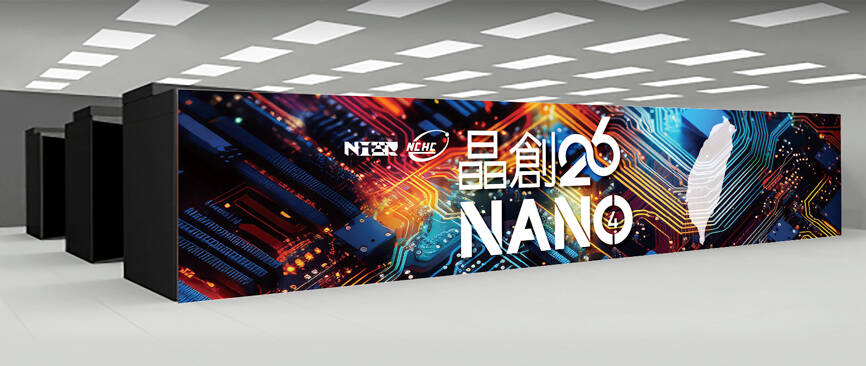
The nation’s fastest supercomputer, Nano 4 (晶創26), is scheduled to be launched in the third quarter, and would be used to train large language models in finance and national defense sectors, the National Center for High-Performance Computing (NCHC) said. The supercomputer, which would operate at about 86.05 petaflops, is being tested at a new cloud computing center in the Southern Taiwan Science Park in Tainan. The exterior of the server cabinet features chip circuitry patterns overlaid with a map of Taiwan, highlighting the nation’s central position in the semiconductor industry. The center also houses Taiwania 2, Taiwania 3, Forerunner 1 and


 RSS
RSS