


Two Russian firms and a Swiss commodity trader announced a merger on Monday that would form the world's largest aluminum maker, overtaking Alcoa of the US and creating a Russian giant to take its place.
Under the deal, Rusal, now Russia's largest aluminum firm, would merge with its smaller local rival, Sual, and mining assets belonging to the Swiss company, Glencore, to create a company with an estimated value of US$25 billion to US$30 billion, controlled by the Russian oligarch who is the owner of Rusal, Oleg Deripaska, the country's sixth-richest man.
The deal continues a pattern in Russia of uniting companies separated in the breakup of the Soviet Union and the subsequent privatization in the 1990s into large, new monopolies, a crucial part of the economic policy of Russian President Vladimir Putin.
Analysts say the mergers have been driven by national pride and partly by efficiencies that can be created by large companies.
"It's a very important deal for the image of Russia. It creates a global leader, No.1. This is good for Russia," Aleksandr Bulygin, the chief executive of Rusal who will have the same post in the merged company, said in a telephone interview.
Like Gazprom or the government-owned oil company Rosneft, the new merged aluminum company intends to list shares on Western stock exchanges, leveraging its size and high commodity prices to get access to international capital.
Sual is majority-owned by the Viktor Vekselberg, Russia's fourth-richest man. Glencore was founded by Marc Rich, the US commodities trader who fled the US to avoid facing charges of tax evasion, racketeering and fraud and was pardoned by then president Bill Clinton in January 2001. Glencore is now owned by its employees.
The new company intends to place shares on the London Stock Exchange in 18 months, executives said on Monday. Rusal would own 66 percent, Sual 22 percent and Glencore 12 percent. The annual revenue would be US$10 billion, Bulygin said.
The combined company, also to be known as Rusal, will produce about 4 million tonnes a year of the lightweight metal used in cans, foil and automotive parts, compared with the 3.5 million tonnes made by Alcoa last year.
The deal, which company executives said should be closed by April 1 next year, would need regulatory clearance in Russia, the EU and possibly the US, along with Jamaica, Ireland and other countries where bauxite mines are located, Bulygin said.
Alcoa, based in Pittsburgh, is a century-old company and a storied name in US business. Alcoa's competitive edge has been dulled because electricity, a major factor in the production of aluminum, is a high-priced commodity.
Rusal has a distinct advantage: Its plants are supplied with some of the world's cheapest electricity, produced by hydropower dams on Siberian rivers. That power is cheap because it is "shut in," or too far from any large city to economically be sold to residential consumers at higher prices.
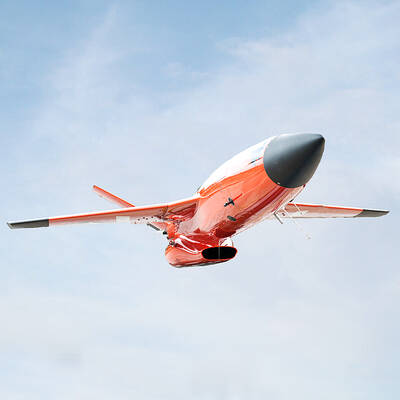
The Chien Feng IV (勁蜂, Mighty Hornet) loitering munition is on track to enter flight tests next month in connection with potential adoption by Taiwanese and US armed forces, a government source said yesterday. The kamikaze drone, which boasts a range of 1,000km, debuted at the Taipei Aerospace and Defense Technology Exhibition in September, the official said on condition of anonymity. The Chungshan Institute of Science and Technology and US-based Kratos Defense jointly developed the platform by leveraging the engine and airframe of the latter’s MQM-178 Firejet target drone, they said. The uncrewed aerial vehicle is designed to utilize an artificial intelligence computer
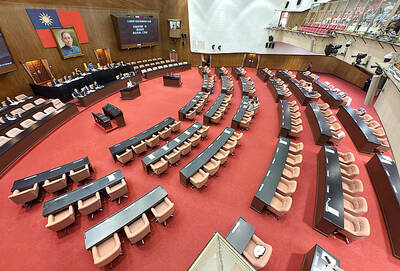
The Chinese Nationalist Party (KMT) caucus yesterday decided to shelve proposed legislation that would give elected officials full control over their stipends, saying it would wait for a consensus to be reached before acting. KMT Legislator Chen Yu-jen (陳玉珍) last week proposed amendments to the Organic Act of the Legislative Yuan (立法院組織法) and the Regulations on Allowances for Elected Representatives and Subsidies for Village Chiefs (地方民意代表費用支給及村里長事務補助費補助條例), which would give legislators and councilors the freedom to use their allowances without providing invoices for reimbursement. The proposal immediately drew criticism, amid reports that several legislators face possible charges of embezzling fees intended to pay
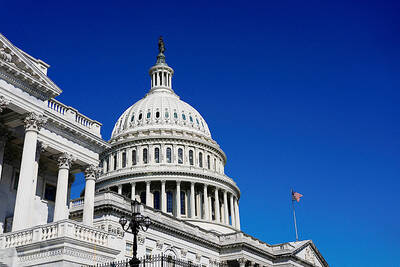
REQUIREMENTS: The US defense secretary must submit a Taiwan security assistance road map and an appraisal of Washington’s ability to respond to Indo-Pacific conflict The US Congress has released a new draft of the National Defense Authorization Act (NDAA), which includes up to US$1 billion in funding for Taiwan-related security cooperation next year. The version published on Sunday by US House of Representatives Speaker Mike Johnson removed earlier language that would have invited Taiwan to participate in the US-led Rim of the Pacific Exercise (RIMPAC). A statement on Johnson’s Web page said the NDAA “enhances U.S. defense initiatives in the Indo-Pacific to bolster Taiwan’s defense and support Indo-Pacific allies.” The bill would require the US secretary of defense to “enable fielding of uncrewed and anti-uncrewed systems capabilities”
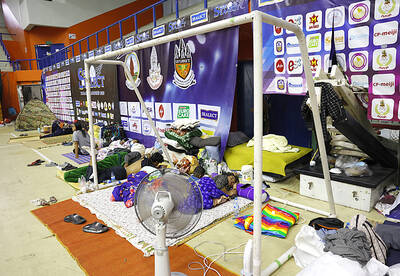
Renewed border fighting between Thailand and Cambodia showed no signs of abating yesterday, leaving hundreds of thousands of displaced people in both countries living in strained conditions as more flooded into temporary shelters. Reporters on the Thai side of the border heard sounds of outgoing, indirect fire yesterday. About 400,000 people have been evacuated from affected areas in Thailand and about 700 schools closed while fighting was ongoing in four border provinces, said Thai Rear Admiral Surasant Kongsiri, a spokesman for the military. Cambodia evacuated more than 127,000 villagers and closed hundreds of schools, the Thai Ministry of Defense said. Thailand’s military announced that


 RSS
RSS