


Brighter growth prospects for Asia over the next 12 months have raised hopes that regional economies will cope should oil prices again breach US$70 a barrel.
Analysts widely see that level as probable within the next two months. Oil currently hovers a few dollars shy of the record high of US$70.85 reached last August following Hurricane Katrina in the US.
At one time US$70 was thought of as a potential breaking point for regional economies with heavy reliance on oil imports. The lesser impact now envisaged marks a welcome change from the pessimism that dominated the markets just five months ago.
"US$70 appears likely, but global growth seems solid right now," said David Cohen, a regional economist with Singapore-based Action Economics.
"The data from across the region shows that the Asian economies finished 2005 on a solid note, supported by strength in global export demand. That looks likely to continue into the first half of 2006," he said.
Middle East tensions, consumer demand and institutions which increasingly see oil as an investment risk pushing the cost of crude to beyond US$90 a barrel, according to some analysts.
BT Pension Scheme plans to invest ?1 billion (US$1.78 billion) in the commodities market.
"This is a huge amount of money in the commodities market," said Tetsu Emori, chief commodities strategist with Mitsui Bussan Futures in Tokyo.
"Oil prices would be pushed up by this kind of pension-fund money. It's a big one we cannot ignore," Emori said.
That prospect, plus possible sanctions against Iran and unparalleled growth in markets like China and India, has Emori forecasting oil prices of US$90 to US$97 in the second half of this year.
At those levels analysts expect inflation to rise, coercing central banks into another round of interest rate hikes, and global economic growth to falter.
However, even at US$90 to US$100 a barrel, Cohen is optimistic the region would weather the economic fallout, if spiralling oil prices are driven more by demand than political risk factors.
"The increase last year reflected a strength in global demand rather than a supply shock -- if that continues to hold through this year then the higher prices should not derail the growth in the region," he said.
"It would subtract some percentage points from world growth, but again the distinction between higher prices resulting from geo-political shocks as opposed to resulting from growth in global demand should be made," he said.
Australian growth has been clipped by oil. But Commsec commodities strategist David Thurtell said the outlook remained solid amid surging commodity prices and a stable housing market.
"I don't think people are hurting too much," he said.
Indonesia is better placed to survive another shock after substantially reducing expensive fuel subsidies which bled government coffers and caused a mini-currency crisis when oil last hit US$70.
Standard Chartered Bank economist Fauzi Ichsan said recent fuel price hikes had caused a fall in demand. Inflation is now expected to ease, but a target of 6 percent growth this year is being maintained.
"For 2006, the impact of oil prices is not too big. Indonesia's balance of payments is improving," he said.
Australia and Indonesia are big energy producers, but India, China and Japan are major importers and are more acutely affected by pricing.
"Oil prices are high, but they are showing signs of relative stability," said Masaaki Kanno, chief economist at JP Morgan Securities Asia.
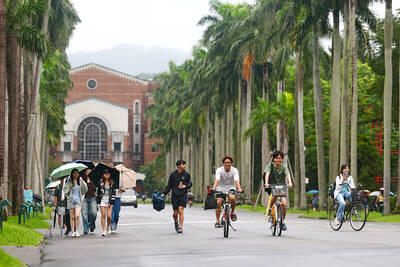
National Taiwan University (NTU) yesterday said it disqualified a person from an entrance examination for using AI smart glasses to cheat, along with two others for making untruthful statements in their curriculum vitae. The three applicants were given null scores, Taiwan’s highest-ranked university said, calling on prospective students to be honest in the admissions process. NTU registrar Lee Hung-sen (李宏森) said that the cheating applicant wore a hat and thick-rimmed glasses to the second written exam for medical school, claiming that they felt cold. Suspicions were aroused when the applicant stared oddly at the test for long stretches while steadily bringing the paper
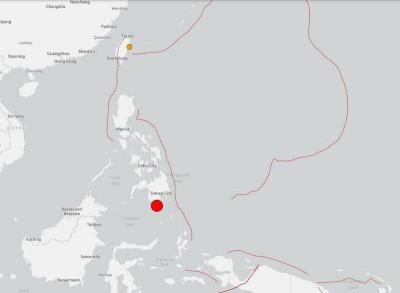
A magnitude 7.8 earthquake struck off the southern coast of Mindanao in the Philippines at 7:38am today, prompting the US Tsunami Warning System to issue an alert for neighboring countries, including Taiwan. The system issued a purple alert indicating a "tsunami threat." The potential threat zone includes Taiwan, the Philippines, Papua New Guinea, Yap and Palau. Philippine authorities were assessing the damage from the quake, with the office of civil defense seeking to verifying initial reports that 15 people had been killed and 129 injured in the region, mostly from falling debris. Arlene Hollero, disaster chief of Maasim town in the Philippines' Sarangani Province,

‘GRAY ZONE’ PRESSURE: Beijing’s activities are intended to create the deceitful impression that China has jurisdiction over the area around Taiwan, the CGA said Taiwan’s rights over its territorial waters and exclusive economic zone must not be violated by any country, the Mainland Affairs Council said yesterday, adding that it will not accept any unprovoked actions. The council issued the remarks in response to the China Coast Guard conducting maritime enforcement drills near eastern Taiwan and claiming to fully exercise China’s maritime administrative law enforcement authority. The Coast Guard Administration (CGA) has been closely monitoring the situation and is taking concrete steps to defend the nation’s sovereignty and secure its waters, the council said. China has no sovereign rights over the waters off eastern
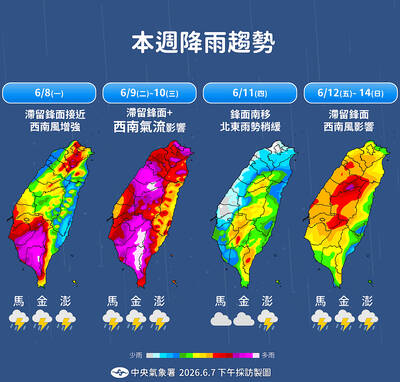
Heavy rain is expected to affect parts of Taiwan this week, the Central Weather Administration (CWA) said yesterday as a meteorologist said the active part of the annual plum rain season has started. A stationary plum rain front and southwesterly winds would bring unstable weather and abundant moisture to Taiwan from today for about a week, with the heaviest rainfall forecast for tomorrow and Wednesday, the CWA said. The agency said western and northeastern Taiwan, and mountainous areas in the east and southeast, could expect showers or thunderstorms on those two days, with localized heavy rain possible. Other parts of


 RSS
RSS