


Undaunted by back-to-back hurricanes and higher oil prices, the US Federal Reserve raised short-term interest rates on Tuesday for the 12th time in a row and made it clear that more increases were on the way.
In a statement, Fed policymakers said the economic disruptions caused by hurricanes were essentially transitory and signaled that they were more worried about higher inflation than about slower growth.
"Elevated energy prices and hurricane-related disruptions in economic activity," the central bank said in raising the rate to 4 percent from 3.75 percent, "have temporarily depressed output and employment."
The decision means that the Federal Reserve is almost certain to raise rates at policy meetings next month and in January, and it will probably keep going after Alan Greenspan retires as Fed chairman at the end of January.
In effect, Greenspan's last act as chairman amounts to a carefully choreographed effort to shore up the Fed's credibility and gently reverse an extraordinary period of cheap borrowing.
Under Greenspan, the Fed reduced short-term rates to 1 percent in 2003 and kept them there for a year in order to shore up the economy.
Since last June, the Fed has been inching rates back toward a "neutral" rate that neither stokes inflation nor stifles growth.
"The Fed is saying that `we're being tested here, we're being tes-ted on our anti-inflation credibility,'" said Ethan Harris, chief economist at Lehman Brothers.
"They need to sound tough. They need a pretty good bark to go with their bite," Harris said.
The federal funds rate is now at its highest level since June 2001, but it is still well below its most recent peak of 6.5 percent at the end of 2000.
The Fed continued to describe its policy as accommodative -- meaning that interest rates are still low -- and predicted that the economic disruptions caused by recent hurricanes and spiking oil prices would essentially be transitory. It also reiterated its desire to keep raising rates at a "pace that is likely to be measured."
Some analysts suspect that Fed officials may be contemplating the need to go beyond "neutral" and apply the brakes. Greenspan told lawmakers early this year that people would recognize a "neutral" level when they reached it. Some Fed policymakers have publicly suggested that it could be 5 percent or higher.
Thus far, the underlying rate of inflation has yet to show many signs of being pushed higher by the surge in oil prices.
The Consumer Price Index in September was 4.7 percent higher than a year earlier, the biggest jump in years, but most of that was because of escalating global fuel prices.
Greenspan and most other Fed officials tend to view higher energy prices as a one-time event and pay much closer attention to the "core" rate of inflation that excludes energy and food prices.
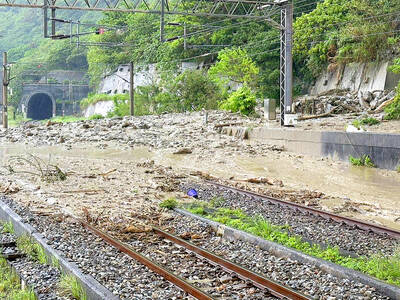
ROLLER-COASTER RIDE: More than five earthquakes ranging from magnitude 4.4 to 5.5 on the Richter scale shook eastern Taiwan in rapid succession yesterday afternoon Back-to-back weather fronts are forecast to hit Taiwan this week, resulting in rain across the nation in the coming days, the Central Weather Administration said yesterday, as it also warned residents in mountainous regions to be wary of landslides and rockfalls. As the first front approached, sporadic rainfall began in central and northern parts of Taiwan yesterday, the agency said, adding that rain is forecast to intensify in those regions today, while brief showers would also affect other parts of the nation. A second weather system is forecast to arrive on Thursday, bringing additional rain to the whole nation until Sunday, it
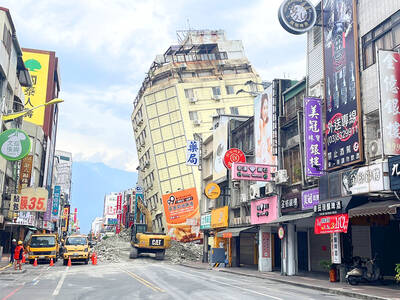
LANDSLIDES POSSIBLE: The agency advised the public to avoid visiting mountainous regions due to more expected aftershocks and rainfall from a series of weather fronts A series of earthquakes over the past few days were likely aftershocks of the April 3 earthquake in Hualien County, with further aftershocks to be expected for up to a year, the Central Weather Administration (CWA) said yesterday. Based on the nation’s experience after the quake on Sept. 21, 1999, more aftershocks are possible over the next six months to a year, the agency said. A total of 103 earthquakes of magnitude 4 on the local magnitude scale or higher hit Hualien County from 5:08pm on Monday to 10:27am yesterday, with 27 of them exceeding magnitude 5. They included two, of magnitude

CONDITIONAL: The PRC imposes secret requirements that the funding it provides cannot be spent in states with diplomatic relations with Taiwan, Emma Reilly said China has been bribing UN officials to obtain “special benefits” and to block funding from countries that have diplomatic ties with Taiwan, a former UN employee told the British House of Commons on Tuesday. At a House of Commons Foreign Affairs Committee hearing into “international relations within the multilateral system,” former Office of the UN High Commissioner for Human Rights (OHCHR) employee Emma Reilly said in a written statement that “Beijing paid bribes to the two successive Presidents of the [UN] General Assembly” during the two-year negotiation of the Sustainable Development Goals. Another way China exercises influence within the UN Secretariat is

Taiwan’s first drag queen to compete on the internationally acclaimed RuPaul’s Drag Race, Nymphia Wind (妮妃雅), was on Friday crowned the “Next Drag Superstar.” Dressed in a sparkling banana dress, Nymphia Wind swept onto the stage for the final, and stole the show. “Taiwan this is for you,” she said right after show host RuPaul announced her as the winner. “To those who feel like they don’t belong, just remember to live fearlessly and to live their truth,” she said on stage. One of the frontrunners for the past 15 episodes, the 28-year-old breezed through to the final after weeks of showcasing her unique


 RSS
RSS