


PeopleSoft on Tuesday announced a broad partnership with IBM, in an attempt to show that it is moving forward aggressively despite the turmoil created by Oracle's US$7.7 hostile takeover bid.
PeopleSoft's chief executive, Craig Conway, told more than 11,000 corporate customers gathered for its annual user convention that the deal with IBM would help PeopleSoft customers adapt to changing technology. The deal, which has been in the works for several months, calls for a combined investment by the two companies of at least US$1 billion over the next five years.
Since Oracle began its takeover effort in June 2003, Conway has said that the move was causing some customers to consider not buying PeopleSoft products, a situation that the company estimates has cost it more than US$1 billion in lost revenue. The IBM deal seemed intended to let customers know that PeopleSoft was moving ahead in spite of all this.
The appearance was Conway's first in public since a federal judge in San Francisco ruled last Thursday against blocking Oracle's offer for PeopleSoft, the second-largest supplier of business automation software for corporations. The ruling removed a major obstacle to what could be the largest -- and perhaps the most acrimonious -- merger in software history.
The Justice Department, which sued Oracle more than a year ago in an effort to block the deal, has not yet announced whether it will appeal.
"This year has sort of been like hearing beautiful music on a radio station with a lot of static," Conway said, in an interview after the announcement on Tuesday.
Conway told customers that the last 15 months had been "a nightmare," but that PeopleSoft was determined to fight off Oracle.
The struggle, he said, "has stretched our resources and challenged our values, but we didn't give up and we're not going to give up."
The partnership with IBM, which the companies say they will conclude in the fourth quarter, will help PeopleSoft make it easier for customers trying to tie together disparate software systems. PeopleSoft will provide the applications programs that customers interact with, while IBM, will provide the underlying technology.
Customers will also be able to choose alternate technology from Microsoft, BEA or others in place of the IBM software.
Conway said the agreement grew out of a deal that was already in the works when PeopleSoft purchased the software maker J.D. Edwards in July last year.
Charles DiBona, an analyst with Sanford C. Bernstein & Co, said that the agreement was a fairly routine technology deal and that its significance would not be apparent until more details were available.
"People like road maps," DiBona said, "and that's what this is."
Customers who want to take a different direction will simply do so, he said.
Earlier on Tuesday, Oracle criticized PeopleSoft for a recent decision to increase severance pay for its staff, accusing it of reducing shareholder value. Conway defended the move, calling it "a natural reaction to the higher state of anxiety due to the court decision."
He said that the rise in severance pay actually increased the value of the company because it encouraged PeopleSoft employees to stay during a difficult time.
"We're protecting our key asset," Conway said, "which is very common during a takeover."

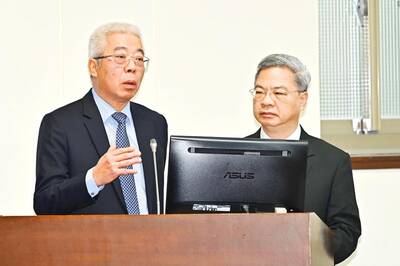
Taiwan has arranged for about 8 million barrels of crude oil, or about one-third of its monthly needs, to be shipped from the Red Sea this month to bypass the Strait of Hormuz and ease domestic supply pressures, CPC Corp, Taiwan (CPC, 台灣中油) said yesterday. The state-run oil company has worked with Middle Eastern suppliers to secure routes other than the Strait of Hormuz, through which about 20 percent of the world’s oil and liquefied natural gas typically passes, CPC chairman Fang Jeng-zen (方振仁) said at a meeting of the legislature’s Economics Committee in Taipei. Suppliers in Saudi Arabia have indicated they

South Korea has adjusted its electronic arrival card system to no longer list Taiwan as a part of China, a move that the Ministry of Foreign Affairs said would help facilitate exchanges between the two sides. South Korea previously listed “Taiwan” as “Taiwan (China)” in the drop-down menus of its online arrival card system, where people had to fill out where they came from and their next destination. The ministry had requested South Korea make a revision and said it would change South Korea’s name on Taiwan’s online immigration system from “Republic of Korea” to “Korea (South),” should the issue not be

Tainan, Taipei and New Taipei City recorded the highest fines nationwide for illegal accommodations in the first quarter of this year, with fines issued in the three cities each exceeding NT$7 million (US$220,639), Tourism Administration data showed. Among them, Taipei had the highest number of illegal short-term rental units, with 410. There were 3,280 legally registered hotels nationwide in the first quarter, down by 14 properties, or 0.43 percent, from a year earlier, likely indicating operators exiting the market, the agency said. However, the number of unregistered properties rose to 1,174, including 314 illegal hotels and 860 illegal short-term rental

AIR ALERT: China’s reservation of airspace over the Yellow Sea and East China Sea could be an attempt to test the US’ response ahead of a Trump-Xi meeting, the NSB head said China’s attempts to infiltrate Taiwan are systematic, planned and targeted, with activity shifting from recruiting mid-level military officers to rank-and-file enlisted personnel, National Security Bureau (NSB) Director-General Tsai Ming-yen (蔡明彥) said yesterday. The Chinese Communist Party’s (CCP) integrates national security, intelligence operations and “united front” efforts into a dense network to conduct intelligence gathering and espionage in Taiwan, Tsai said at a meeting of the legislature’s Foreign Affairs and National Defense Committee. It uses specific networks to screen targets through exchange activities and recruiting local collaborators to establish intelligence-gathering organizations, he said. China is also shifting who it targets to lower-ranking military personnel,


 RSS
RSS