


Google on Monday revised the document it will give prospective investors, to state even more pointedly that the unusual auction process for its initial stock sale could cause its shares to fall after the offering.
The revised prospectus also omitted the name of Merrill Lynch & Co, the largest US retail brokerage, from the list of underwriters.
"If your objective is to make a short-term profit by selling the shares you purchase in the offering shortly after trading begins, you should not submit a bid in the auction," the revised prospectus stated.
Google's revisions were probably made in response to comments from the staff of the Securities and Exchange Commission, which has to approve the prospectus before the stock sale. But any commission comments are confidential.
A spokeswoman for Google, which operates the Web's leading search engine, declined to comment on the filing. It is not clear whether there will be more amendments.
Some securities lawyers speculated that the commission would force Google to remove an unusual letter from its founders, Larry Page and Sergey Brin, which argues that the company is unique because of its long-term view of the business.
The revised prospectus still contains the letter, although it has moved to the middle of the document, after the enumeration of the potential risks of investing in the company.
A section of the letter in which the founders discussed their debate about going public was dropped. The founders also added a nod to the view that managing for the long term may not be the best course.
Investors, they noted, "may have trouble evaluating long-term value, thus potentially reducing the value of our company," they wrote. "Competitors may be rewarded for short-term tactics and grow stronger as a result."
The letter keeps its jab at Wall Street analysts, noting that companies that try to manage their earnings in order to be consistent with analysts' forecasts "often accept smaller, predictable earnings rather than larger and less predictable returns."
But the risks section of the prospectus now warns that analysts may still be able to affect the stock's price. It notes that because of the auction process, the initial price "may have little or no relationship to the price determined using traditional valuation methods."
So when analysts start to cover Google's stock, presumably using those traditional methods, they may publish target prices far below the offering price, possibly causing the price to decline.
In the amended filing, Google underscored the likelihood that its executives and employees would sell shares of the company's stock during the initial public offering (IPO). The company states in its prospectus that these sales will help stabilize the auction process and will lead to greater transparency in contrast to the traditional "lock-ups" which prohibit company insiders from selling shares when a firm goes public.
But Andrew Kessler, an independent Silicon Valley investment analyst, said he was concerned that such sales might provide Google executives with a way to manage the company's stock price.
"It's another thing that makes this completely different than any other IPO that has been done in the past 50 years," Kessler said. "Google wants their cake and to be able to eat it, too."
Meanwhile, Merrill Lynch & Co, which had originally been listed as part of the 31-member underwriting group, was not listed in the revised prospectus. The firm dropped out of the list mostly out of concern that the fees it would generate wouldn't be worth it.
"The fees are too thin," said one institutional investor who is a client of Merrill Lynch and other firms planning to sell shares in the deal. "It wasn't worth the trouble."
A Merrill Lynch spokeswoman declined comment.
Companies going public usualy pay about 7 percent of the size of the offering in fees, and most of that goes to the lead underwriters. Other firms in the syndicate get less in fees, but distribute fewer shares.
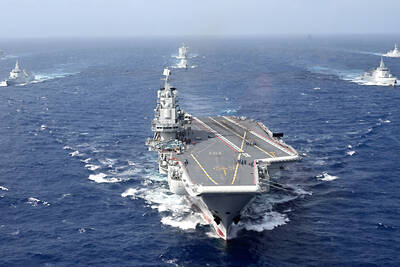
PROVOCATIVE: Chinese Deputy Ambassador to the UN Sun Lei accused Japan of sending military vessels to deliberately provoke tensions in the Taiwan Strait China denounced remarks by Japan and the EU about the South China Sea at a UN Security Council meeting on Monday, and accused Tokyo of provocative behavior in the Taiwan Strait and planning military expansion. Ayano Kunimitsu, a Japanese vice foreign minister, told the Council meeting on maritime security that Tokyo was seriously concerned about the situation in the East China and South China seas, and reiterated Japan’s opposition to any attempt to change the “status quo” by force, and obstruction of freedom of navigation and overflight. Stavros Lambrinidis, head of the EU delegation to the UN, also highlighted South China Sea
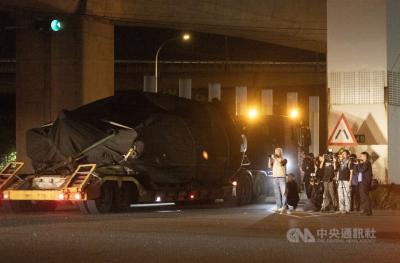
The final batch of 28 M1A2T Abrams tanks purchased from the US arrived at Taipei Port last night and were transported to the Armor Training Command in Hsinchu County’s Hukou Township (湖口), completing the military’s multi-year procurement of 108 of the tanks. Starting at 12:10am today, reporters observed more than a dozen civilian flatbed trailers departing from Taipei Port, each carrying an M1A2T tank covered with black waterproof tarps. Escorted by military vehicles, the convoy traveled via the West Coast Expressway to the Armor Training Command, with police implementing traffic control. The army operates about 1,000 tanks, including CM-11 Brave Tiger
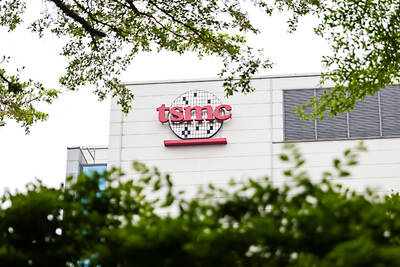
Taiwan Semiconductor Manufacturing Co (TSMC, 台積電), the world’s largest contract chipmaker, said it expects its 2-nanometer (2nm) chip capacity to grow at a compound annual rate of 70 percent from this year to 2028. The projection comes as five fabs begin volume production of 2-nanometer chips this year — two in Hsinchu and three in Kaohsiung — TSMC senior vice president and deputy cochief operating officer Cliff Hou (侯永清) said at the company’s annual technology symposium in Silicon Valley, California, last week. Output in the first year of 2-nanometer production, which began in the fourth quarter of last year, is expected to
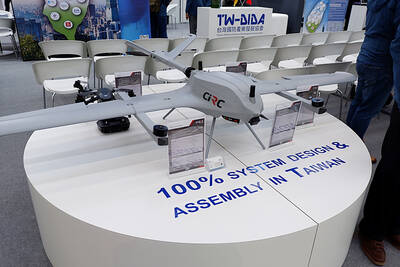
Taiwan’s drone exports surged past US$100 million in the first quarter, exceeding last year’s full-year total, with the Czech Republic emerging as the largest buyer, the Ministry of Economic Affairs said. Exports of complete drones reached US$115.85 million in the period, about 1.2 times the total recorded for all of last year, the ministry said in a report. Exports to the Czech Republic accounted for about US$100 million, far outpacing other markets. Poland, last year’s top destination, recorded about US$11.75 million in the first quarter. Taiwan’s drone exports have expanded rapidly in the past few years, with last year’s total


 RSS
RSS