


The World Bank recommended yesterday that China ease rules against people moving from its poor countryside into booming cities as part of efforts to fight poverty.
The proposal came in a report on ways to reduce the growing gap between China's rich and poor -- an issue that communist leaders worry could fuel unrest. It is a key focus of the government of President Hu Jintao (
The report comes amid official efforts to spread prosperity to the countryside -- where 800 million Chinese live -- and debate over rules that bar Chinese from living in new areas without permission. Millions of rural people move to cities in search of work every year, but many are detained and sent home.
Easing such restrictions would let some rural Chinese find better jobs in cities while others could benefit by taking over farmland left behind, said Hana Brixi, an economist in the World Bank's Beijing office who wrote the report.
Rural incomes could rise by up to 16 percent as farms get bigger and more efficient, Brixi said at a news conference. That estimate is a striking contrast to projections that farmers would see incomes fall following China's entry in the WTO as Beijing allows in cheaper foreign farm goods.
"If we allow for free migration, farmers will benefit most," Brixi said. "The increase in their wages is quite significant."
China's city-countryside wealth gap is already huge. The economic output of Shanghai, its business capital, passed 40,000 yuan (US$5,000) per person last year. Meanwhile, in some remote areas, farm families get by on 600 yuan (US$70) a year.
Violent protests are reported regularly in farming areas over high taxes and stagnant incomes.
Some in the leadership worry that such unrest could spread, possibly threatening communist rule. Others appear genuinely distressed that a country whose 1949 revolution was based on liberating peasants still has so many people living in poverty.
China's government announced new rules on the treatment of migrant workers in June following the beating death of a man detained in the southern city of Guangzhou for lacking a residence permit.
But despite ordering local officials to crack down on the mistreatment of detained migrants, the government gave no indication it was scrapping the registration system.
Brixi said relaxing current rules could lead to 20 million additional people migrating by 2007, though she said she did not have her own estimate of the total. Chinese officials say the country has as many as 100 million migrants.
The World Bank report comes amid sweeping changes in priorities by Hu's months-old government, which is trying to spread prosperity to rural areas and China's remote west after two decades of reform that made eastern cities into export powerhouses.
The report also called for more spending on schools in poor areas and job training for migrants in order to increase their job prospects.
"Migration is the most important factor, but also ... a higher growth in skilled labor will facilitate migration," Brixi said.
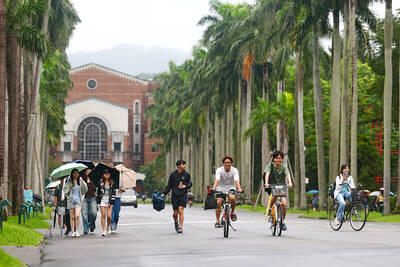
National Taiwan University (NTU) yesterday said it disqualified a person from an entrance examination for using AI smart glasses to cheat, along with two others for making untruthful statements in their curriculum vitae. The three applicants were given null scores, Taiwan’s highest-ranked university said, calling on prospective students to be honest in the admissions process. NTU registrar Lee Hung-sen (李宏森) said that the cheating applicant wore a hat and thick-rimmed glasses to the second written exam for medical school, claiming that they felt cold. Suspicions were aroused when the applicant stared oddly at the test for long stretches while steadily bringing the paper
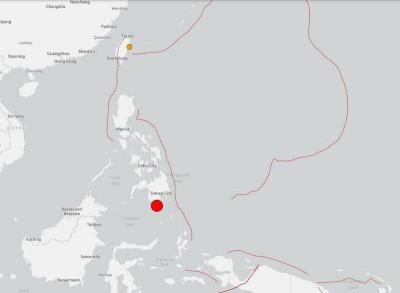
A magnitude 7.8 earthquake struck off the southern coast of Mindanao in the Philippines at 7:38am today, prompting the US Tsunami Warning System to issue an alert for neighboring countries, including Taiwan. The system issued a purple alert indicating a "tsunami threat." The potential threat zone includes Taiwan, the Philippines, Papua New Guinea, Yap and Palau. Philippine authorities were assessing the damage from the quake, with the office of civil defense seeking to verifying initial reports that 15 people had been killed and 129 injured in the region, mostly from falling debris. Arlene Hollero, disaster chief of Maasim town in the Philippines' Sarangani Province,

‘GRAY ZONE’ PRESSURE: Beijing’s activities are intended to create the deceitful impression that China has jurisdiction over the area around Taiwan, the CGA said Taiwan’s rights over its territorial waters and exclusive economic zone must not be violated by any country, the Mainland Affairs Council said yesterday, adding that it will not accept any unprovoked actions. The council issued the remarks in response to the China Coast Guard conducting maritime enforcement drills near eastern Taiwan and claiming to fully exercise China’s maritime administrative law enforcement authority. The Coast Guard Administration (CGA) has been closely monitoring the situation and is taking concrete steps to defend the nation’s sovereignty and secure its waters, the council said. China has no sovereign rights over the waters off eastern
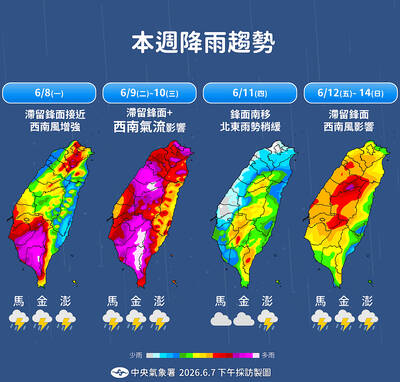
Heavy rain is expected to affect parts of Taiwan this week, the Central Weather Administration (CWA) said yesterday as a meteorologist said the active part of the annual plum rain season has started. A stationary plum rain front and southwesterly winds would bring unstable weather and abundant moisture to Taiwan from today for about a week, with the heaviest rainfall forecast for tomorrow and Wednesday, the CWA said. The agency said western and northeastern Taiwan, and mountainous areas in the east and southeast, could expect showers or thunderstorms on those two days, with localized heavy rain possible. Other parts of


 RSS
RSS