


China last month attracted foreign investment at the slowest pace this year as the SARS virus kept visitors away. Overseas investors are returning now that the nation has stopped the disease from spreading, economists said.
Foreign direct investment rose 2.5 percent from a year earlier to US$7 billion, the Ministry of Commerce said on its Web site in Bei-jing. In the first half, foreign investment rose 34 percent to US$30.3 billion.
"SARS had an impact on this June figure," said Tai Hui, an economist with Standard Chartered in Hong Kong.
"Foreign investors' sentiment toward China is still very positive," Tai said.
SARS prompted overseas executives such as Boeing Co chief executive Officer Phil Condit and Siemens AG chairman Heinrich von Pierer to postpone visiting China in recent months, hampering negotiations about planned investments.
Condit, who visited Beijing for 48 hours last week, told Chinese reporters that Boeing, the world's No. 1 planemaker, will set up a US$100 million airplane repair, modification and maintenance venture in Shanghai, said Mark Hooper, a spokesman for Boeing in Hong Kong.
He also said Boeing may build parts for its proposed 7E7 Dreamliner plane in China.
"We are making some investments and we talked about this joint venture we're going to do with Shanghai Airlines Co Ltd and the airport people," Hooper said.
Von Pierer also visited the Chinese capital last week and was cited by Xinhua News Agency as saying the world's biggest engineering company will spend 100 million euros (US$113 million) on a new office building in the city.
While SARS disrupted foreign investment in the second quarter, the disease's impact appears to have been short-lived.
Contracted foreign investment, an indicator of future investment, rose 35 percent to US$12.7 billion last month and surged two-fifths to US$50.9 billion in the first half.
China last year surpassed the US as the top recipient of foreign direct investment, which is a key driver of growth in the world's sixth-largest economy.
Foreign investment accounts for 5 percent of China's GDP and the factories built by overseas companies produce about half of the nation's exported goods. Overseas sales make up about a third of China's economy.
Hui said he expect China to attract record foreign investment this year as companies such as LG Electronics Inc and SABMiller Plc pour money into the country.
LG, South Korea's second-largest electronics maker, said it plans to invest US$500 million over the next three years to expand its production facilities in China. The company has so far invested US$2 billion in China, setting up 17 factories making cellphones, refrigerators and washing machines.
SABMiller, the world's second-largest brewer, bought a 30 percent stake in Harbin Brewery Group Ltd for HK$675 million (US$87 million) last month to reinforce its dominance as the largest foreign brewer in China. The company, formerly known as South African Breweries Plc, now has 31 breweries in China.
The World Health Organization on June 24 lifted its travel advisory against Beijing, the last area in China it recommended travelers avoid. The UN body has since declared the disease contained worldwide.
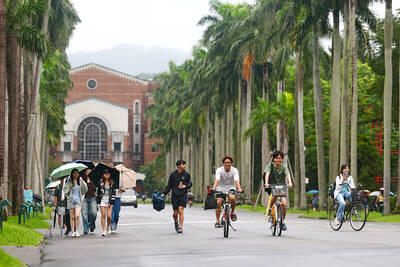
National Taiwan University (NTU) yesterday said it disqualified a person from an entrance examination for using AI smart glasses to cheat, along with two others for making untruthful statements in their curriculum vitae. The three applicants were given null scores, Taiwan’s highest-ranked university said, calling on prospective students to be honest in the admissions process. NTU registrar Lee Hung-sen (李宏森) said that the cheating applicant wore a hat and thick-rimmed glasses to the second written exam for medical school, claiming that they felt cold. Suspicions were aroused when the applicant stared oddly at the test for long stretches while steadily bringing the paper
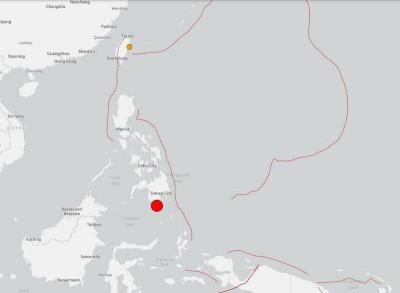
A magnitude 7.8 earthquake struck off the southern coast of Mindanao in the Philippines at 7:38am today, prompting the US Tsunami Warning System to issue an alert for neighboring countries, including Taiwan. The system issued a purple alert indicating a "tsunami threat." The potential threat zone includes Taiwan, the Philippines, Papua New Guinea, Yap and Palau. Philippine authorities were assessing the damage from the quake, with the office of civil defense seeking to verifying initial reports that 15 people had been killed and 129 injured in the region, mostly from falling debris. Arlene Hollero, disaster chief of Maasim town in the Philippines' Sarangani Province,
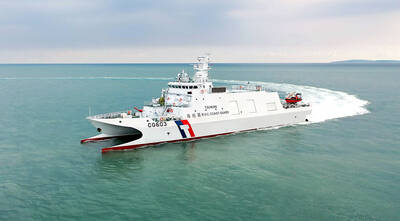
‘GRAY ZONE’ PRESSURE: Beijing’s activities are intended to create the deceitful impression that China has jurisdiction over the area around Taiwan, the CGA said Taiwan’s rights over its territorial waters and exclusive economic zone must not be violated by any country, the Mainland Affairs Council said yesterday, adding that it will not accept any unprovoked actions. The council issued the remarks in response to the China Coast Guard conducting maritime enforcement drills near eastern Taiwan and claiming to fully exercise China’s maritime administrative law enforcement authority. The Coast Guard Administration (CGA) has been closely monitoring the situation and is taking concrete steps to defend the nation’s sovereignty and secure its waters, the council said. China has no sovereign rights over the waters off eastern
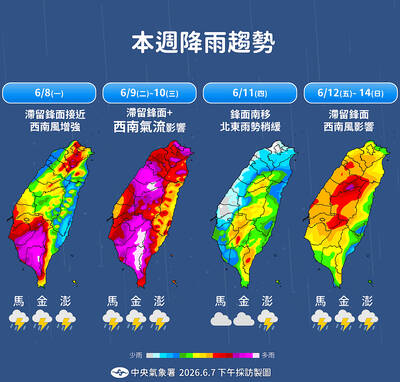
Heavy rain is expected to affect parts of Taiwan this week, the Central Weather Administration (CWA) said yesterday as a meteorologist said the active part of the annual plum rain season has started. A stationary plum rain front and southwesterly winds would bring unstable weather and abundant moisture to Taiwan from today for about a week, with the heaviest rainfall forecast for tomorrow and Wednesday, the CWA said. The agency said western and northeastern Taiwan, and mountainous areas in the east and southeast, could expect showers or thunderstorms on those two days, with localized heavy rain possible. Other parts of


 RSS
RSS