


Even in a gathering of about 70 people, spotting the money seekers was easy. They were the younger men huddled off to the sides, clutching glasses of mineral water and trying not to look anxious.
All around them, Silicon Valley veterans in semiformal attire traded jokes and gossip over cocktails. It was early evening, but the mid-June sun still slanted through the picture window of the Los Altos Golf and Country Club's private dining hall, where the "Band of Angels" was convening again.
Begun in 1995, the band is an informal club of about 150 angel investors, or private financiers, who meet for dinner once a month to network with one another and to listen to representatives from three companies looking for seed capital. Before being invited, each start-up must find an angel from the group to serve as its sponsor.
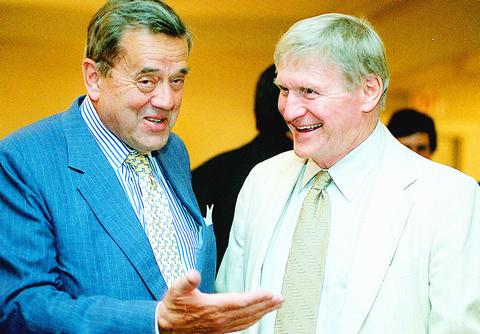
PHOTO: NY TIMES
Those seeking money must then pass a rigorous vetting process and survive the final cut administered by Hans Severiens and Ian Sobieski, the band's managing directors. All for the chance to zoom through their PowerPoint presentation in the 20 minutes before the timer next to the podium flashes red.
But running the gauntlet can definitely be worthwhile. If a company's presentation is well received, interested investors usually attend a follow-up luncheon a week later, where some may write personal checks for US$50,000 to US$100,000 in exchange for a small stake in the company.
Venture capital
In early 2000, it was still possible for a start-up to skip the angel stage and go directly to venture capitalists, taking home perhaps US$5 million with few questions asked. In the heady days before the tech boom collapsed, the venture capitalists had billion-dollar funds raised from limited partners like universities and could easily afford to risk a relative pittance on early stage concepts. No longer.
Venture capital financing fell from US$26.1 billion in the first quarter of 2000 to just US$10.2 billion for the first quarter of this year, according to PricewaterhouseCoopers/Venture One. What cash there was went mostly to struggling mid-stage companies already in the venture capitalists' portfolios; seed-stage financing plummeted to US$32.9 million, down 75 percent from a year earlier.
Angel backing
Not only are venture capitalists shying away from start-ups just getting off the ground, they are also creating a bottleneck down the line for those angels still willing to take a chance. "The companies in the tough spot now are ones that have angel backing but no venture capital," said Steve Jurvetson, managing director of Draper Fisher Jurvetson, an early-stage venture capital fund. "When they need more money, it's difficult to get VC's attention."
Last year the Band of Angels invested roughly US$25 million in 23 companies, making the group one of the most active of the many angel networks in the US. The Center for Venture Research at the University of New Hampshire puts the number of active angels in America at around 400,000. To be accredited, angel investors are required by the Securities and Exchange Commission to have assets of at least US$1 million.
Angel investing has become one of the most popular activities for many wealthy people. But it is not a hobby for the impatient or the cautious: Angels will not see their money again unless the company successfully goes public or is acquired. Given the youth of these companies, that can take a while even in an environment less hostile than the current one. Since its founding six years ago, fewer than 10 of the group's more than 100 investments have gone public, while about 15 have been acquired.
The group is also, in effect, a social club for Silicon Valley's elite. The band is distinguished from other angel networks by the credentials of its members, many of them veterans of Intel, Sun Microsystems and other icons of technology development. That can make them an intimidating audience to a lot of struggling entrepreneurs -- even more so now that the stock market's deflation has sewn up the purse strings of most other money sources.
"Times being what they are, we have to be realistic," said David Bandych, chief operating officer of the start-up Notiva, No. 2 in the evening lineup. Bandych and Tom Furphy, Notiva's chief executive, both left the East Coast supermarket chain Wegmans in early 2000 to found their software company, based in Rochester, New York.
"I think it's a good thing we didn't get funding last year," Bandych added, not entirely convincingly. "We've had to get customers and prove ourselves first instead."
At 7:30pm sharp, Severiens urged everyone to be seated. "If we don't get started now we'll all be here way past our bedtimes," he said, with a trace of a Dutch accent. Severiens' breadth of experience -- he was a nuclear physicist who worked for Perkin-Elmer and the Atomic Energy Commission before becoming an investment banker at Morgan Stanley and other white-shoe firms -- is par for the course among members of this group.
Financial smorgasbord
He calls himself and Sobieski the band's chefs, lining up a smorgasbord of wine, food and good companies to nibble on.
But first comes an appetizer from Fred Hoar, a co-founder of the group and a public relations maestro whose decades-long career has touched landmark technology companies from Fairchild Camera, whose later exiles founded Intel, to Apple Computer before it went public. Hoar began with a cheery "Greetings, angels and angelettes, welcome to `You Bet Your Assets,' our monthly walk on the wild side of Wall Street."
He flashed a grin before taking aim at, among others, himself. Regarding his rumpled cream suit, he joked, "Summer must be here: I look like a symphony in oatmeal." And he could not help noting the pain the group felt from the stock market. "As someone said," Hoar remarked, "I don't know whether to kill myself or go bowling."
Once the laughter died down and the salad course was cleared, the real business began in earnest. First up was Cardiac Focus, a medical device company developing a disposable vest that will help doctors screen and map cardiac arrhythmias without surgery.
Craig McMullen, 57, recently recruited as the company's chief executive, delivered his PowerPoint presentation in a quietly urgent monotone. The company was on the prowl for US$2 million to complete the development team, perform clinical trials, and file for Food and Drug Administration approval. Given the company's sponsors to the angels -- among them Wally Buch, a heart surgeon, and Tom Fogarty, also a surgeon and the inventor of the first balloon catheter -- it was no surprise that the group paid close attention to the spiel.
Several hands went up for questions, particularly about regulatory issues, which were handled confidently by Terry Ransbury, 39, the company's co-founder and its chief technology officer.
Furphy, 35, of Notiva went next. He started off badly, with an audience participation trick -- "Who's had a career in accounts payable?" -- that elicited weary sighs. One angel took a look at Furphy's nearly shaved head and whispered, "Who'd trust someone with a haircut like that?" But heads started nodding as Furphy described the big retailers that are already using Notiva's software. The company's management team, with years of experience at Wegmans, also got the thumbs-up.
Speedy presentation
Then the 20-minute timer on the table turned yellow. With three minutes left, Furphy sped through his PowerPoint presentation like the pitchmen in the latest Toyota commercials, abandoning sentences halfway through. "We've thought about getting a hook for moments like these," Hoar confided.
The brief Q-and-A session consisted mostly of questions about Notiva's venture capital financing. Notiva's team was hoping to raise US$500,000 from the angels to tide the company over until it secures US$3 million to US$5 million in venture capital.
The audience was tiring in spite of the coffee making the rounds. And the final start-up, a developer of software platforms to allow wireless carriers to customize their mobile phone offerings, did not perk them back up. One investor even fell asleep over his apple tart.
Afterward, as people milled around, Furphy insisted that his timer malfunctioned. "I was robbed of a good seven minutes," he laughed. He was not too troubled; apparently several angels indicated that they would show up for Notiva's follow-up lunch.
Before the chill in investing hit, two of the three companies that presented themselves to the band could probably expect to get checks. Now, it's more likely to be one. But which?
As it turned out, no one but Notiva's sponsors and the two managing directors showed up for its lunch. The band's members were cautious, waiting to see if the company was indeed about to get a "term sheet," a venture capital contract. Others were less concerned. The morning of the follow-up, said Mark Brandt, the company's chief development officer, a single angel investor from outside the group committed to the entire sum.
The clear favorite of the evening was Cardiac Focus. In the week after the dinner, 10 members wrote checks, while another four rounded out the company's US$2 million goal at its lunch.
"The mechanisms of the funding are pretty much the same, independent of product," Ransbury, of Cardiac Focus, wrote in an e-mail the day after the dinner. "If you get critical mass with the investors who the followers admire, then the deal happens. If not, it really doesn't matter, even if you have the cure for cancer."
But Cardiac Focus still faces many hurdles, including proving its device works well enough to get FDA approval and eligibility for Medicare reimbursement.
At least now it has a greater chance of finding out. "The lust for entrepreneurship has not changed," Severiens said. "And now there are great bargains to be had."

National Taiwan University (NTU) yesterday said it disqualified a person from an entrance examination for using AI smart glasses to cheat, along with two others for making untruthful statements in their curriculum vitae. The three applicants were given null scores, Taiwan’s highest-ranked university said, calling on prospective students to be honest in the admissions process. NTU registrar Lee Hung-sen (李宏森) said that the cheating applicant wore a hat and thick-rimmed glasses to the second written exam for medical school, claiming that they felt cold. Suspicions were aroused when the applicant stared oddly at the test for long stretches while steadily bringing the paper
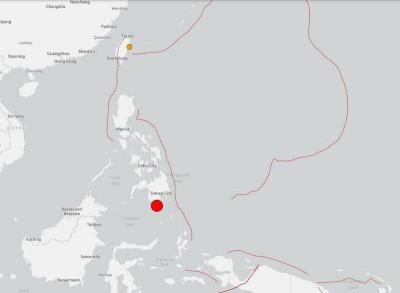
A magnitude 7.8 earthquake struck off the southern coast of Mindanao in the Philippines at 7:38am today, prompting the US Tsunami Warning System to issue an alert for neighboring countries, including Taiwan. The system issued a purple alert indicating a "tsunami threat." The potential threat zone includes Taiwan, the Philippines, Papua New Guinea, Yap and Palau. Philippine authorities were assessing the damage from the quake, with the office of civil defense seeking to verifying initial reports that 15 people had been killed and 129 injured in the region, mostly from falling debris. Arlene Hollero, disaster chief of Maasim town in the Philippines' Sarangani Province,
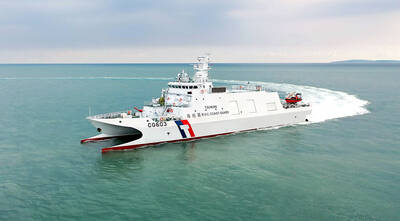
‘GRAY ZONE’ PRESSURE: Beijing’s activities are intended to create the deceitful impression that China has jurisdiction over the area around Taiwan, the CGA said Taiwan’s rights over its territorial waters and exclusive economic zone must not be violated by any country, the Mainland Affairs Council said yesterday, adding that it will not accept any unprovoked actions. The council issued the remarks in response to the China Coast Guard conducting maritime enforcement drills near eastern Taiwan and claiming to fully exercise China’s maritime administrative law enforcement authority. The Coast Guard Administration (CGA) has been closely monitoring the situation and is taking concrete steps to defend the nation’s sovereignty and secure its waters, the council said. China has no sovereign rights over the waters off eastern
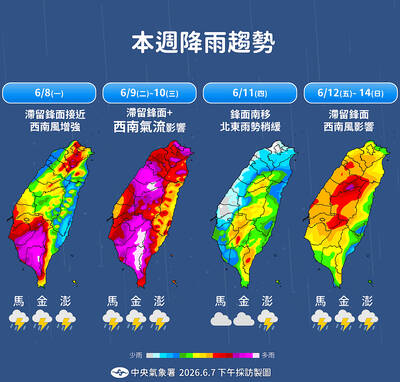
Heavy rain is expected to affect parts of Taiwan this week, the Central Weather Administration (CWA) said yesterday as a meteorologist said the active part of the annual plum rain season has started. A stationary plum rain front and southwesterly winds would bring unstable weather and abundant moisture to Taiwan from today for about a week, with the heaviest rainfall forecast for tomorrow and Wednesday, the CWA said. The agency said western and northeastern Taiwan, and mountainous areas in the east and southeast, could expect showers or thunderstorms on those two days, with localized heavy rain possible. Other parts of


 RSS
RSS