


Incumbent Portuguese Prime Minister Antonio Costa’s Socialist Party won a general election marked by low turnout on Sunday after presiding over a period of solid economic growth following years of austerity.
The Socialist Party (PS) took 36.65 percent of the vote, followed by the center-right Social Democrats (PSD) with 27.9 percent, near-total results from the Portuguese Ministry of Internal Administration showed.
That left the PS, which has governed for the past four years with the support of two smaller hard-left parties, with 106 seats in the 230-seat parliament, up from 86 seats in the outgoing assembly and just 10 seats short of an outright majority.
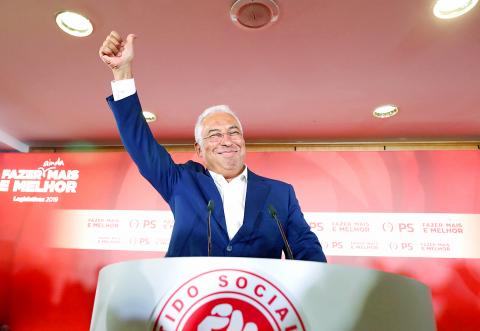
Photo: Reuters
Four seats still must be attributed, according to the results of votes cast abroad.
The election bucks the trend of declining center-left fortunes and the rise of far-right populist forces seen elsewhere in Europe.
A new far-right formation, Chega! or “That’s Enough!” entered parliament for the first time, but it won a single seat.
Turnout was 54.5 percent, the lowest level for a general election since Portugal returned to democracy after a decades-long right-wing dictatorship was toppled in 1974.
The question now is who Costa, 58, will pick as his allies.
After the last general election in 2015 in which the PS finished second, Costa convinced the Communist Party and Left Bloc to support a minority PS government, an unprecedented alliance that foes nicknamed the “geringonca,” or odd contraption.
During his victory speech Costa said he wanted to “renew this experience” of an alliance with the hard-left.
“The election shows that the Portuguese like the ‘geringonca,’ they like this political solution,” he said as supporters chanted: “Victory!”
“Stability is essential for Portugal’s international credibility and for attracting investors,” Costa said. “The PS will strive to find solutions that ensure this stability for the entire legislature.”
The Left Bloc, which won 19 seats just as in the last election, and the Communists, which won 12 seats, five fewer than in the last polls, said they were willing to once again back the PS.
A strengthened PS has more alternatives to get laws approved in parliament, political analyst Pedro Norton told public television broadcaster RTP.
“This is an incentive for it to govern alone, by searching for ad hoc agreements” to govern instead of forming a formal agreement, he added.
The election gave Costa another potential governing partner as the upstart People-Animals-Nature party, which has backed his budgets in the past, won four seats, up from just one.
Retired municipal worker Antonio Tavares, 76, said he voted for the PS, because the government raised pensions by 50 to 100 euros (US$55 to US$110) per month.
“It’s not a lot, it should be more, but that allows one to live more comfortably,” he said after casting his ballot in Lisbon.
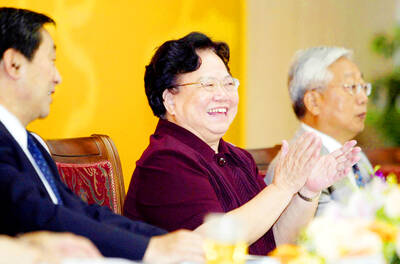
The death of a former head of China’s one-child policy has been met not by tributes, but by castigation of the abandoned policy on social media this week. State media praised Peng Peiyun (彭珮雲), former head of China’s National Family Planning Commission from 1988 to 1998, as “an outstanding leader” in her work related to women and children. The reaction on Chinese social media to Peng’s death in Beijing on Sunday, just shy of her 96th birthday, was less positive. “Those children who were lost, naked, are waiting for you over there” in the afterlife, one person posted on China’s Sina Weibo platform. China’s
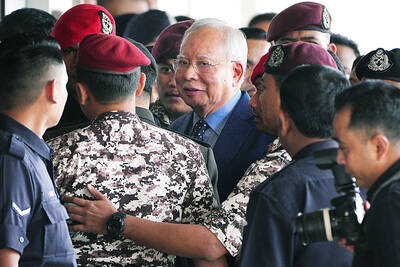
‘NO COUNTRY BUMPKIN’: The judge rejected arguments that former prime minister Najib Razak was an unwitting victim, saying Najib took steps to protect his position Imprisoned former Malaysian prime minister Najib Razak was yesterday convicted, following a corruption trial tied to multibillion-dollar looting of the 1Malaysia Development Berhad (1MDB) state investment fund. The nation’s high court found Najib, 72, guilty on four counts of abuse of power and 21 charges of money laundering related to more than US$700 million channeled into his personal bank accounts from the 1MDB fund. Najib denied any wrongdoing, and maintained the funds were a political donation from Saudi Arabia and that he had been misled by rogue financiers led by businessman Low Taek Jho. Low, thought to be the scandal’s mastermind, remains
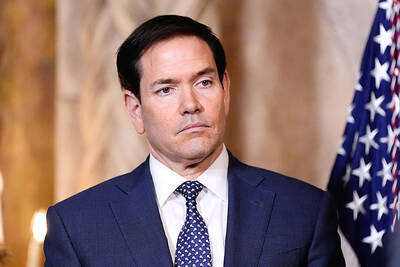
‘POLITICAL LOYALTY’: The move breaks with decades of precedent among US administrations, which have tended to leave career ambassadors in their posts US President Donald Trump’s administration has ordered dozens of US ambassadors to step down, people familiar with the matter said, a precedent-breaking recall that would leave embassies abroad without US Senate-confirmed leadership. The envoys, career diplomats who were almost all named to their jobs under former US president Joe Biden, were told over the phone in the past few days they needed to depart in the next few weeks, the people said. They would not be fired, but finding new roles would be a challenge given that many are far along in their careers and opportunities for senior diplomats can

Australian Prime Minister Anthony Albanese yesterday announced plans for a national bravery award to recognize civilians and first responders who confronted “the worst of evil” during an anti-Semitic terror attack that left 15 dead and has cast a heavy shadow over the nation’s holiday season. Albanese said he plans to establish a special honors system for those who placed themselves in harm’s way to help during the attack on a beachside Hanukkah celebration, like Ahmed al-Ahmed, a Syrian-Australian Muslim who disarmed one of the assailants before being wounded himself. Sajid Akram, who was killed by police during the Dec. 14 attack, and


 RSS
RSS