


French and German attempts to end the conflict in east Ukraine risk increasing tensions that were already rising in the EU over how to handle Russia and which could complicate peace efforts.
Progress at talks between Russian and Ukrainian envoys have raised hopes of convening the first international summit in three years on ending the fighting between pro-Russian separatists and Ukrainian government forces.
Some EU states, while welcoming a summit that would involve France, Germany, Ukraine and Russia, are worried by growing talk that the EU might partially lift sanctions imposed on Moscow since its seizure of Crimea from Ukraine in 2014.
EU divisions over how to deal with Moscow have been growing with overtures to the Kremlin in recent months, led by Paris.
Comments by French President Emmanuel Macron have especially upset governments in EU countries that were once Soviet satellite states or constituent republics.
Alarmed by what they see as an increasingly aggressive Russian foreign policy, they reject anything that might smack of appeasement.
“Are we to reward Russia because they have not done anything grotesque in the past few months?” one EU diplomat asked.
The tension could make it harder for the EU to agree to new sanctions if Russia intensifies what are often depicted by Western leaders as efforts by Russian President Vladimir Putin to undermine Western institutions such as the 28-nation bloc.
The strain could also further divide the bloc — with a group of French-led, relatively Russia-friendly allies such as Italy on one side, and the Baltic states, Poland and Romania on the other.
This in turn could weaken the resolve of Western-backed governments to stand up for Ukraine, diplomats said.
EU diplomats still expect leaders of the bloc to extend sanctions on Russia’s energy, financial and defense sectors for another six months at a regular summit in December.
While Macron and German Chancellor Angela Merkel say there could be no sanctions relief until Russia implements a peace deal for Ukraine agreed in 2014 and 2015, both see sanctions as impeding better relations with Moscow.
The measures, imposed over the annexation of Crimea and Russian support for the separatists fighting in Ukraine, require all EU governments to agree. Any friction could allow just one country, possibly Moscow’s ally Hungary, to end them.
“The time has come for the German government to pressure the EU for a partial lifting of the sanctions,” said German lawmaker Peter Ramsauer, whose center-right Christian Social Union is a member of Germany’s ruling coalition.
Baltic states, once part of the Soviet Union, fear a Russian trap to block Ukraine’s ambition to join NATO and the EU.
The country of 42 million has borders both with Russia and countries in the EU and NATO.
Belgian Prime Minister Charles Michel told EU diplomats last month that while Russia was a security threat, it “remains a neighbor too and we must deal with this reality.”
In a letter to EU diplomats last month, the EU’s ambassador to Moscow also called for a “pragmatic” approach to Russia.
EU diplomats from eastern, Baltic and Nordic nations have said they are confused by Macron’s approach, questioning what has changed in Russia to merit a renaissance in relations.
The conflict in east Ukraine has killed more than 13,000 people since April 2014.
Putin has ruled out returning Crimea, gifted to Ukraine in 1954 by then-Soviet leader Nikita Khrushchev.
The EU’s five-point strategy to deal with Russia involves so-called selective engagement, and many EU diplomats say that is the best way forward, seeking Russian collaboration on issues such as climate change to rebuild trust.
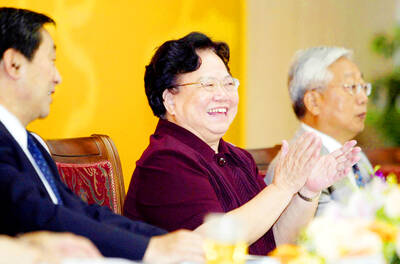
The death of a former head of China’s one-child policy has been met not by tributes, but by castigation of the abandoned policy on social media this week. State media praised Peng Peiyun (彭珮雲), former head of China’s National Family Planning Commission from 1988 to 1998, as “an outstanding leader” in her work related to women and children. The reaction on Chinese social media to Peng’s death in Beijing on Sunday, just shy of her 96th birthday, was less positive. “Those children who were lost, naked, are waiting for you over there” in the afterlife, one person posted on China’s Sina Weibo platform. China’s
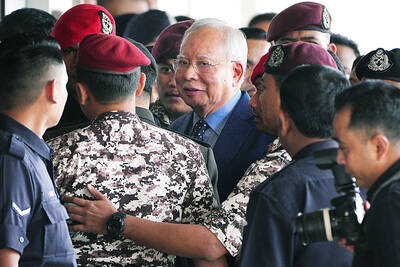
‘NO COUNTRY BUMPKIN’: The judge rejected arguments that former prime minister Najib Razak was an unwitting victim, saying Najib took steps to protect his position Imprisoned former Malaysian prime minister Najib Razak was yesterday convicted, following a corruption trial tied to multibillion-dollar looting of the 1Malaysia Development Berhad (1MDB) state investment fund. The nation’s high court found Najib, 72, guilty on four counts of abuse of power and 21 charges of money laundering related to more than US$700 million channeled into his personal bank accounts from the 1MDB fund. Najib denied any wrongdoing, and maintained the funds were a political donation from Saudi Arabia and that he had been misled by rogue financiers led by businessman Low Taek Jho. Low, thought to be the scandal’s mastermind, remains
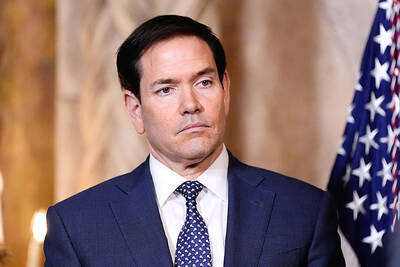
‘POLITICAL LOYALTY’: The move breaks with decades of precedent among US administrations, which have tended to leave career ambassadors in their posts US President Donald Trump’s administration has ordered dozens of US ambassadors to step down, people familiar with the matter said, a precedent-breaking recall that would leave embassies abroad without US Senate-confirmed leadership. The envoys, career diplomats who were almost all named to their jobs under former US president Joe Biden, were told over the phone in the past few days they needed to depart in the next few weeks, the people said. They would not be fired, but finding new roles would be a challenge given that many are far along in their careers and opportunities for senior diplomats can

Australian Prime Minister Anthony Albanese yesterday announced plans for a national bravery award to recognize civilians and first responders who confronted “the worst of evil” during an anti-Semitic terror attack that left 15 dead and has cast a heavy shadow over the nation’s holiday season. Albanese said he plans to establish a special honors system for those who placed themselves in harm’s way to help during the attack on a beachside Hanukkah celebration, like Ahmed al-Ahmed, a Syrian-Australian Muslim who disarmed one of the assailants before being wounded himself. Sajid Akram, who was killed by police during the Dec. 14 attack, and


 RSS
RSS