


The Philippines, one of two Southeast Asian countries that protested being treated like dumpsites by wealthier nations, yesterday shipped 69 containers of what its officials called illegally transported garbage back to Canada.
Subic Bay Metropolitan Authority Chairperson and Administrator Wilma Eisma said that the tonnes of garbage were loaded overnight on the container ship M/V Bavaria, which left on a 20-day journey to the Canadian port city of Vancouver and ended a “sordid chapter in our history.”
The Bavaria is to stop at a Taiwanese port before heading to Canada, she said.
Environmental activists, including those from Greenpeace and EcoWaste Coalition, welcomed the Bavaria’s arrival at Subic Bay, and on Thursday sailed on board a small outrigger with a streamer reading: “Philippines: Not a garbage dumping ground.”
Phillipine President Rodrigo Duterte had threatened to forcibly ship back the trash, which officials said was transported to the Philippines in 103 containers in 2013 to 2014, and falsely declared as recyclable plastic scraps.
Several containers of the trash had been disposed of, including in a landfill, leaving 69 containers of electrical and household waste, including used diapers, rotting in two Philippine ports.
The Philippine government recalled its ambassador and consuls in Canada earlier this month over Ottawa’s failure to comply with a May 15 deadline to take back the waste.
“I think the message that we’re sending to the world is that we will not be a pushover and, moreover, that the president is really somebody to reckon with,” Eisma said.
The return of the garbage removes a six-year thorn in relations between the two countries, especially under Duterte, who took office in mid-2016.
He has resented international criticism, including by Canadian Prime Minister Justin Trudeau, of his bloody crackdown on illegal drugs that has left thousands of mostly poor suspects dead.
The countries had sought to resolve the problem for years, with Trudeau in 2017 saying that legal issues preventing the return of the garbage had been resolved.
However, the return was delayed by other issues, despite Canadian assurances of its willingness to take back the garbage that Trudeau said was shipped to Manila in a private commercial transaction.
Last week, Canadian Minister of Environment and Climate Change Catherine McKenna said that the government had awarded a contract to French shipping giant Bollore Logistics Canada, calling for the return of the containers by the end of June.
However, Philippine presidential spokesman Salvador Panelo rejected the plan, saying that the Duterte administration would look for a private shipping company to transport the garbage sooner.
“If Canada will not accept their trash, we will leave the same within its territorial waters,” Panelo said. “The president’s stance is as principled as it is uncompromising: The Philippines as an independent sovereign nation must not be treated as trash by other foreign nations.”
Malaysian Prime Minister Mahathir Mohamad has also criticized the practice of wealthier countries such as the US, Canada and Japan sending their non-recyclable waste to poorer countries.
Speaking in Tokyo on Thursday, Mahathir said it was “grossly unfair” and should stop.
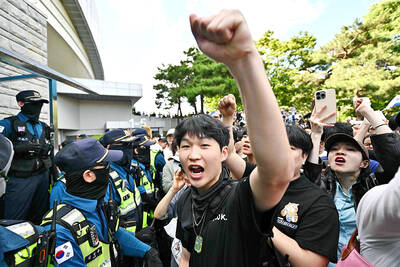
‘ABSURD MISTAKE’: The election commission said that there had been a failure to anticipate turnout after 14 polling stations ran short of ballot papers South Korean riot police yesterday cleared protesters from a Seoul polling station after a 35-hour blockade sparked by a shortage of ballot papers during local elections earlier this week. Wednesday’s election was the first nationwide vote since South Korean President Lee Jae-myung took office following the ouster of Yoon Suk-yeol over his short-lived martial law declaration. Lee’s ruling Democratic Party swept most races, but failed to flip the crucial Seoul mayoral seat. The South Korean National Election Commission apologized, blaming a failure to anticipate turnout after 14 polling stations in Seoul ran short of ballot papers. Some polling stations stayed open until 10pm to

France experienced its hottest spring on record, the French weather service said on Tuesday, after an exceptional early heat wave that also broke highs for the season in England and Wales. Meteo-France said the average nationwide temperature over March to May was 13.8°C — about 1.7°C above the norm, and surpassing records set in 2011 and 2020. “The warmest spring since records began in 1900,” it said in a bulletin. All three months were warmer than average, but the onset of an “unprecedented heatwave” late last month pushed the mercury to highs typically seen at the height of the summer. “Our country had never

A Sherpa guide was found crawling to base camp on Mount Everest a week after he went missing and was reunited with his family, who had given up hope he would return. Dawa Sherpa was last seen on Friday last week descending the mountain, but he did not reach base camp even though his client did. The pair were among the last climbers on the mountain as the climbing season came to an end and the route was dismantled. Dawa was located by a cleaning crew on Thursday morning as he was crawling down the snowy slopes around the Khumbu Icefall, just above
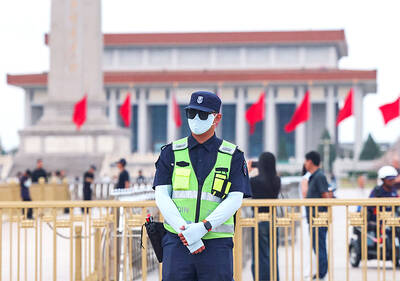
Chinese authorities are snuffing out any remembrance of the deadly 1989 military crackdown on student-led pro-democracy protests in Tiananmen Square, which happened 37 years ago yesterday, in a further tightening of a years-long campaign to erase what happened from public memory. Police told relatives of the victims they would not be allowed to visit a cemetery in Beijing on the anniversary of the crackdown, a person with knowledge of the matter said. Relatives of the victims visited the cemetery on the anniversary for more than 30 years to read memorial statements with police keeping watch, Amnesty International said. Hundreds of people,


 RSS
RSS