


French President Emmanuel Macron sees himself as Europe’s savior and this week’s European Parliament elections as a make-or-break moment for the beleaguered EU, but Macron is no longer the fresh-faced force who marched into a surprising presidential victory to the rousing EU anthem two years ago.
His pro-Europe vision has collided with populists and national interests across the continent. At home, his political vision has given rise to France’s raucous yellow vest uprising over his government’s pro-business policies.
Macron wanted the European Parliament elections that begin on Thursday to be the key moment that he could push his ambitions for a stronger Europe — but instead, nationalists and populists who criticized the 28-nation bloc could achieve unprecedented success.
They argue that EU leaders have failed to manage migration into the continent and remain out of touch with ordinary workers’ concerns.
“We have a crisis of the European Union. This is a matter of fact. Everywhere in Europe, when you look at the past five to six years, in our country but in a lot of countries, all the extremes, extreme-rights, are increasing,” Macron said on Thursday, making an unexpected appeal for European unity on the sidelines of a technology trade show.
“On currency, on digital, on climate action, we need more Europe,” he said. “I want the EU to be more protective of our borders regarding migration, terrorism and so on, but I think if you fragment Europe, there is no chance you have a stronger Europe.”
France’s youngest president grew up with the EU and has been using the shared European euro currency his whole adult life, and sees it as Europe’s only chance to stay in the global economic game.
He has visited 20 of the EU’s 28 countries in his two years in office, and while he acknowledges the EU’s problems, he wants to fix the bloc — not disassemble it.
Macron won the 2017 presidential election over France’s far-right, anti-immigration party leader Marine Le Pen on a pledge to make Europe stronger to face global competition against the US and China. Since then, he has had to make compromises with other EU leaders — and clashed with some nations where populist parties govern, from Poland to Italy.
Four months after his election, Macron outlined his vision for Europe in a sweeping speech at Paris’ Sorbonne university, calling for a joint EU budget, shared military forces and harmonized taxes.
However, with Brexit looming and nationalism rising, Macron has had to reconsider his ambitions.
“In Europe, what is expected from France is to clearly say what it wants, its goals, its ambitions, and then be able to build a compromise with Germany to move forward” with other European countries, Macron said last week.
Macron stressed that despite her initial reluctance, German Chancellor Angela Merkel agreed last year to create a eurozone budget they hope will boost investment and provide a safety mechanism for the 19 nations using the euro currency.
In March, Macron sought to draw support for a Europe of “freedom, protection and progress” with a written call to voters in 28 countries to reject nationalist parties that “offer nothing.”
He also proposed to define a roadmap for the EU by the end of this year in a discussion with all member nations and a panel of European citizens.
However, Macron has little chance to repeat Europe-wide what he did in France: rip up the political map by building a powerful centrist movement that weakened the traditional left and right.
Across the continent, the centrists are not expected to come out remotely on top, but rank third or even lower behind the parliament’s traditional two biggest groups, the right-wing European People’s Party and the left-wing Socialists and Democrats group.
Even at home, Macron is far from certain of being able to claim victory in the European vote. Polls suggest his party will be among France’s top two vote-getters in the election on Sunday, but its main rival, the far-right National Rally party, is determined to take revenge on Macron beating Le Pen in 2017.

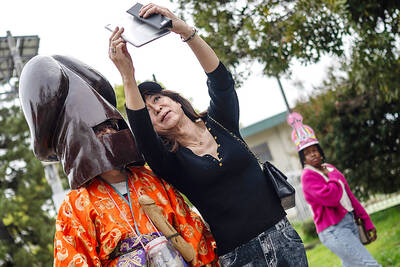
Showcasing phallus-shaped portable shrines and pink penis candies, Japan’s annual fertility festival yesterday teemed with tourists, couples and families elated by its open display of sex. The spring Kanamara Matsuri near Tokyo features colorfully dressed worshipers carrying a trio of giant phallic-shaped objects as they parade through the street with glee. The festival, as legend has it, honors a local blacksmith in the Edo Period (1603-1868) who forged an iron dildo to break the teeth of a sharp-toothed demon inhabiting a woman’s vagina that had been castrating young men on their wedding nights. A 1m black steel phallus sits in the courtyard of

JAN. 1 CLAUSE: As military service is voluntary, applications for permission to stay abroad for over three months for men up to age 45 must, in principle, be granted A little-noticed clause in sweeping changes to Germany’s military service policy has triggered an uproar after it emerged that the law requires men aged up to 45 to get permission from the armed forces before any significant stay abroad, even in peacetime. The legislation, which went into effect on Jan. 1 aims to bolster the military and demands all 18-year-old men fill out a questionnaire to gauge their suitability to serve in the armed forces, but stops short of conscription. If the “modernized” model fails to pull in enough recruits, parliament will be compelled to discuss the reintroduction of compulsory service, German
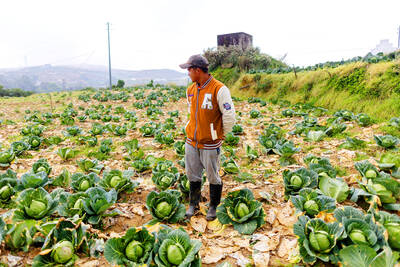
Filipino farmers like Romeo Wagayan have been left with little choice but to let their vegetables rot in the field rather than sell them at a loss, as rising oil prices linked to the Iran war drive up the cost of harvesting, labor and transport. “There’s nothing we can do,” said Wagayan, a 57-year old vegetable farmer in the northern Philippine province of Benguet. “If we harvest it, our losses only increase because of labor, transportation and packing costs. We don’t earn anything from it. That’s why we decided not to harvest at all,” he said. Soaring costs caused by the Middle East
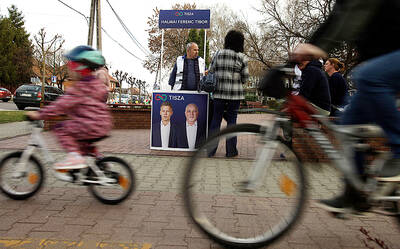
Hungarian Prime Minister Viktor Orban’s officially declared wealth is fairly modest: some savings and a jointly owned villa in Budapest. However, voters in what Transparency International deems the EU’s most corrupt country believe otherwise — and they might make Orban pay in a general election this Sunday that could spell an end to his 16-year rule. The wealth amassed by Orban’s inner circle is fueling the increasingly palpable frustration of a population grappling with sluggish growth, high inflation and worsening public services. “The government’s communication machine worked well as long as our economic situation remained relatively good,” said Zoltan Ranschburg, a political analyst


 RSS
RSS