

The Indian government yesterday told the nation’s top court that some of the Muslim Rohingya who have fled Myanmar are a serious security threat as it sought to justify moves to deport up to 40,000 of them.
Senior Indian Home Ministry official Mukesh Mittal said the Supreme Court must allow the government to take a decision in the wider interests of the country since some of the Rohingya have an extremist record.
“Some of the Rohingyas with militant background are also found to be very active in Jammu, Delhi, Hyderabad and Mewat and have been identified as having a very serious and potential threat to the national security of India,” he said in a written statement to the court.

Photo: AFP
The statement also highlighted the “serious potential” for an “eruption of violence against the Buddhists who are Indian citizens who stay on Indian soil.”
The Rohingya have denied any link with Muslim extremist groups.
The statement came in response to a petition filed at the Supreme Court challenging the government’s decision to deport the Rohingya, many of whom have been in India for the past decade.
Prashant Bhushan, a lawyer representing the Rohingya, said the Indian constitution “provides equal rights and liberty to every person” including non-citizens.
Mohammad Salimullah, one of the two Rohingya petitioners, said the authorities in New Delhi had always been helpful so he was hopeful the court would support the refugees.
The UN said there are 16,000 registered Rohingya in India, but many more are undocumented. The government puts the figure at 40,000.
About 7,000 of them live in shanties in India’s Jammu Kashmir state and they say they have faced hostility from the majority Hindu community there.
Rights groups have urged India to abide by its international obligations after the government said last month it had asked state authorities to identify and deport the Rohingya living in their territories.
Many experts question where India could send the Rohingya even if the deportations get Supreme Court backing.
Myanmar claims the community are illegal immigrants from Bangladesh and denies them citizenship.
Meanwhile, pressure grew yesterday on Myanmar’s government as Human Rights Watch urged world leaders to impose sanctions on the Burmese military, which is accused of driving out more than 400,000 Rohingya Muslims in an orchestrated “ethnic cleansing” campaign.
The call from Human Rights Watch came as the UN General Assembly prepared to convene in New York City, with the crisis in Myanmar one of the most pressing topics.
Myanmar hinted on Sunday that it would not take back all who had fled across the border, accusing those refugees of having links to the Rohingya militants whose raids on police posts last month triggered the army backlash.
Any moves to block the refugees’ return will likely inflame Bangladeshi Prime Minister Sheik Hasina, who will urge the General Assembly to put more global pressure on Myanmar to take back all the Rohingya massing in shanty towns and camps near the border.
Human Rights Watch also called for the “safe and voluntary return” of the displaced as it urged governments around the globe to punish Myanmar’s army with sanctions for the “ongoing atrocities” against the Rohingya.
It called on the General Assembly to make the crisis a priority, urging countries to impose travel bans and asset freezes on Burmese officers implicated in the abuses, as well as to expand arms embargoes.
Burmese State Councilor Aung San Suu Kyi is preparing a televised address to the nation today on the crisis.
The Nobel peace laureate has angered the international community with her near-silence on the plight of the Rohingya and her failure to condemn the actions of the army.
In other developments, police in Bangladesh yesterday ramped up security as more than 10,000 Muslim hardliners marched on Myanmar’s embassy in Dhaka to protest against the violence driving the Rohingya out of Myanmar.
A huge crowd of demonstrators in white robes chanting “God is great” assembled outside Bangladesh’s largest mosque ahead of the planned “siege” of the embassy.
The Hefazat-e-Islami has vowed to station hundreds of thousands of followers outside the embassy.

US President Donald Trump on Wednesday threatened to take action against the EU if it moves forward with European Commission President Ursula von der Leyen’s proposal to make Canada the bloc’s first associate member. “If they do that, if I think it’s at all a hostile act; I will put very serious tariffs or stop trading with Europe on many things,” Trump told reporters en route to an event in North Carolina, calling the proposal “laughable.” “If it’s a good intention, that’s fine. If it’s a bad intention, we’ll put very heavy tariffs on Europe,” he said. Von der Leyen made the proposal
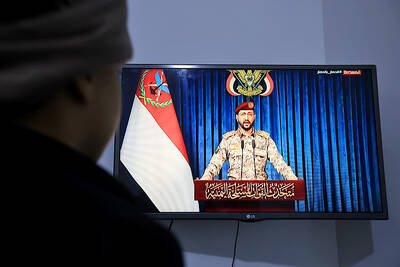
ON THE MOVE: Trump unexpectedly cut short a trip to return to the White House, while the State Department warned Americans to avoid travel to the Middle East The US on Saturday warned that hostilities between Saudi Arabia and Iran-backed Houthis could “escalate rapidly” after a missile attack targeted Riyadh for the first time since the Yemen conflict resumed. US President Donald Trump on Saturday cut short a weekend at Camp David, a secluded presidential complex in rural Maryland, to return unexpectedly to the White House. The White House gave no explanation for the early return, which comes as a new threshold was crossed in the conflict between Saudi Arabia and the Houthis, who control a large part of Yemen and are fighting government forces backed by a coalition led

World leaders gather in New York this week for the UN General Assembly, bracing for US President Donald Trump’s return to the rostrum for a second year running, with talks centering on the widening conflicts in the Middle East and Ukraine and the risks of artificial intelligence (AI). Nearly 130 heads of state meet with the post-World War II order under strain and with the UN itself struggling to remain relevant and weathering attacks from Trump, who has slashed the US’ contributions and withdrawn from dozens of UN bodies. Chinese President Xi Jinping (習近平), who last addressed the diplomatic jamboree via video

The US military came close to boarding a Chinese vessel in the Middle East earlier this year based on a flawed intelligence report prepared with the help of artificial intelligence (AI), CNN said on Friday. US intelligence indicated the ship was carrying nuclear weapons-related components, leading US forces to prepare to intercept it, the broadcaster reported, citing four anonymous sources familiar with the incident. However, the operation was called off after officials determined that an AI chatbot used by an analyst had misidentified the material the ship was carrying. The report was “entirely false,” but “almost started a war,” CNN quoted one source


 RSS
RSS