


A 10-week cholera epidemic has now infected more than 300,000 people in Yemen, the International Committee of the Red Cross (ICRC) said yesterday, a health disaster on top of war, economic collapse and near-famine in the impoverished nation.
“Disturbing. We’re at 300k+ suspected cases with ~7k new cases/day,” ICRC regional director Robert Mardini said on Twitter.
The WHO said there were 297,438 suspected cases and 1,706 deaths by Friday, but it did not publish a daily update on Sunday, when the 300,000 mark looked set to be reached.
A WHO spokesman said the figures were still being analyzed by the Yemen Ministry of Public Health.
Although the daily growth rate in the overall number of cases has halved to just more than 2 percent in recent weeks and the spread of the disease has slowed in the worst-hit regions, outbreaks in other areas have grown rapidly.
The hardest-hit areas have been in the nation’s west, which have been fiercely contested in the two-year war between a Saudi-led coalition and armed Iran-aligned Houthi rebels.
The war has been a breeding ground for the disease, which spreads by feces contaminating food or water and thrives in places with poor sanitation.
Over the past week, a few cases have appeared in the city of Sayun and Mukalla Port in the Hadramawt region in the east.
Yemen’s economic collapse means that 30,000 health workers have not been paid for more than 10 months, so the UN has stepped in with “incentive” payments to get them involved in an emergency campaign to fight the disease.
The WHO has said its response, based on a network of rehydration points and the remnants of Yemen’s shattered health system, has succeeded in catching the disease early and keeping the death rate from the disease low at 0.6 percent of cases.
The spread of the disease is also being limited by herd immunity — the natural protection afforded by a large proportion of the population contracting and then surviving the disease.
It is not yet clear how people could be affected. Early in the outbreak, the WHO said there could be 300,000 cases within six months, but on June 27, it said the epidemic might have reached the halfway mark at 218,800 cases.
However, since then, the daily number of new cases has risen from an average of about 6,500 to about 7,200, according to WHO data.

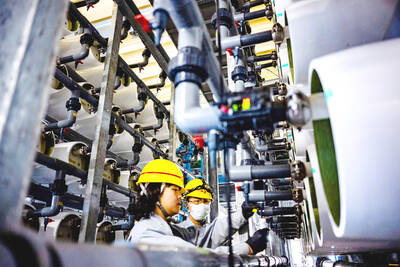
HIGH HOPES: The power source is expected to have a future, as it is not dependent on the weather or light, and could be useful for places with large desalination facilities A Japanese water plant is harnessing the natural process of osmosis to generate renewable energy that could one day become a common power source. The possibility of generating power from osmosis — when water molecules pass from a less salty solution to a more salty one — has long been known. However, actually generating energy from that has proved more complicated, in part due the difficulty of designing the membrane through which the molecules pass. Engineers in Fukuoka, Japan, and their private partners think they might have cracked it, and have opened what is only the world’s second osmotic power plant. It generates

When a hiker fell from a 55m waterfall in wild New Zealand bush, rescuers were forced to evacuate the badly hurt woman without her dog, which could not be found. After strangers raised thousands of dollars for a search, border collie Molly was flown to safety by a helicopter pilot who was determined to reunite the pet and the owner. A week earlier, an emergency rescue helicopter found the woman with bruises and lacerations after a fall at a rocky spot at the waterfall on the South Island’s West Coast. She was airlifted on March 24, but they were forced to
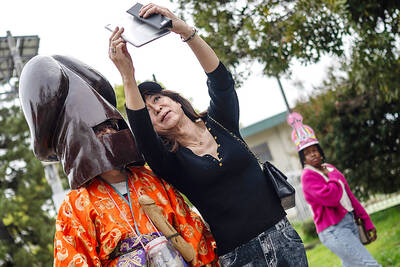
Showcasing phallus-shaped portable shrines and pink penis candies, Japan’s annual fertility festival yesterday teemed with tourists, couples and families elated by its open display of sex. The spring Kanamara Matsuri near Tokyo features colorfully dressed worshipers carrying a trio of giant phallic-shaped objects as they parade through the street with glee. The festival, as legend has it, honors a local blacksmith in the Edo Period (1603-1868) who forged an iron dildo to break the teeth of a sharp-toothed demon inhabiting a woman’s vagina that had been castrating young men on their wedding nights. A 1m black steel phallus sits in the courtyard of

JAN. 1 CLAUSE: As military service is voluntary, applications for permission to stay abroad for over three months for men up to age 45 must, in principle, be granted A little-noticed clause in sweeping changes to Germany’s military service policy has triggered an uproar after it emerged that the law requires men aged up to 45 to get permission from the armed forces before any significant stay abroad, even in peacetime. The legislation, which went into effect on Jan. 1 aims to bolster the military and demands all 18-year-old men fill out a questionnaire to gauge their suitability to serve in the armed forces, but stops short of conscription. If the “modernized” model fails to pull in enough recruits, parliament will be compelled to discuss the reintroduction of compulsory service, German


 RSS
RSS