


Banging empty pots and brandishing signs saying “only the government is growing fatter,” a group of Venezuelans in Caracas on Saturday protested food shortages in the crisis-stricken country.
The march by a few hundred people, quickly halted by security officials firing tear gas, built on two months of near-daily demonstrations against leftist Venezuelan President Nicolas Maduro, who critics say has plunged oil-rich Venezuela into its worst economic crisis in history.
Protesters are demanding early presidential elections, freedom for jailed rights advocates, and humanitarian aid to allow in scarce medicines and food.
Currency controls that crimp imports, as well as ailing local farms, have left many supermarket shelves empty.
About 93 percent of Venezuelans cannot afford to buy enough food and 73 percent of them have lost weight in the past year, according to a study by three universities.
Children begging in front of bakeries, restaurants, or markets are a common sight, while more and more people are salvaging food from the trash.
Many in the middle class have had to cut back on meat or vegetables and instead get by on cheaper starches.
“Sometimes I only eat once or twice a day. Today I couldn’t find bread [for breakfast] at any bakery, and I came here because I can’t just stay home watching this country fall to pieces,” said Consuelo, a 60-year-old protester banging two spoons together at the march in western Caracas.
Traditionally a poorer, pro-government area, parts of western Caracas are now home to road barricades, graffiti reading “Maduro dictator!” and clashes between hooded youth and Venezuelan National Guards.
“It’s time for Nicolas Maduro to listen to the people and finally leave,” said Consuelo, adding that she prays every day for an end to the crisis.
However, Maduro, a former bus driver and union leader elected in 2013 to replace late Venezuelan president Hugo Chavez, says he is not going anywhere.
He accuses street protesters of leading an “armed insurrection” designed to bring down socialism and allow big business to get its hands on Venezuela’s crude oil reserves, the world’s largest.
At least 64 people have been killed since the unrest began in early April, with the state prosecutor’s office on Saturday confirming another death.
Yoiner Pena, 28, died in the western state of Lara after being shot from a pickup truck near a protest in April, the office said in a statement.
In what he says is an attempt to bring “peace” to Venezuela, Maduro is creating a new super-body, known as a constituent assembly, to rewrite the national charter.
However, his opponents and even some dissenting voices from within the government have slammed the plan.
Venezuela’s chief state prosecutor has said that creating the assembly without a plebiscite, as happened in 1999 when Chavez rewrote the constitution, threatened to “eliminate” democracy in Venezuela.
The opposition is depicting this round of protests as a last-ditch effort to stop Maduro from building a “Cuban-style” one-party system in Venezuela and avoid a full-fledged meltdown.
For many Venezuelans, daily life already revolves around trying to find food.
“Once a week I get up at 5am and I line up for six hours to buy the basic food basket,” protester Solange Rey, 53, said.
Venezuelans are only allowed to buy staples once a week, based on the number on their identity cards.
“The rest of the week, I go from market to market looking for the best price,” added Rey, who used to make lunches for companies, but had to stop because she could no longer find the products.

Four contenders are squaring up to succeed Antonio Guterres as secretary-general of the UN, which faces unprecedented global instability, wars and its own crushing budget crisis. Chile’s Michelle Bachelet, Argentina’s Rafael Grossi, Costa Rica’s Rebeca Grynspan and Senegal’s Macky Sall are each to face grillings by 193 member states and non-governmental organizations for three hours today and tomorrow. It is only the second time the UN has held a public question-and-answer, a format created in 2016 to boost transparency. Ultimately the five permanent members of the UN’s top body, the Security Council, hold the power, wielding vetoes over who leads the

A humanoid robot that won a half-marathon race for robots in Beijing on Sunday ran faster than the human world record in a show of China’s technological leaps. The winner from Honor, a Chinese smartphone maker, completed the 21km race in 50 minutes and 26 seconds, said a WeChat post by the Beijing Economic-Technological Development Area, also known as Beijing E-Town, where the race began. That was faster than the human world record holder, Ugandan Jacob Kiplimo, who finished the same distance in about 57 minutes in March at the Lisbon road race. The performance by the robot marked a significant step forward

An earthquake registering a preliminary magnitude of 7.7 off northern Japan on Monday prompted a short-lived tsunami alert and the advisory of a higher risk of a possible mega-quake for coastal areas there. The Cabinet Office and the Japan Meteorological Agency said there was a 1% chance for a mega-quake, compared to a 0.1% chance during normal times, in the next week or so following the powerful quake near the Chishima and Japan trenches. Officials said the advisory was not a quake prediction but urged residents in 182 towns along the northeastern coasts to raise their preparedness while continuing their daily lives. Prime
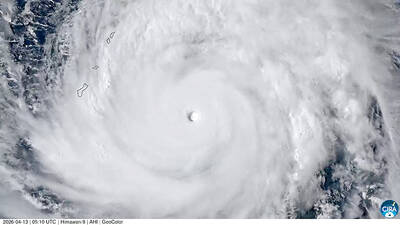
HAZARDOUS CONDITION: The typhoon’s sheer size, with winds extending 443km from its center, slowed down the ability of responders to help communities, an official said The US Coast Guard was searching for six people after losing contact with their disabled boat off the coast of Guam following Typhoon Sinlaku. The crew of the 44m dry cargo vessel, the US-registered Mariana, on Wednesday notified the coast guard that the boat had lost its starboard engine and needed assistance, Petty Officer 3rd Class Avery Tibbets said yesterday. The coast guard set up a one-hour communication schedule with the vessel, but lost contact on Thursday. A Coast Guard HC-130 Hercules aircraft was launched to search for the six people on board, but it had to return to Guam because of


 RSS
RSS