


Cuban-Americans poured onto the streets of Miami on Saturday to cries of “Cuba Libre” and “Freedom, freedom” as they celebrated the death of former Cuban president Fidel Castro.
Revelers — many who fled Havana’s communist regime — honked car horns, banged on pots and drums and danced, cried and waved Cuban flags in a crush of communal euphoria.
Castro died late on Friday, his brother Cuban President Raul Castro announced on national television at about midnight.
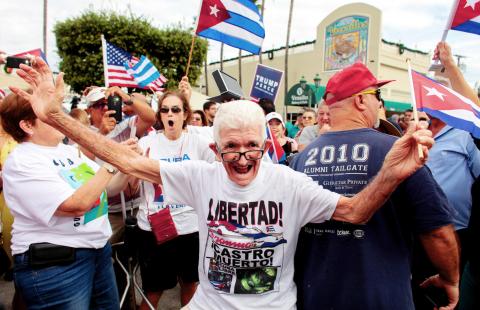
Photo: Reuters
In Miami — home to the largest concentration of Cuban-Americans in the US — the news spread quickly and with fervor.
“It’s sad that one finds joy in the death of a person — but that person should never have been born,” said Pablo Arencibia, 67, a teacher who fled Cuba 20 years ago.
Sensing the historic moment, younger revelers streamed the event on Facebook Live, posted pictures on Instagram and broadcast the celebrations on FaceTime and Skype to friends and relatives on the island.
Little Havana and Hialeah — areas where many Cuban exiles settled — saw people dance, hug and exchange comments like “it took so long,” and “now it’s Raul’s turn.”
“Cuba Libre” — Free Cuba — has been a rallying cry for exiles ever since the Castro brothers took over Cuba in 1959.
About 2 million Cubans live in the US, nearly 70 percent of them in Florida.
“It’s a major moment for the Cuban community and I’m with them,” said a retired Florida native named Debbie.
“I live in Little Havana and this is a big part of our lives. The community always comes together here,” she added.
Debbie and her friend, Cuban-American Aymara, celebrated outside the Cafe Versailles, where exiles met for decades to plot their return to the island and strategies to protest the Castro regime.
“He should have died a long time ago. He’s a criminal, a murderer and a wretched being,” said 78-year-old retiree Hugo Ribas. “The brother should have died too — in that family they’re all criminals.”
“It took too long,” said Cuban immigrant Analia Rodriguez, 23, who has lived in Miami for a decade.
By noon on Saturday, the party in Little Havana was still on, with young and old waving Cuban flags, cheered on by drivers honking horns.
Florida Governor Rick Scott said he was joining Cuban-Americans across the US “who are incredibly hopeful for the future of Cuba.”
“After decades of oppression, the Cuban people deserve freedom, peace and democracy,” the US Republican added in a statement.
He was joined by the Cuban-American Florida Senator Marco Rubio, who called Castro an “evil, murderous dictator who inflicted misery and suffering on his own people” and turned Cuba into an “impoverished island prison.”

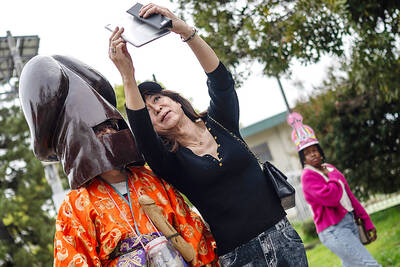
Showcasing phallus-shaped portable shrines and pink penis candies, Japan’s annual fertility festival yesterday teemed with tourists, couples and families elated by its open display of sex. The spring Kanamara Matsuri near Tokyo features colorfully dressed worshipers carrying a trio of giant phallic-shaped objects as they parade through the street with glee. The festival, as legend has it, honors a local blacksmith in the Edo Period (1603-1868) who forged an iron dildo to break the teeth of a sharp-toothed demon inhabiting a woman’s vagina that had been castrating young men on their wedding nights. A 1m black steel phallus sits in the courtyard of

JAN. 1 CLAUSE: As military service is voluntary, applications for permission to stay abroad for over three months for men up to age 45 must, in principle, be granted A little-noticed clause in sweeping changes to Germany’s military service policy has triggered an uproar after it emerged that the law requires men aged up to 45 to get permission from the armed forces before any significant stay abroad, even in peacetime. The legislation, which went into effect on Jan. 1 aims to bolster the military and demands all 18-year-old men fill out a questionnaire to gauge their suitability to serve in the armed forces, but stops short of conscription. If the “modernized” model fails to pull in enough recruits, parliament will be compelled to discuss the reintroduction of compulsory service, German
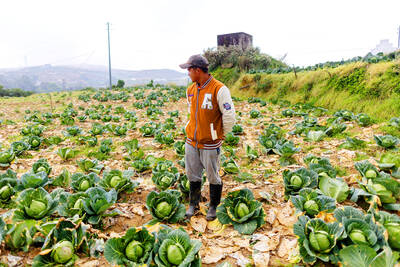
Filipino farmers like Romeo Wagayan have been left with little choice but to let their vegetables rot in the field rather than sell them at a loss, as rising oil prices linked to the Iran war drive up the cost of harvesting, labor and transport. “There’s nothing we can do,” said Wagayan, a 57-year old vegetable farmer in the northern Philippine province of Benguet. “If we harvest it, our losses only increase because of labor, transportation and packing costs. We don’t earn anything from it. That’s why we decided not to harvest at all,” he said. Soaring costs caused by the Middle East
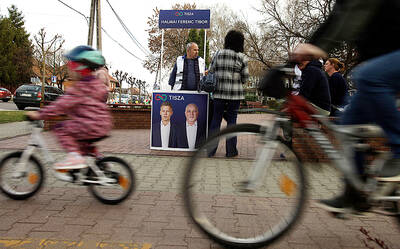
Hungarian Prime Minister Viktor Orban’s officially declared wealth is fairly modest: some savings and a jointly owned villa in Budapest. However, voters in what Transparency International deems the EU’s most corrupt country believe otherwise — and they might make Orban pay in a general election this Sunday that could spell an end to his 16-year rule. The wealth amassed by Orban’s inner circle is fueling the increasingly palpable frustration of a population grappling with sluggish growth, high inflation and worsening public services. “The government’s communication machine worked well as long as our economic situation remained relatively good,” said Zoltan Ranschburg, a political analyst


 RSS
RSS