


Political turmoil in South Korea, where President Park Geun-hye is facing noisy calls for her impeachment, comes at a particularly sensitive moment for security in East Asia, where North Korea’s menacing nuclear weapons and missile development programs are advancing unchecked.
The rogue regime in Pyongyang led by North Korean leader Kim Jong-un conducted another illegal missile test shortly before the US presidential election on Nov. 8.
While reportedly unsuccessful, it was the regime’s fifth ballistic missile firing in two months and followed its fifth and biggest nuclear test explosion in September.
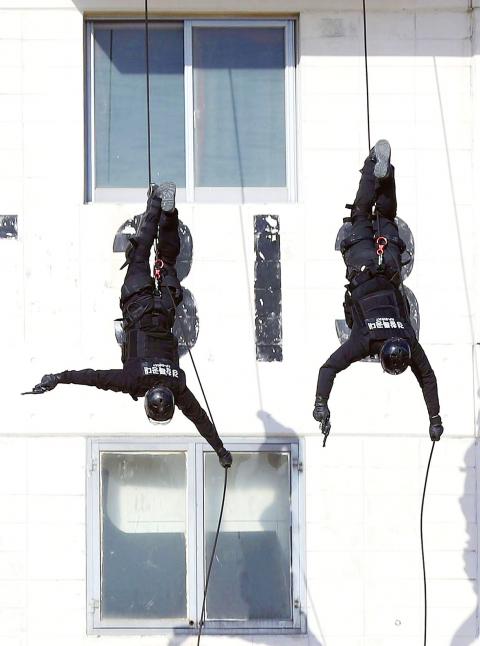
Photo: EPA
South Korea’s army chiefs responded angrily, indicating they were ready to hit back.
“Our military strongly condemns North Korea for continuously conducting illegal provocative acts and are thoroughly prepared for any possibility of additional provocation,” an official statement said.
Concern is growing that, at this critical juncture, South Korea’s foremost ally is at best distracted, or at worst, might no longer be reliable.
Like their counterparts in Japan, South Korea’s leaders have been unnerved by statements by US president-elect Donald Trump that the two countries should pay more for their own defense.
South Korea pays about US$860 million per year toward the cost of stationing 28,000 US troops. Under a bilateral security treaty, Japan, where 50,000 US personnel are based, pays about US$2 billion per year.
Trump suggested at one point in the presidential campaign that South Korea and Japan acquire their own nuclear weapons to deter North Korea. This idea runs directly contrary to years of global counterproliferation efforts.
It is also deeply offensive in Japan, the only nation to come under nuclear attack.
What Trump might do, in practice, about North Korea is unknown, but the administration of US President Barack Obama is not waiting to see. Earlier this month US Secretary of State John Kerry pledged to deploy a defensive missile system known as THAAD (terminal high-altitude area defense) in South Korea “as soon as possible.”
THAAD is designed to shoot down incoming ballistic missiles.
Japan is raising its game, too.
Earlier this year Tokyo said it was planning to acquire a wider range of ship-borne interceptors, upgrading two of its maritime self-defence force’s six Aegis frigates and building two more. It might also deploy the THAAD system.
Unsurprisingly, North Korea has condemned these developments, along with China.
Beijing says the anti-missile systems will disturb the regional balance of power and could be used to undermine its own defenses.
China’s displeasure might stoke wider tensions with the US and its regional allies. Washington has been critical of Beijing’s perceived failure to rein in North Korea. Although China has supported UN sanctions against Pyongyang and condemned its nuclear explosions, it has not applied its unique economic leverage to make Kim back off.
It is likely that Chinese President Xi Jinping (習近平) views the North Korean conundrum in the broader context of his efforts to thwart Obama’s “pivot” toward Asia and assert Chinese regional dominance at the expense of the US.
One front in this escalating war for power and influence is the South China Sea, where China is building military bases also claimed by Taiwan, among others, despite a UN court ruling that its activities are illegal.
Taiwan is a potential flashpoint. Xi is squeezing President Tsai Ing-wen (蔡英文), whom he suspects of pursuing a pro-independence agenda.
China is also challenging Japan in a separate island dispute in the East China Sea. Japanese Prime Minister Shinzo Abe is frequently assailed by official Chinese media.
Last week Abe became the first foreign leader to meet Trump. Abe wanted to gauge the election victor’s intentions in east Asia.
He declared afterward that Trump could be trusted.
However, Abe’s verdict will not prevent supporters of moves to “re-interpret” the nation’s post-war pacifist constitution and expand Japan’s independent defense capabilities from using current tensions with China and North Korea, and continuing doubts about Trump, to justify accelerated rearmament.
Former Japanese minister of defense Shigeru Ishiba, who is tipped as a possible successor to Abe, on Monday suggested that it was not unreasonable for Trump to want Tokyo to do more to render the US-Japan alliance more effective.
“In the future, this structure should change,” Ishiba said.
In Japan’s cautious political parlance, that amounts to a call to arms.

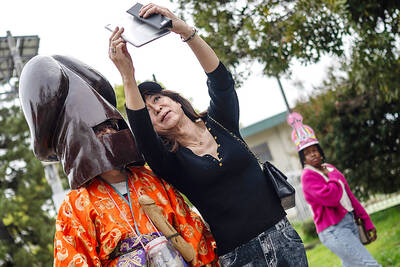
Showcasing phallus-shaped portable shrines and pink penis candies, Japan’s annual fertility festival yesterday teemed with tourists, couples and families elated by its open display of sex. The spring Kanamara Matsuri near Tokyo features colorfully dressed worshipers carrying a trio of giant phallic-shaped objects as they parade through the street with glee. The festival, as legend has it, honors a local blacksmith in the Edo Period (1603-1868) who forged an iron dildo to break the teeth of a sharp-toothed demon inhabiting a woman’s vagina that had been castrating young men on their wedding nights. A 1m black steel phallus sits in the courtyard of
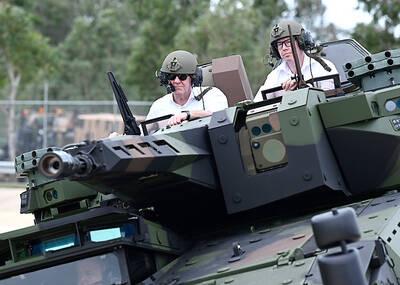
JAN. 1 CLAUSE: As military service is voluntary, applications for permission to stay abroad for over three months for men up to age 45 must, in principle, be granted A little-noticed clause in sweeping changes to Germany’s military service policy has triggered an uproar after it emerged that the law requires men aged up to 45 to get permission from the armed forces before any significant stay abroad, even in peacetime. The legislation, which went into effect on Jan. 1 aims to bolster the military and demands all 18-year-old men fill out a questionnaire to gauge their suitability to serve in the armed forces, but stops short of conscription. If the “modernized” model fails to pull in enough recruits, parliament will be compelled to discuss the reintroduction of compulsory service, German
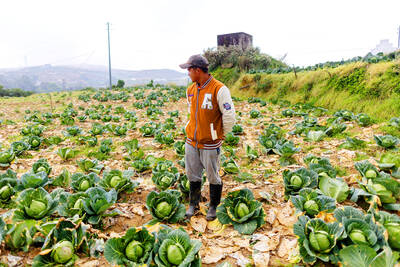
Filipino farmers like Romeo Wagayan have been left with little choice but to let their vegetables rot in the field rather than sell them at a loss, as rising oil prices linked to the Iran war drive up the cost of harvesting, labor and transport. “There’s nothing we can do,” said Wagayan, a 57-year old vegetable farmer in the northern Philippine province of Benguet. “If we harvest it, our losses only increase because of labor, transportation and packing costs. We don’t earn anything from it. That’s why we decided not to harvest at all,” he said. Soaring costs caused by the Middle East
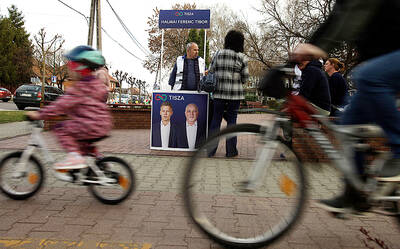
Hungarian Prime Minister Viktor Orban’s officially declared wealth is fairly modest: some savings and a jointly owned villa in Budapest. However, voters in what Transparency International deems the EU’s most corrupt country believe otherwise — and they might make Orban pay in a general election this Sunday that could spell an end to his 16-year rule. The wealth amassed by Orban’s inner circle is fueling the increasingly palpable frustration of a population grappling with sluggish growth, high inflation and worsening public services. “The government’s communication machine worked well as long as our economic situation remained relatively good,” said Zoltan Ranschburg, a political analyst


 RSS
RSS