


Zimbabwean President Robert Mugabe yesterday declared a “state of disaster” in many rural areas hit by a severe drought, with more than a quarter of the population facing food shortages.
A regional drought worsened by the El Nino weather phenomenon has affected South Africa, Malawi and Zambia, as well as Zimbabwe, leaving tens of thousands of cattle dead, dams depleted and crops written off.
Formerly known as the breadbasket of Africa, Zimbabwe has suffered perennial shortages in recent years and has relied on importing grain from neighboring countries to meet its needs.
“Initial indications were that 1.5 million people were food insecure, with all the 60 rural districts being affected,” Public Works Minister Saviour Kasukuwere said in a statement.
“Overall, the food insecure population has since risen to 2.44 million — 26 percent of the population,” he said.
Mugabe has blamed low farm yields on erratic rains due to climate change, as well as sanctions imposed by Western countries over the government’s tainted human rights record.
Critics say the food shortages have been partially caused by Mugabe’s land reforms enacted since 2000 when the government oversaw the often violent eviction of white farmers.
Many farms are underutilized, and the government has vowed to hold an audit to ensure agriculture land is put into production.
“The rains came too late to save the crops. Most of the maize wilted,” Enos Janhi, a farmer in Masvingo, one of the worst affected districts, said by telephone.
“Farmers are driving their cattle into the fields to graze on the drying stalks. The government must act urgently to bring us food,” he said.
Kasukuwere said at least 16,500 cattle have died in Zimbabwe, while as much as 75 percent of crops have been abandoned in the worst-hit areas.
The minister said the Zimbabwean government would take measures to minimize the impact of the drought on both humans and livestock.
However, he gave few details, and the country has scarce resources to tackle the food shortages due to years of international isolation and its stagnant economy.
“The April [last year] harvest in Zimbabwe was 50 percent lower than the previous year,” World Food Programme (WFP) spokesman David Orr said.
“With the drought continuing, it looks like the lean season is going to continue beyond the harvest time this year,” he said.
“The number of food insecure people is likely to rise and continue rising,” he added.
Last month, the WFP said 14 million people across southern Africa faced going hungry due to the prolonged drought, with the cost of maize — the regional staple — in Malawi 73 percent higher than average.
“People have no money in their pockets — a situation exacerbated by food shortages,” Morgan Tsvangirai, leader of the opposition Movement for Democratic Change, told a news conference in Harare.
“We are facing a very serious national crisis,” Tsvangirai said.


When a hiker fell from a 55m waterfall in wild New Zealand bush, rescuers were forced to evacuate the badly hurt woman without her dog, which could not be found. After strangers raised thousands of dollars for a search, border collie Molly was flown to safety by a helicopter pilot who was determined to reunite the pet and the owner. A week earlier, an emergency rescue helicopter found the woman with bruises and lacerations after a fall at a rocky spot at the waterfall on the South Island’s West Coast. She was airlifted on March 24, but they were forced to
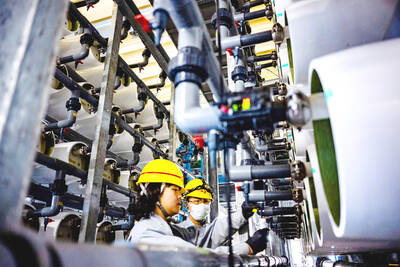
HIGH HOPES: The power source is expected to have a future, as it is not dependent on the weather or light, and could be useful for places with large desalination facilities A Japanese water plant is harnessing the natural process of osmosis to generate renewable energy that could one day become a common power source. The possibility of generating power from osmosis — when water molecules pass from a less salty solution to a more salty one — has long been known. However, actually generating energy from that has proved more complicated, in part due the difficulty of designing the membrane through which the molecules pass. Engineers in Fukuoka, Japan, and their private partners think they might have cracked it, and have opened what is only the world’s second osmotic power plant. It generates

Hundreds of Filipinos and tourists flocked to a sun-bleached field north of Manila yesterday, on Good Friday, to witness one of the country’s most blood-soaked displays of religious fervor, undeterred by rising fuel prices. Scores of bare-chested flagellants with covered faces walked barefoot through the dusty streets of Pampanga Province’s San Fernando as they flogged their backs with bamboo whips in the scorching heat. Agence France-Presse (AFP) journalists said they saw devotees deliberately puncturing their skin with glass shards attached to a small wooden paddle to ensure their bleeding during the ritual, a way to atone for sins and seek miracles from
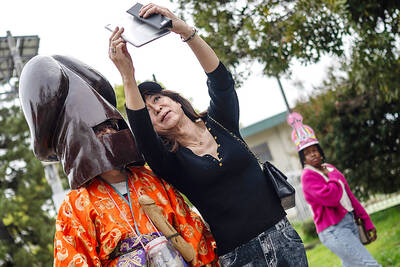
Showcasing phallus-shaped portable shrines and pink penis candies, Japan’s annual fertility festival yesterday teemed with tourists, couples and families elated by its open display of sex. The spring Kanamara Matsuri near Tokyo features colorfully dressed worshipers carrying a trio of giant phallic-shaped objects as they parade through the street with glee. The festival, as legend has it, honors a local blacksmith in the Edo Period (1603-1868) who forged an iron dildo to break the teeth of a sharp-toothed demon inhabiting a woman’s vagina that had been castrating young men on their wedding nights. A 1m black steel phallus sits in the courtyard of


 RSS
RSS