


A top Chinese leader has promised “unprecedented” economic and societal reforms at the Chinese Communist Party’s (CCP) much anticipated plenum meeting next month, state media reported yesterday.
Yu Zhengsheng (俞正聲), the fourth-ranked member in the party’s elite Politburo Standing Committee, said the closed-door meeting would “principally explore the issue of deep and comprehensive reforms.”
“The reforms this time will be broad, with major strength, and will be unprecedented,” he said, according to Xinhua news agency.
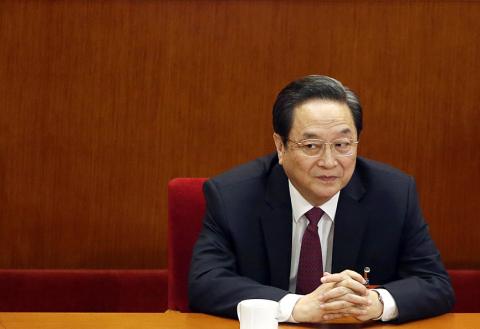
Photo: Reuters
“Inevitably, they will strongly push forward profound transformations in the economy, society and other spheres,” Yu added.
Yu’s comments are among the first from China’s top leaders about the plenum, where Chinese President Xi Jinping (習近平) is expected to press for greater economic reforms.
The broad reform agenda is expected to steer the second-largest economy in the world, which is experiencing slowing growth, from a reliance on debt-fueled investment to a more balanced model driven more by consumption, services and innovation.
The meeting will mark the third time China’s elite 200-member Central Committee has gathered since a leadership transition last year.
Historically, third plenums in China have served as a springboard for key economic reforms. Political reform is not expected to be a major point of discussion.
China’s Cabinet has called for greater effort in revamping the economy because a recovery is not yet solid.
China’s US$8.5 trillion economy grew at its fastest pace this year between July and last month in a rebound fueled largely by investment, although signs are already emerging the pickup in activity may lose some vigor. China still expects to meet its economic targets for this year, including growth of 7.5 percent.
China this week launched a new benchmark lending rate, aimed at letting markets set the cost of funds and reducing distortions that have led to excessive investment and overcapacity now dogging the economy.
At the plenum, the reform agenda is likely to feature financial and tax reforms, but may also address persistent issues such as hastening urbanization through land reforms and liberalizing China’s household registration system, which restricts migration between rural areas and cities.
Critics have said that vested interests, especially state-owned enterprises, could stymie reforms.
Former leader Deng Xiaoping (鄧小平) launched historic reforms at the third plenum of the 11th party committee in 1978 to rescue the economy from the verge of collapse after Mao Zedong’s (毛澤東) disastrous Cultural Revolution.
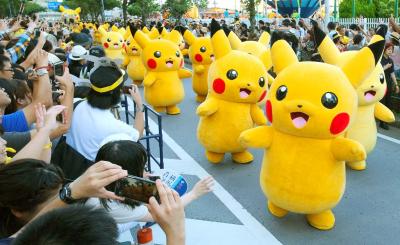
China’s military news agency yesterday warned that Japanese militarism is infiltrating society through series such as Pokemon and Detective Conan, after recent controversies involving events at sensitive sites. In recent days, anime conventions throughout China have reportedly banned participants from dressing as characters from Pokemon or Detective Conan and prohibited sales of related products. China Military Online yesterday posted an article titled “Their schemes — beware the infiltration of Japanese militarism in culture and sports.” The article referenced recent controversies around the popular anime series Pokemon, Detective Conan and My Hero Academia, saying that “the evil influence of Japanese militarism lives on in

DIPLOMATIC THAW: The Canadian prime minister’s China visit and improved Beijing-Ottawa ties raised lawyer Zhang Dongshuo’s hopes for a positive outcome in the retrial China has overturned the death sentence of Canadian Robert Schellenberg, a Canadian official said on Friday, in a possible sign of a diplomatic thaw as Canadian Prime Minister Mark Carney seeks to boost trade ties with Beijing. Schellenberg’s lawyer, Zhang Dongshuo (張東碩), yesterday confirmed China’s Supreme People’s Court struck down the sentence. Schellenberg was detained on drug charges in 2014 before China-Canada ties nosedived following the 2018 arrest in Vancouver of Huawei chief financial officer Meng Wanzhou (孟晚舟). That arrest infuriated Beijing, which detained two Canadians — Michael Spavor and Michael Kovrig — on espionage charges that Ottawa condemned as retaliatory. In January

A sign hanging from a rusty ice-green shipping container installed by Thai forces on what they say is the border with Cambodia reads: “Cambodian citizens are strictly prohibited from entering this area.” On opposite sides of the makeshift barricade, fronted by coils of barbed wire, Cambodians lamented their lost homes and livelihoods as Thailand’s military showed off its gains. Thai forces took control of several patches of disputed land along the border during fighting last year, which could amount to several square kilometers in total. Cambodian Kim Ren said her house in Chouk Chey used to stand on what is now the Thai

NEW RULES: There would be fewer school days, four-day workweeks, and a reduction in transportation services as the country battles a crisis exacerbated by US pressure The Cuban government on Friday announced emergency measures to address a crippling energy crisis worsened by US sanctions, including the adoption of a four-day work week for state-owned companies and fuel sale restrictions. Cuban Deputy Prime Minister Oscar Perez-Oliva Fraga blamed Washington for the crisis, telling Cuban television the government would “implement a series of decisions, first and foremost to guarantee the vitality of our country and essential services, without giving up on development.” “Fuel will be used to protect essential services for the population and indispensable economic activities,” he said. Among the new measures are the reduction of the working week in


 RSS
RSS