


A relentless Catholic Church campaign to derail a birth control law in the Philippines entered its final phase at the Supreme Court yesterday, with the verdict to have a monumental impact on millions of poor Filipinos.
The court began hearing arguments against a family planning law that Philippine President Benigno Aquino III, defying intense church pressure, helped steer through parliament late last year.
It is the last legal recourse for the church, which for more than a decade led resistance to birth control legislation in the mainly Catholic nation.

Photo: EPA
The church, which had threatened Aquino and other supporters of the law with excommunication, yesterday held prayer vigils, protests and masses near the Supreme Court.
“We ask the Holy Spirit to enlighten and inspire the lawyers who would be arguing for our position ... and enlighten the justices of the Supreme Court,” Bishop Gabriel Reyes said during a mass at a nearby church.
The law requires government health centers to hand out free condoms and birth control pills, benefiting tens of millions of the country’s poor who would not otherwise have access to them.
More than a quarter of the Philippines’ nearly 100 million people live on the equivalent of US$0.62 a day, according to government data.
The law also mandates that sex education be taught in schools and that public health workers receive family planning training, while post-abortion medical care was legalized.
Proponents say the reproductive health (RH) law will slow the country’s population growth, which is one of the fastest in the world, and reduce the number of mothers dying in childbirth.
“To deny RH services from our people would be a denial of human rights and a grave social injustice, especially against women and the poor,” said Senator Pia Cayetano, one of the architects of the law.
The Supreme Court suspended the law in March so that the judges could hear the 15 formal petitions from a range of church-backed groups arguing that it was unconstitutional.
The opponents argue it violates various elements of the constitution, including those on protecting the sanctity of the family and guaranteeing freedom of religion.
A crowd of about 400 opponents of the law gathered outside the Supreme Court as the judges began hearing the case, holding banners such as: “Obey God’s will, no to RH bill”.
Another read: “RH Bill is abortion.”
They stood on the other side of the road from a smaller crowd of supporters of the law, some of whom carried a banner that read: “Rights and welfare, not the beliefs of a few.”
Opinion surveys over many years have shown strong public support for birth control legislation.
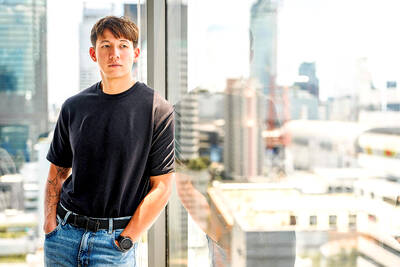
SPEAKING OUT: After Siranudh Scott’s allegations surfaced, celebrities and public figures took to social media to share their own experiences of sexual misconduct and abuse A high-profile alleged sexual abuse case within a wealthy Thai beer brewing family has prompted a wave of painful accounts from survivors of unconnected abuse in the conservative nation. Siranudh Scott, a member of the billionaire Thai family that founded the ubiquitous Singha beer brand, posted an emotional video this month accusing his elder brother Sunit of repeatedly abusing him when he was a teenager. Sunit, who is in his 30s, later denied the allegations in a video posted online, but Singha parent Boonrawd dismissed him from his executive role with the company on Tuesday last week. “I felt I needed to speak

‘CROSSING THE LINE’: China’s embassy in Seoul criticized US Forces Korea Commander General Xavier Brunson, asking if his ‘hostile’ remarks were authorized by Washington South Korea and the US are in talks over recent public remarks by the commander of US Forces Korea, Seoul’s presidential office said yesterday, after the comments drew sharp criticism from China. In a recent podcast interview, US Forces Korea Commander General Xavier Brunson described South Korea as “the dagger in the heart of Asia” from China’s east coast, prompting the Chinese embassy in Seoul to say that he had “truly crossed the line.” The interview came amid growing speculation that Washington might seek to expand the role of US Forces Korea in countering the growing regional influence of China, a key

SEEKING ORDER: Rodrigo Paz said that ‘anyone who wants to destroy the nation will have to deal with this president and the full force of the constitution’ Bolivian President Rodrigo Paz on Wednesday said that the nation was at a “breaking point” after nearly a month of protests that have caused shortages of food, fuel and medicine. Paz, who took office six months ago amid the worst economic crisis there in four decades, is battling a groundswell of fury over his policies. The political capital, La Paz, has been besieged by low-income workers and members of the indigenous majority calling for his resignation. “The country needs order and is reaching breaking point,” the 58-year-old said at a public event in La Paz, renewing his appeal for dialogue. On Tuesday, the Bolivian

Forecasters in Europe yesterday warned of exceptional heat as record temperatures driven by a “heat dome” push temperatures well above seasonal norms across the continent. The surge follows a record-breaking Monday, with France logging its hottest day in the month of May on record, its weather agency said, and the UK also posting unprecedented highs. A so-called “heat dome” of warm air from northern Africa trapped under a high-pressure system over western Europe is behind the high temperatures not usually seen until high summer. Restrictions on outdoor work were imposed in parts of Italy, beaches in southwest France filled earlier than usual and


 RSS
RSS