


The suburban home boasts four bedrooms, an updated kitchen — and the chance to own a slice of Russian spy history.
The US Marshals Service is selling a New Jersey home whose previous owners were arrested in 2010 by the FBI and accused of being members of a Russian spy ring.
Authorities said the former occupants went by the aliases Richard and Cynthia Murphy and led what appeared to be a banal suburban life.
Lawyers for the couple said the man was a stay-at-home father to two daughters and his wife worked for a New York accounting firm and made US$135,000 a year.
It was all an elaborate, illegal ruse. The couple, whose real names are Vladimir and Lydia Guryev, was part of a group of deep-cover Russian operatives who had been living in the US for years.
The Guryevs and eight others were arrested in June 2010 after a decade-long counterintelligence probe that led to the biggest spy swap since the Cold War. Both pleaded guilty to conspiring to act as an unregistered agent of a foreign country and were deported.
Prosecutors described a ring that used techniques both elaborate and seemingly out of a Cold War spy movie.
The group meshed into US life while engaging in clandestine global travel with fake passports, using invisible ink and engaging in practices so sophisticated the government would not describe them in open court.
It was all toward the goal of infiltrating US policy circles and learning about US diplomacy and weapons information.
In 2009, authorities allege, the Guryevs were asked to find information from people involved in US politics and foreign policy about US President Barack Obama’s impending trip to Russia and how he would negotiate with regards to the START nuclear arms pact, Afghanistan and Iran’s nuclear program.
Authorities said they found US$80,000 in US$100 bills in the home, which was paid for by the Russian government.
The home has a US$444,900 list price.

An American scientist convicted of lying to US authorities about payments from China while he was at Harvard University has rebuilt his research lab in Shenzhen, China, to pursue technology the Chinese government has identified as a national priority: embedding electronics into the human brain. Charles Lieber, 67, is among the world’s leading researchers in brain-computer interfaces. The technology has shown promise in treating conditions such as amyotrophic lateral sclerosis and restoring movement in paralyzed people. It also has potential military applications: Scientists at the Chinese People’s Liberation Army have investigated brain interfaces as a way to engineer super soldiers by boosting
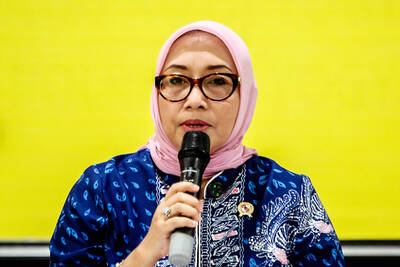
Indonesian police have arrested 13 people after shocking images of alleged abuse against small children at a daycare center went viral, sparking outrage across the nation, officials said on Monday. Police on Friday last week raided Little Aresha, a daycare center in Yogyakarta on Java island, following a report from a former employee. CCTV footage circulating on social media showed children, most younger than two, lying on the floor wearing only diapers, their hands and feet bound with rags. The police have confirmed that the footage is authentic. Police said they also found 20 children crammed into a room just 3m by 3m. “So
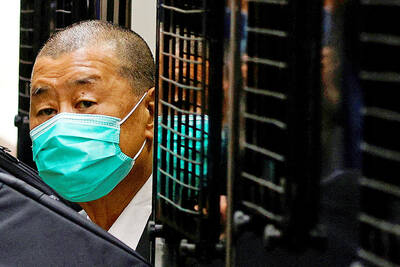
Jailed media entrepreneur Jimmy Lai (黎智英) has been awarded Deutsche Welle’s (DW) freedom of speech award for his contribution to Hong Kong’s pro-democracy movement. The German public broadcaster on Thursday said Lai would be presented in absentia with the 12th iteration of the award on June 23 at the DW Global Media Forum in Bonn. Deutsche Welle director-general Barbara Massing praised the 78-year-old founder of the now-shuttered news outlet Apple Daily for standing “unwaveringly for press freedom in Hong Kong at great personal risk.” “With Apple Daily, he gave journalists a platform for free reporting and a voice to the democracy movement in

PHILIPPINE COMMITTEE: The head of the committee that made the decision said: ‘If there is nothing to hide, there is no reason to hide, there is no reason to obstruct’ A Philippine congressional committee on Wednesday ruled that there was “probable cause” to impeach Philippine Vice President Sara Duterte after hearing allegations of unexplained wealth, misuse of state funds and threats to have the president assassinated. The unanimous decision of the 53-member committee in the Philippine House of Representatives sends the two impeachment complaints to deliberations and voting by the entire lower chamber, which has more than 300 lawmakers. The complaints centered on Duterte’s alleged illegal use and mishandling of intelligence funds from the vice president’s office, and from her time as education secretary under Philippine President Ferdinand Marcos Jr. Duterte and the


 RSS
RSS