


South Korean investigators say they were wrong when they identified a Chinese Internet address as the origin of a cyberattack that paralyzed tens of thousands of computers at six South Korean companies this week. However, they still believe the attack originated from somewhere abroad.
Seoul’s Korea Communications Commission said yesterday that an internet protocol (IP) address linked to Wednesday’s attack actually belonged to a computer at one of the South Korean companies that were hit.
Commission officials say the IP address was used only for the company’s internal network and was identical to a public Chinese address. Investigators say an analysis of malware and servers indicates the attack was likely orchestrated from abroad. They did not elaborate.
Meanwhile, Seoul said yesterday it is preparing for the possibility of more cyberattacks, while a new team of investigators try to determine if North Korea was behind the synchronized shutdown of computers at the six banks and media companies.
Many in Seoul suspect hackers loyal to Pyongyang were responsible for the attack, but South Korean officials have yet to assign blame and say they have no proof yet of North Korea’s involvement.
The investigation could take weeks.
South Korea has set up a team of computer security experts from the government, military and private sector to identify the hackers and is preparing to deal with more possible attacks, presidential spokesman Yoon Chang-jung told reporters yesterday.
He did not elaborate on the possibility of more attacks, but said the prime minister would later hold a meeting to discuss ways to beef up cybersecurity at institutions overseeing infrastructure, such as roads and electricity.
If the attack was in fact carried out by North Korea, it may be a warning to Seoul that Pyongyang is capable of breaching its computer networks with relative ease.
The cyberattack did not affect South Korea’s government, military or infrastructure, and there were no initial reports that customers’ bank records were compromised. However, it disabled cash machines and disrupted commerce in the tech-savvy, Internet-dependent country, renewing questions about South Korea’s Internet security and vulnerability to hackers.
All three of the banks that were hit were back online and operating regularly yesterday. It could be next week before the media companies have fully recovered.
Regulators said all six attacks appeared to come from “a single organization.”
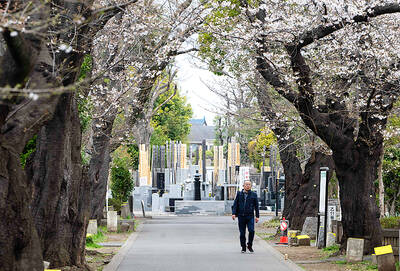
ROCKY RELATIONS: The figures on residents come as Chinese tourist numbers drop following Beijing’s warnings to avoid traveling to Japan The number of Chinese residents in Japan has continued to rise, even as ties between the two countries have become increasingly fractious, data released on Friday showed. As of the end of December last year, the number of Chinese residents had increased by 6.5 percent from the previous year to 930,428. Chinese people accounted for 22.6 percent of all foreign residents in Japan, making them by far the largest group, Japanese Ministry of Justice data showed. Beijing has criticized Tokyo in increasingly strident terms since Japanese Prime Minister Sanae Takaichi last year suggested that a military conflict around Taiwan could
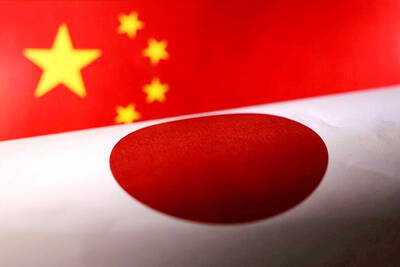
Japan is to downgrade its description of ties with China from “one of its most important” in an annual diplomatic report, according to a draft reviewed by Reuters, as relations with Beijing worsen. This year’s Diplomatic Bluebook, which Japanese Prime Minister Sanae Takaichi’s government is expected to approve next month, would instead describe China as an important neighbor and the relationship as “strategic” and “mutually beneficial.” The draft cites a series of confrontations with Beijing over the past year, including export controls on rare earths, radar lock-ons targeting Japanese military aircraft and increased pressure around Taiwan. The shift in tone underscores a deterioration

A retired US colonel behind a privately financed rocket launch site in the Dominican Republic sees the project as a response to China’s dominance of the space race in Latin America. Florida-based Launch on Demand is slated to begin building a US$600 million facility in a remote region near the border with Haiti late this year. The project is designed to meet surging demand for the heavy-lift rockets needed to put clusters of satellites into orbit. It is also an answer to China’s growing presence in the region, said CEO Burton Catledge, a former commander of the US Air Force’s 45th Operations

Germany is considering Australia’s Ghost Bat robot fighter as it looks to select a combat drone to modernize its air force, German Minister of Defense Boris Pistorius said yesterday. Germany has said it wants to field hundreds of uncrewed fighter jets by 2029, and would make a decision soon as it considers a range of German, European and US projects developing so-called “collaborative combat aircraft.” Australia has said it will integrate the Ghost Bat, jointly developed by Boeing Australia and the Royal Australian Air Force, into its military after a successful weapons test last year. After inspecting the Ghost Bat in Queensland yesterday,


 RSS
RSS