


Russia yesterday sent two planes to Syria to pick up Russians wanting to leave the conflict-torn country, as the navy dispatched four warships to the Mediterranean reportedly for a possible larger evacuation.
Two emergencies ministry planes carrying humanitarian aid for Syria took off from Moscow for the port city of Latakia and would take any Russians wanting to leave on their flight back, the ministry said.
Meanwhile, the defense ministry said Russia was sending four more warships to the Mediterranean Sea to join an escort ship and smaller vessels that were already on duty in the region.
Observers are watching for any hints of Russia planning a full-scale evacuation of its citizens, which would be seen as a tacit admission from Moscow that the regime of Syrian President Bashar al-Assad is doomed in its fight against rebels.
The ministry said in a statement to Russian news agencies that the ships would be on “military service,” but gave no further details.
However, a military source quoted by RIA Novosti said their main task could be taking part in a possible evacuation of Russian citizens from Syria.
“Even though the tasks of the warships has not been announced, it can be assumed that given the development of the situation in the region, their main job will be taking part in a possible evacuation of Russian citizens from Syria,” the source said.
The Russian emergencies ministry Ilyushin-62 and Ilyushin-76 planes were carrying more than 40 tonnes of humanitarian aid and would be ready to evacuate any Russians wanting to leave the country, a ministry statement said.
“Citizens of Russia and the [ex-Soviet grouping] CIS wanting to leave can leave Syria on these planes,” the ministry said, adding that the departure from Latakia back to Moscow was planned for later yesterday.
The Interfax news agency quoted sources in the Russian community in Syria as saying that 150 Russians and other ex-Soviet citizens could be flown out on the planes.
The voluntary evacuation would be the second such operation organized by Russia after it took out 77 people fleeing Syria on two planes flying from Beirut in neighboring Lebanon last month.
However, it would be the first directly from Syria itself.
Meanwhile, EU foreign ministers announced on Monday that they were keeping current sanctions against Syria in place for three months, rejecting attempts to alter an embargo on the country so that arms could be funneled to rebels fighting al-Assad.
However, in an apparent nod to the UK, which had argued that the rebels should be exempted from the embargo, the ministers adopted a non-specific amendment “so as to provide greater non-lethal support and technical assistance for the protection of civilians.”
EU High Representative for Foreign Affairs and Security Policy Catherine Ashton said that the meaning of that would be defined in meetings among the representatives of EU member countries. She denied to reporters that the wording was a political fudge.
Still, British Foreign Secretary William Hague appeared to claim victory, saying many countries had not even wanted to discuss changing the embargo at a meeting in November.
He added that further amendments could be made three months from now, an indication that Britain might continue its push to arm the rebels.
Several EU foreign ministers said, in strong terms, that they opposed sending any more arms into the ravaged country.
That view was supported on Monday by a new report by a UNappointed panel that said Syria’s civil war is becoming increasingly sectarian and the behavior of both sides is growing more and more radicalized. The report urged the international community to curb the supply of weapons and anti-government forces to part with foreign fighters.
Additional reporting by AP
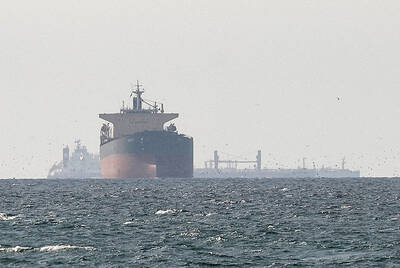
A ship that appears to be taking on the identity of a scrapped gas carrier exited the Strait of Hormuz on Friday, showing how strategies to get through the waterway are evolving as the Middle East war progresses. The vessel identifying as liquefied natural gas (LNG) carrier Jamal left the Strait on Friday morning, ship-tracking data show. However, the same tanker was also recorded as having beached at an Indian demolition yard in October last year, where it is being broken up, according to market participants and port agent’s reports. The ship claiming to be Jamal is likely a zombie vessel that

Japan is to downgrade its description of ties with China from “one of its most important” in an annual diplomatic report, according to a draft reviewed by Reuters, as relations with Beijing worsen. This year’s Diplomatic Bluebook, which Japanese Prime Minister Sanae Takaichi’s government is expected to approve next month, would instead describe China as an important neighbor and the relationship as “strategic” and “mutually beneficial.” The draft cites a series of confrontations with Beijing over the past year, including export controls on rare earths, radar lock-ons targeting Japanese military aircraft and increased pressure around Taiwan. The shift in tone underscores a deterioration

LAW CONSTRAINTS: The US has been pressing allies to send warships to open the Strait, but Tokyo’s military actions are limited under its postwar pacifist constitution Japan could consider deploying its military for minesweeping in the Strait of Hormuz if a ceasefire is reached in the war on Iran, Japanese Minister of Foreign Affairs Toshimitsu Motegi said yesterday. “If there were to be a complete ceasefire, hypothetically speaking, then things like minesweeping could come up,” Motegi said. “This is purely hypothetical, but if a ceasefire were established and naval mines were creating an obstacle, then I think that would be something to consider.” Japan’s military actions are limited under its postwar pacifist constitution, but 2015 security legislation allows Tokyo to use its Self-Defense Forces overseas if an attack,

German Chancellor Friedrich Merz’s conservative Christian Democratic Union (CDU) yesterday faced a regional election battle in Rhineland-Palatinate, now held by the center-left Social Democratic Party (SPD). Merz’s CDU has enjoyed a narrow poll lead over the SPD — their coalition partners at the national level — who have ruled the mid-sized state for 35 years. Polling third is the far-right Alternative for Germany (AfD), which spells a greater threat to the two centrist parties in several state elections in September in the country’s ex-communist east. The picturesque state of Rhineland-Palatinate, bordering France, Belgium and Luxembourg and with a population of about 4 million,


 RSS
RSS