


In the Nepalese hamlet of Simen, five days’ walk from the nearest town, children pay for schooling with wood or animal dung, and life appears untouched by modernity — however, change is coming.
Just two valleys away in Dho Tarap village, business is booming and satellite dishes that beam in American wrestling are set up beside prayer flags as the high Himalayan landscape of Upper Dolpa opens up to the outside world.
The contrast between the two settlements points to the future for one of the highest inhabited regions on Earth and local children like Pema Lama are likely to lead lives full of bewildering new experiences.
Pema’s parents cannot afford the 3,000 rupee (US$35) charge for six months of schooling and, like most of their neighbors, send the children to classes with wood or yak dung which is weighed and accepted in lieu of cash.
“The school doesn’t have much money,” says his teacher Sonam Tsering, 26, over salty Tibetan tea in the kitchen of Shree Tsering Dolma primary school. “Students have to bring 50kg of firewood and if they can’t do that, then many bring yak and horse dung.”
Upper Dolpa, a hidden land of deeply notched canyons and swollen rivers, is virtually sealed off from the rest of Nepal by passes more than 5,100m above sea level.
The region is marked by high peaks abutting the Tibetan plateau, with trails snaking along high cliffs for farmers and nomadic herders who take their shaggy, black yak south for winter grazing.
Small fields, planted with barley, buckwheat, potatoes and radish are cultivated, but yield just enough food to sustain families.
Yak, sheep and goats provide milk, butter and meat, and the wool and hides are used for cloth and boots.
Most locals speak a Tibetan dialect called Dolpo and the literacy rate is about 20 percent.
Pupils study just six months of the year due to the harsh winter and in summer most also spend weeks with their parents on the hazardous task of harvesting yarchagumba, a wild fungus prized for its alleged aphrodisiac qualities.
Closed to trekkers until 1989, Upper Dolpa is ranked one of the worst places in the world for food security by the UN World Food Program, due to its inaccessibility and harsh terrain.
However, a few days’ walk away, in Dho Tarap village, the pleasures and problems of 21st century living are clearly in evidence.
In the comfortable Caravan Guest House, one of a number of hotels springing up in what some claim is “the world’s highest village,” Jyampa Lama, 42, watches his new flatscreen TV.
He moved to the village, 4,200m above sea level, 18 years ago to cash in on the nascent trekking trade and increasing number of yarchagumba harvesters passing through the village.
“There are 252 houses here now and maybe five to 10 have televisions. Most people still don’t know what is happening in the outside world, or even inside the country. But that is changing,” he said. “A new generation is now going to school, learning Nepali with the help of international donors and learning to keep in touch with the outside world.”
Lama said since he bought his television he had been able to keep up with domestic and world news and had been able to invite friends around to watch English Premier League soccer and WWE Wrestlemania — a particular favorite.
Upper Dolpa is expected to benefit financially from a further opening up to Western culture with the new Great Himalayan Trail, one of the longest and highest trekking routes in the world, passing right through the region.
SNV, the Dutch development organization behind the trail, is training locals in villages across its 1,700km stretch to provide services for trekkers and to offer a better selection of cuisine and Western toilets.
However, the tourist dollar brings with it dangers of its own, according to Amchi Namgayal Rinpoche, 44, a senior Tibetan lama who has spent his life in Dho Tarap.
“People have a bit of money now and craftsmanship is slowly disappearing. They used to craft thanka paintings here and even make their own shoes,” he said. “Tourists come in with flashy clothes and shoes and, if people have money, they want the same. When people have money, there is always something to want.”
Television, he says, is a mixed blessing as the images of Western culture can be corrupting.
“It’s OK to see the outside world,” said the monk, who watches Nepali programs on his own television. “But our people need to retain their culture and take the good examples from the outside world, not the bad ones.”

‘IN A DIFFERENT PLACE’: The envoy first visited Shanghai, where he attended a Chinese basketball playoff match, and is to meet top officials in Beijing tomorrow US Secretary of State Antony Blinken yesterday arrived in China on his second visit in a year as the US ramps up pressure on its rival over its support for Russia while also seeking to manage tensions with Beijing. The US diplomat tomorrow is to meet China’s top brass in Beijing, where he is also expected to plead for restraint as Taiwan inaugurates president-elect William Lai (賴清德), and to raise US concerns on Chinese trade practices. However, Blinken is also seeking to stabilize ties, with tensions between the world’s two largest economies easing since his previous visit in June last year. At the

UNSETTLING IMAGES: The scene took place in front of TV crews covering the Trump trial, with a CNN anchor calling it an ‘emotional and unbelievably disturbing moment’ A man who doused himself in an accelerant and set himself on fire outside the courthouse where former US president Donald Trump is on trial has died, police said yesterday. The New York City Police Department (NYPD) said the man was declared dead by staff at an area hospital. The man was in Collect Pond Park at about 1:30pm on Friday when he took out pamphlets espousing conspiracy theories, tossed them around, then doused himself in an accelerant and set himself on fire, officials and witnesses said. A large number of police officers were nearby when it happened. Some officers and bystanders rushed

Beijing is continuing to commit genocide and crimes against humanity against Uyghurs and other Muslim minorities in its western Xinjiang province, U.S. Secretary of State Antony Blinken said in a report published on Monday, ahead of his planned visit to China this week. The State Department’s annual human rights report, which documents abuses recorded all over the world during the previous calendar year, repeated language from previous years on the treatment of Muslims in Xinjiang, but the publication raises the issue ahead of delicate talks, including on the war in Ukraine and global trade, between the top U.S. diplomat and Chinese
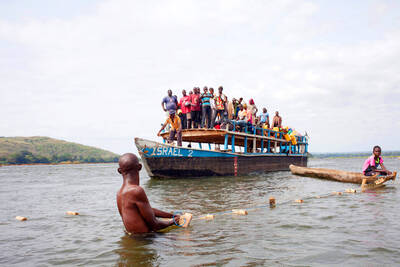
RIVER TRAGEDY: Local fishers and residents helped rescue people after the vessel capsized, while motorbike taxis evacuated some of the injured At least 58 people going to a funeral died after their overloaded river boat capsized in the Central African Republic’s (CAR) capital, Bangui, the head of civil protection said on Saturday. “We were able to extract 58 lifeless bodies,” Thomas Djimasse told Radio Guira. “We don’t know the total number of people who are underwater. According to witnesses and videos on social media, the wooden boat was carrying more than 300 people — some standing and others perched on wooden structures — when it sank on the Mpoko River on Friday. The vessel was heading to the funeral of a village chief in


 RSS
RSS