


North Korea’s young first lady has been pictured sporting what appears to be a Christian Dior handbag, in stark contrast to widespread shortages elsewhere in the impoverished nation.
Ri Sol-ju, the wife of leader Kim Jong-un, was pictured accompanying him on a “field guidance trip” to an army unit.
It was unclear whether the bag was genuine or an imitation. South Korea’s JoongAng Ilbo newspaper yesterday said it would cost 1.8 million won (US$1,594) in Seoul.
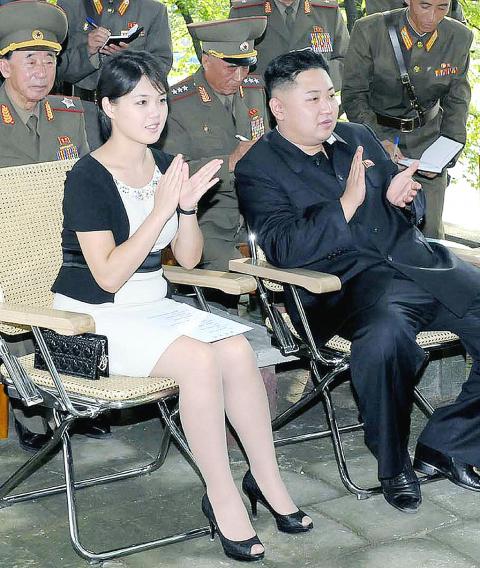
Photo: AFP
Photos, carried by state television and the official news agency, show the couple applauding while seated together watching outdoor art performances by soldiers.
Ri was wearing a white dress with a black top and next to her is a small handbag, apparently with the luxury brand’s signature “D” metal tag.
The attractive and stylish young woman contrasts sharply with her husband, clad in his customary Mao-style dark suit, and with the army officers in olive drab uniforms and oversized peaked caps.
The photo was carried by state TV on Tuesday night, but the date of the field guidance trip was unclear.
The secretive communist state, in an unusual move, confirmed last month that Ri is Kim’s wife. Recent photos had shown the pair at public events together, sparking speculation about her identity.
Kim, believed to be in his late 20s, took over as leader after his father and longtime ruler Kim Jong-il died in December.
Disclosure of his marriage is seen as part of efforts to stress his maturity in a culture that puts high priority on family life.
The country of 24 million has suffered severe food shortages since a famine in the mid-1990s killed hundreds of thousands.
UN agencies estimated last autumn that 3 million people would need food aid this year.
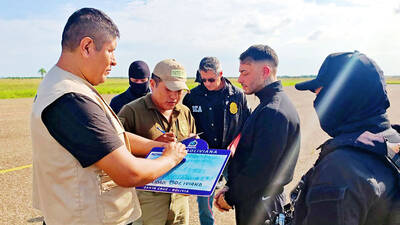
KINGPIN: Marset allegedly laundered the proceeds of his drug enterprise by purchasing and sponsoring professional soccer teams and even put himself in the starting lineups Notorious Latin American narco trafficker Sebastian Marset, who eluded police for years, was handed over to US authorities after his arrest on Friday in Bolivia. Marset, a Uruguayan national who was on the US most-wanted list, was passed to agents of the US Drug Enforcement Administration at Santa Cruz airport in Bolivia, then put on a US airplane, Bolivian state television showed. “The arrest and deportation were carried out pursuant to a court order issued by the US justice system,” Bolivian Minister of Government Marco Antonio Oviedo told reporters. The alleged kingpin was arrested in an upscale neighborhood of Santa
ACTIONABLE ADVICE: The majority of chatbots tested provided guidance on weapons, tactics and target selections, with Perplexity and Meta AI deemed to be the least safe From school shootings to synagogue bombings, leading artificial intelligence (AI) chatbots helped researchers plot violent attacks, according to a study published on Wednesday that highlighted the technology’s potential for real-world harm. Researchers from the nonprofit watchdog Center for Countering Digital Hate and CNN posed as 13-year-old boys in the US and Ireland to test 10 chatbots, including ChatGPT, Google Gemini, Perplexity, Deepseek and Meta AI. Eight of the chatbots assisted the make-believe attackers in more than half the responses, providing advice on “locations to target” and “weapons to use” in an attack, the study said. The chatbots had become a “powerful accelerant for
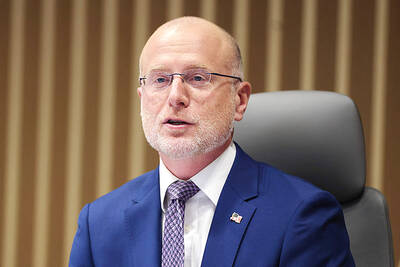
FAKE NEWS? ‘When the government demands the press become a state mouthpiece under the threat of punishment, something has gone very wrong,’ a civic group said The top US broadcast regulator on Saturday threatened media outlets over negative coverage of the Middle East war, after US President Donald Trump slammed critical headlines from the “Fake News Media.” The US president since his first term has derided mainstream media as “fake news” and has sued major outlets over what he sees as unfair coverage. Brendan Carr, head of the US Federal Communications Commission — which oversees the nation’s radio, television and Internet media — said broadcasters risked losing their licenses over news coverage. “The law is clear. Broadcasters must operate in the public interest, and they will
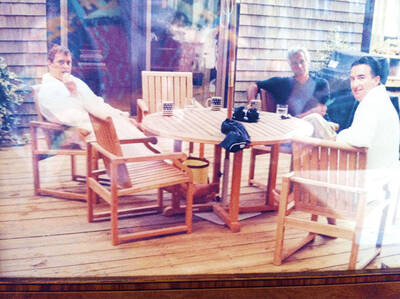
SCANDAL: Other images discovered earlier show Andrew bent over a female and lying across the laps of a number of women, while Mandelson is pictured in his underpants A photograph of former British prince Andrew and veteran politician Peter Mandelson sitting in bathrobes alongside late sex offender Jeffrey Epstein was unearthed on Friday in previously published documents. The image is believed to be the first known photograph of the two men with Epstein. They are currently engulfed in scandal in the UK over their ties to their mutual friend. The undated photograph, first reported by ITV News, shows King Charles III’s disgraced brother and former British ambassador to the US sitting barefoot outside on a wooden deck. They appear to have mugs with a US flag on them


 RSS
RSS