


Venezuela’s election commission is investigating both sides in this year’s bitterly contested presidential race over alleged campaign irregularities, a mere two months before voters head to the polls in the South American OPEC nation.
Venezuelan President Hugo Chavez is squaring off against opposition candidate Henrique Capriles in an Oct. 7 vote that has become the controversial socialist leader’s toughest political battle of his 14 years in power.
With both camps leveling accusations of foul play, all eyes are on the National Electoral Council, which said late on Thursday it was investigating state television channel VTV, government-run newspaper Correo del Orinoco and the opposition campaign.
It said VTV had allegedly paid for election propaganda, while the Correo del Orinoco used the image of an opposition candidate without permission in a negative ad. It also cited the opposition for allegedly exceeding the limits on television and print commercials, and added that it would consider whether Capriles was breaking any rules by regularly donning a baseball cap featuring the Venezuelan flag. If either side is found guilty of an infraction, they could be fined.
In the lead up to the vote, pressure is growing on the council to take stronger action to ensure a balanced campaign. Chavez has also called on state media to abide by electoral rules.
After the announcement, the two sides traded barbs.
“You have to listen to the umpire. If the umpire tells you, ‘Look, Chavez is crowding the plate, step away from home plate,’ I can say I’m okay and he can say no, move back. You have to move back,” Chavez, an ardent baseball fan, said on Friday.
In a message on Twitter after the council’s decision, his rival Capriles said: “Here there are thousands of Venezuelans in shelters who lost their homes and their needs are not met — but the issue for the government is the hat I use.”
“We’re not breaking any electoral norms,” Capriles added.
Capriles’ team cannot match the resources of Chavez, who frequently obliges both state and private TV stations to carry his hours-long speeches and appearances live in so-called cadenas or nationwide “chain” broadcasts.
Chavez says he only uses cadenas for government business and that they are unrelated to his campaign. At one recent rally, he chided supporters who called for him to order a broadcast, saying he had to stick to the rules. In a bid to get its message to wealthier voters, Chavez’s team began running campaign videos this week on paid cable TV channels, including multiple spots during Warner Bros’ popular sitcom The Big Bang Theory.
Chavez is seeking a new six-year term at the helm of South America’s biggest oil exporter. However, he has had three cancer operations in the last year and has been unable to match the intensive campaigning of his younger challenger.
The 58-year-old, who says he is completely cured, remains popular thanks to huge state spending on social programs and the enduring emotional connection that even his fiercest critics concede he shares with the country’s poor majority. Capriles, 40, has been drawing big crowds while projecting an energetic image. One opinion poll showed a close race, but most respected surveys give Chavez a solid double-digit lead.
After all but disappearing from public view earlier this year while undergoing treatment, Chavez’s energy levels appear to have returned — back are the hours-long campaign rallies and televised speeches. On Tuesday, he flew to Brazil for a ceremony when Venezuela joined the regional trade bloc Mercosur.
Capriles, the candidate of a newly united opposition coalition, wants to capitalize on pent-up frustration among many voters weary of high crime, inefficient public services and high prices, and is pledging to set up a Brazil-style government that would be friendly to business, but also maintain social programs.
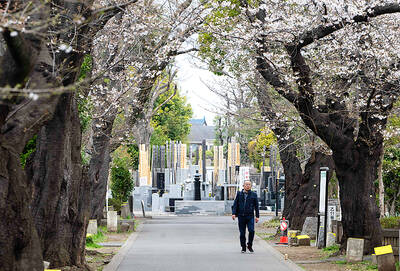
ROCKY RELATIONS: The figures on residents come as Chinese tourist numbers drop following Beijing’s warnings to avoid traveling to Japan The number of Chinese residents in Japan has continued to rise, even as ties between the two countries have become increasingly fractious, data released on Friday showed. As of the end of December last year, the number of Chinese residents had increased by 6.5 percent from the previous year to 930,428. Chinese people accounted for 22.6 percent of all foreign residents in Japan, making them by far the largest group, Japanese Ministry of Justice data showed. Beijing has criticized Tokyo in increasingly strident terms since Japanese Prime Minister Sanae Takaichi last year suggested that a military conflict around Taiwan could

A retired US colonel behind a privately financed rocket launch site in the Dominican Republic sees the project as a response to China’s dominance of the space race in Latin America. Florida-based Launch on Demand is slated to begin building a US$600 million facility in a remote region near the border with Haiti late this year. The project is designed to meet surging demand for the heavy-lift rockets needed to put clusters of satellites into orbit. It is also an answer to China’s growing presence in the region, said CEO Burton Catledge, a former commander of the US Air Force’s 45th Operations

Germany is considering Australia’s Ghost Bat robot fighter as it looks to select a combat drone to modernize its air force, German Minister of Defense Boris Pistorius said yesterday. Germany has said it wants to field hundreds of uncrewed fighter jets by 2029, and would make a decision soon as it considers a range of German, European and US projects developing so-called “collaborative combat aircraft.” Australia has said it will integrate the Ghost Bat, jointly developed by Boeing Australia and the Royal Australian Air Force, into its military after a successful weapons test last year. After inspecting the Ghost Bat in Queensland yesterday,
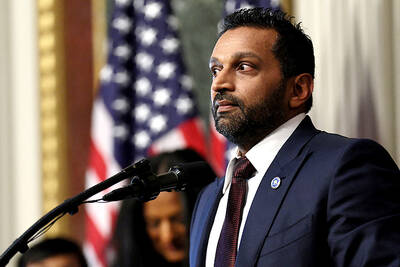
A pro-Iran hacking group claimed to breach FBI Director Kash Patel’s personal e-mail inbox and posted some of the contents online. The e-mails provided by the hacking group include travel details, correspondence with leasing agents in Washington and global entry, and loyalty account numbers. The e-mail address the hackers claim to have compromised has been previously tied to Patel’s personal details, and the leaked e-mails contain photos of Patel and others, in addition to correspondence with family members and colleagues. “The FBI is aware of malicious actors targeting Director Patel’s personal email information,” the agency said in a statement on


 RSS
RSS